
Last Updated on May 2, 2026 by Craig Allen Keefner
Self-service kiosks in fast-food restaurants significantly enhance customer spending and satisfaction. Kiosk Industry reports that these kiosks typically increase customer spending by 20% on average, with McDonald's observing sales jumps as high as 30% in some instances. This boost is attributed to the kiosks' ability to automatically upsell and create positive "experiential and effective feelings" for customers through interactive touchscreens. The technology transforms the fast-food customer experience by making service more efficient and subtly influencing customer behavior towards larger orders.
Read More: The Truth About Self-Serve Kiosks At Fast Food Restaurants
Self-Service Fast Food Order Kiosks Transforming Customer Experience
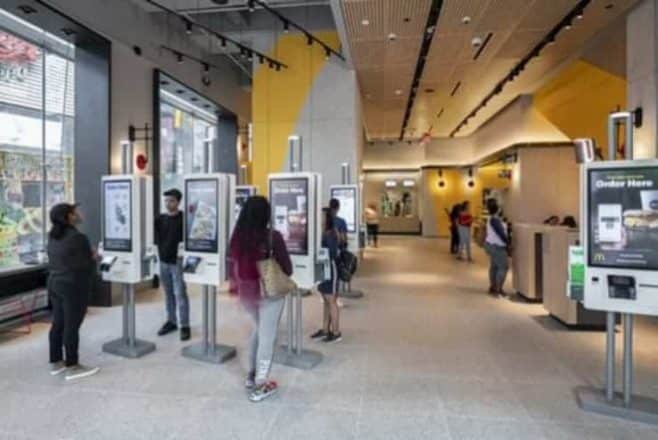
Self-Service Fast Food Kiosks — Congrats McDonalds: Today Grand Opening NYC Times Square wonderful McDonalds restaurant and 18 polytouch 32“ kiosks are ready to take orders. In close neighborhood, at AMC Theatre Times Square there are 16 polytouch 24“ units, selling cinema tickets since 2 years. Design, performance and reliability makes the difference.
The same principles for self-order kiosks and increasing sales in fast-food restaurants work across market verticals. At an airline kiosk, a simple upsell to get better seating usually works for example. In hospitality its much easier to click off on extra services at check-in.
This is a nice article writeup by the Mashed writer.
Highlights:
- Self-Service Kiosks encourage people to spend more
- 20% on average
- Larger sales than in-person
- McDonalds saw 30% increase
- Machines automatically upsell — counter people do not
- Kiosks positively impact customer mood
- Touch screens create “experiential and effective feelings” in customers
Excerpt:
As they become more efficient and user-friendly, self-serve kiosks are transforming the fast-food customer experience. Many of us have seen this firsthand. After all, who hasn’t taken some secret pleasure in flicking through a digital menu? However, as FoodTec discussed in a 2018 article, self-serve technology is not only making fast food service more efficient, but also subtly changing customer behavior. Namely, it is encouraging people to spend more.
The numbers speak for themselves. FoodTec has suggested that self-serve kiosks increase customer spending, on average, by 20%, and this figure is borne out by data presented in a 2015 Harvard Business Review article. According to the review, major chains, including Taco Bell, McDonald’s, and Chilis have all reported self-serve kiosks generating larger sales than in-person ordering, usually by a margin of 20%. In one instance, McDonald’s even saw sales increase by as much as 30%. Self-serve kiosks aren’t just good for business — they’re great for business.
Read More: https://www.mashed.com/417946/the-truth-about-self-serve-kiosks-at-fast-food-restaurants/
What are other related posts about self-service kiosks and QSR?
- Other related posts about self-service kiosks and QSR include: QSR by Pyramid Computer and Intel Showcase, Contactless Payment Using Facial Recognition Self-Order Kiosks Case Study – Daddy’s Chicken Shack QSR Restaurant, QSR Market Update Self-Service – Unattended Kiosks, 5 Tips to Ensure Your Self-Serve Kiosk is a Success – by NCR, and Retail Kiosks.
For More Information Contact Us
[contact-form to=”craig@catareno.com” subject=”General inquiry”][contact-field label=”Name” type=”name” required=”1″][contact-field label=”Email” type=”email” required=”1″][contact-field label=”Website” type=”url”][contact-field label=”Message” type=”textarea”][/contact-form]


