Last Updated on March 18, 2026 by Craig Allen Keefner
What Does a Large Self Service Kiosk Deployment Require?
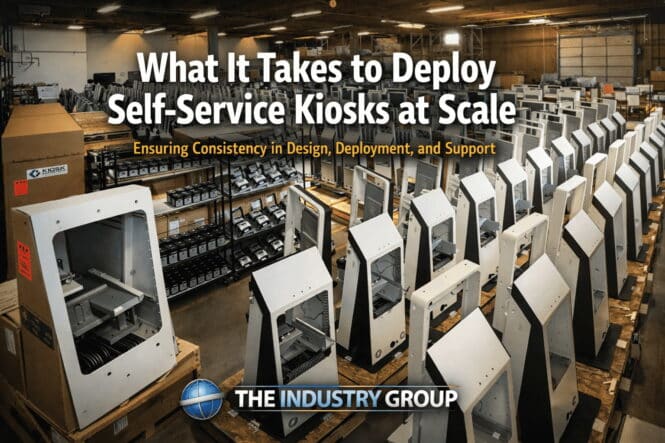
Deploying self-service kiosks across multiple locations poses different challenges than deploying a small number of units. As the number of kiosks increases, the importance of consistency in quality, configuration, installation, and long-term support grows.
Larger-scale deployments are not just about producing more units. It requires operational planning and design decisions that buyers can trust. Organizations that succeed at scale typically address these factors early, before inconsistencies become expensive problems.
Designing for Repeatable Production
When kiosks are produced in volume, the smallest design choices have the biggest impact. Inconsistent component placements, overly complex assemblies, or reliance on short-life-cycle parts can slow production and degrade the quality of the kiosk.
Scalable kiosk designs prioritize repeatability. This often means standardizing internal layouts, simplifying assemblies, and selecting components with long-term durability. Designing with production in mind helps maintain quality across every unit, regardless of deployment size.
Logistics and Deployment Readiness
Kiosks must arrive complete, protected, and ready for installation at locations with varying site conditions. Shipping damage, missing components, or incomplete preparation at install sites can delay deployments and increase costs. To reduce these risks, large-scale deployments often rely on engineered packaging, protective crating, and shipment methods tailored to finished kiosks. Reducing the amount of work required onsite limits the opportunities for error during installation.
Installation Across Locations
When kiosks are installed across multiple regions, installation is rarely handled by a single team. Internal staff, contractors, and third-party providers may be involved. Without standardized processes, installation quality can vary significantly. Some issues may include inconsistent mounting, improper cable routing, incomplete setup, or missed validation steps. These inconsistencies can affect performance and user experience. Reducing field installation problems is one of the most effective ways to improve deployment outcomes.
Long Term Service and Lifecycle Support
Scalable deployments must be supportable over time. Hardware that’s reliable will influence long term performances. A kiosk design that allows technicians to access and replace components efficiently reduces downtime and service costs. Clear maintenance guidelines and planned strategies help organizations keep kiosks running smoothly as fleets age.
Scaling with confidence
Large self-service kiosk deployments succeed or fail based on the decisions made long before the first unit is installed. What works for a small rollout often breaks down at scale, where consistency, reliability, and supportability become critical. By designing for repeatable production, planning for deployment readiness, standardizing installation practices, and building serviceability into every unit, organizations can avoid costly problems and protect their long-term investment.
Trust Kiosk Innovations
Scaling self-service kiosks successfully requires more than hardware. It requires a manufacturing and deployment strategy designed for security, consistency, reliability, and long-term serviceability. Kiosk Innovations specializes in supporting organizations through every stage of large-scale kiosk deployments. If you are planning a large-scale kiosk deployment, our team is ready to help you build a deployment strategy designed for long-term success. Contact Kiosk Innovations today to simplify your operation’s needs.