

Last Updated on August 6, 2026 by Craig Allen Keefner
Healthcare and Self-Service — Your Digital Front Door
First Alerts — info good to know today —
Compliance: ADA, Section 504 (HHS), and HIPAA. (e.g., “How the Lobby Kiosks meet the May 2026 deadline”). Under HHS Section 504, kiosk compliance is service-based, not web-based. If a kiosk controls access to a federally funded healthcare service, the service must be accessible — regardless of the kiosk’s software architecture. Learn more about HHS Section 504
-
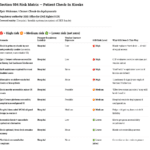
Matrix showing HHS Section 504 and ADA compliance risk levels for healthcare kiosks.
-
HHS document new-requirements-accessibility-web-content-mobile-apps-kiosks
-
If an Epic or Cerner check-in kiosk fails accessibility, OCR comes for the hospital, not the vendor. Hospitals may seek recourse contractually — but they own the compliance risk the moment the kiosk replaces a front desk. Kiosk manufacturers only provide the hardware and no liability.
-
Biggest mistake? — “Epic says their kiosk supports accessibility.” To what degree is never revealed. Have you verified your indemnification levels with Epic here?
-
Conversational AI: Using Voice/LLMs at any of these touchpoints to assist patients who can’t use touchscreens. Learn more about conversational AI. PRO TIP — this can be easily retrofitted.
- How Cloud AI Becomes a HIPAA Liability for Patient Kiosks (And The Edge Inference Fix)

For healthcare leaders evaluating compliant AI infrastructure, we’re discussing deployment frameworks during HIMSS 2026 in Las Vegas. #3461
For patient-facing kiosks handling PHI, edge inference should be the default architectural standard. Interesting parallel example in self-order for kiosk which details Edge Inference method and the benefit for Cardholder Data Environment (PCI DSS). Making debut this week at EuroShop.
Let’s consider locations —
-
The Lobby (highest traffic)
-
Arrival & Intake: Focusing on patient self-check-in and digital registration. This is May 2026 HHS Section 504 accessibility deadline.
-
Wayfinding & Information: Using interactive digital signage and building directories to help people find their destination without needing to ask a staff member. Learn more about Hospitals and digital signage wayfinding.
-
Pharmacy & Asset Management: Integrating smart lockers for secure prescription pick-up or temporary storage of patient belongings. Learn about Smart Lockers like Amazon Hub and Temperature Controlled Lockers. Clothes and shoes for staff videos.
-
Security & Visitor Management: Using kiosks to print visitor badges and manage entrance security protocols.
-
-
The Surgical/Clinical Suite (most technical/niche)
-
The Parking/Exterior (most “modern infrastructure”)
Security-First Identity: The New Standard for Patient Intake
As healthcare organizations face record-breaking data breaches and rising medical identity theft, the “Digital Front Door” must evolve. Traditional identification methods—drivers’ licenses and social security numbers—are no longer sufficient. To protect Protected Health Information (PHI) and ensure patient safety, leading providers are moving toward a Zero-Trust Identity model at the point of entry.
Eliminating Fraud with Biometrics
Password-based systems and physical IDs can be shared, forged, or stolen. Biometric Patient Identification—including palm vein and advanced facial authentication—creates a link between the physical patient and their Electronic Health Record (EHR).
-
Privacy by Design: Modern biometric solutions store encrypted mathematical templates rather than raw images, ensuring patient privacy remains intact.
-
Fraud Prevention: Reduces the $17.4 billion annual cost of medical errors and fraud linked to patient misidentification.
-
Hygienic Interaction: Touchless and near-touchless sensors align with post-pandemic clinical requirements for sterile environments.
Solving the “Duplicate Record” Crisis
Duplicate records aren’t just a billing headache; they are a clinical risk. By performing a 1:N (one-to-many) search across the Master Patient Index (MPI) at the kiosk, hospitals can ensure every encounter is matched to the correct, singular identity.
-
Data Integrity: Prevent fragmented care by ensuring clinicians have the full patient history every time.
-
Workflow Efficiency: Reduce the administrative burden on front-desk staff by automating identity verification.
- PRO TIP — Being asked to fill out 15 pages of questions is going to result in 15% accuracy since most patients will mark default in otder to get to end of forms/
EHR Handshaking aka somebody tell Epic or Cerner what is going on….
A self-service kiosk is only as powerful as its connection to the Electronic Health Record (EHR). For a truly frictionless experience, the kiosk must perform a secure, real-time “handshake” with platforms like Epic, Oracle Health (Cerner), and MEDITECH. This ensures that patient data isn’t just collected—it’s synchronized instantly with the clinical workflow. Epic provides Welcome which is client loaded on check-in. Epic uses persistent queuing. It’s a key feature that prevents data loss if the kiosk loses connection during a “handshake.”
The Languages of Interoperability: HL7 vs. FHIR — To communicate with diverse hospital systems, kiosks utilize industry-standard protocols. Understanding which “language” your system speaks is critical for a successful rollout. Learn more about HIMSS 2026 Healthcare Technology for Self-Service
The Surgical & Clinical Suite: Precision in the Sterile Field
The Sterile Suite: Advanced Interfaces for High-Stakes Environments
In the operating room (OR), every second and every surface matters. Self-service and interactive technology in these zones must move beyond simple utility to prioritize infection control and uninterrupted clinical focus.
Touchless Control: Maintaining the Sterile Field — Traditional input devices like mice and keyboards are notorious vectors for bacterial transfer. To eliminate the need for repeated “scrubbing in,” modern surgical suites are adopting Vision-Based Gesture Control.
-
How it works: Surgeons use simple hand gestures (zoom, rotate, pan) to manipulate 3D medical models or radiology images without physical contact.
-
The Benefit: Reduces procedure time and maintains a strict sterile field, allowing the surgeon to remain focused on the primary task. ✋
Medical-Grade & Antimicrobial Displays –Standard displays cannot survive the aggressive disinfection protocols of a clinical environment. Surgical-grade touchscreens must meet specific engineering standards:
-
IP65/IP69K Ratings: Fully sealed enclosures that withstand high-pressure washdowns and chemical disinfectants (bleach, hydrogen peroxide) without liquid infiltration.
-
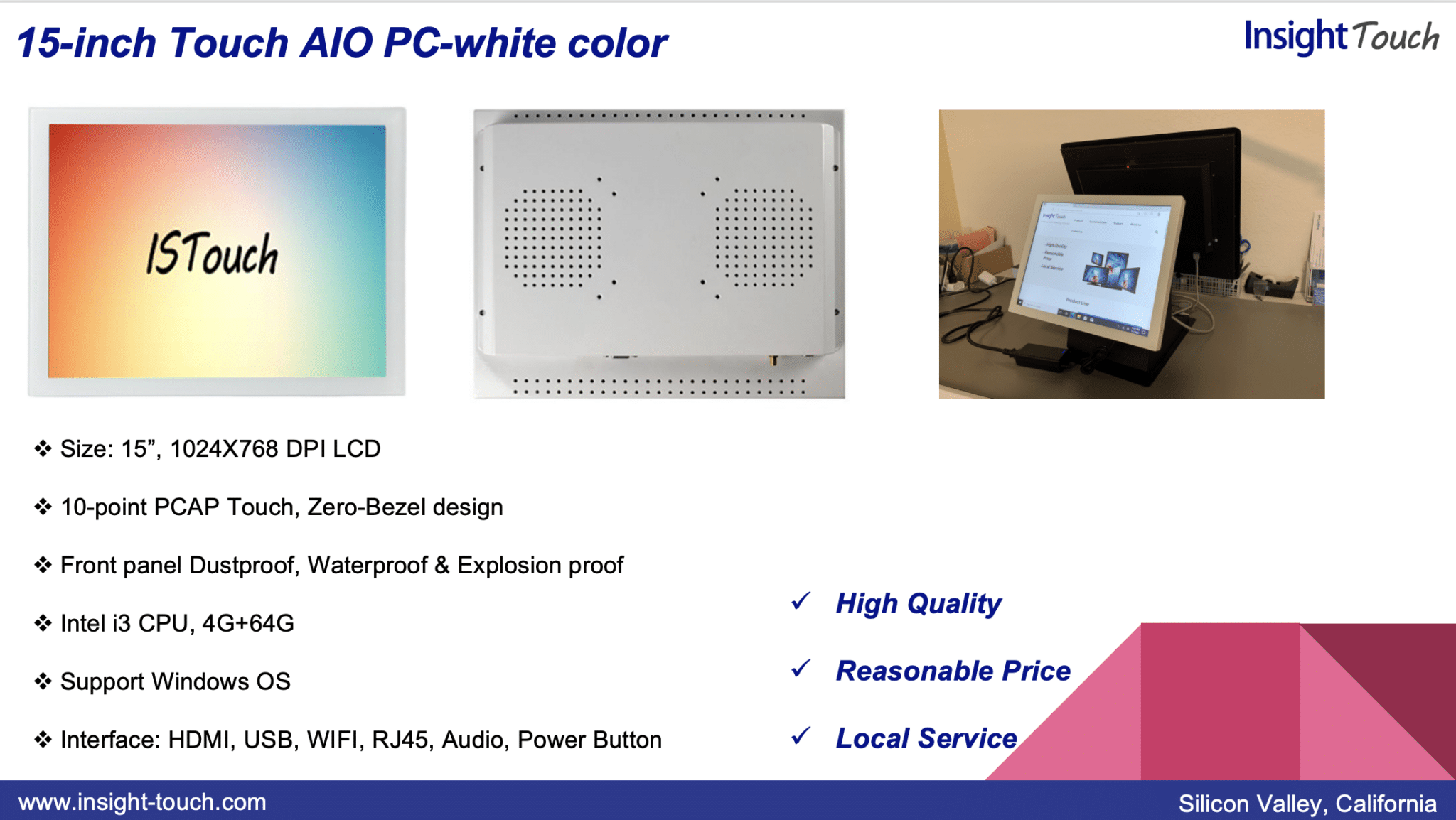
Glove-Compatible PCAP: High-sensitivity touchscreens that function flawlessly even when the user is wearing 5mm thick surgical gloves or when the screen is covered in fluids like saline.
-
Compliance: Look for IEC 60601-1 certification to ensure electrical safety and electromagnetic compatibility with sensitive medical equipment.
- Learn about antimicrobial touchscreen wipes and coatings
- Learn about Antibacterial Touchscreen wipes and coatings
The Parking & Exterior: Infrastructure for the Modern Campus
The Hospital Exterior: Extending Care Beyond the Front Door
A patient’s experience begins the moment they turn into the hospital parking lot. By integrating Smart Infrastructure, healthcare facilities can reduce “parking anxiety” and provide value before the patient even enters the building.
Hospital EV Charging: An Essential Amenity — Electric Vehicle (EV) charging is no longer just a “green” initiative; it is a critical patient and staff amenity.
-
For Staff: Level 2 chargers in employee lots help reduce range anxiety for nurses and doctors on long shifts, aiding in recruitment and retention. 🔌
-
For Patients: High-speed Level 3 (DC Fast) chargers in visitor lots provide a necessary service for those traveling from rural areas for specialized care.
-
The Revenue Opportunity: Integrated digital signage on charging kiosks allows for hospital branding, wayfinding, or local partnerships to offset infrastructure costs.
Outdoor Signage & Emergency Wayfinding — Hospital campuses are notoriously difficult to navigate. Outdoor Digital Wayfinding serves as an intelligent guide for anxious visitors.
-
Dynamic Messaging: Instantly update routes for emergency vehicle access or redirect traffic during surges.
-
High-Brightness Displays: Kiosks must feature 3000+ nits of brightness to remain readable in direct sunlight, with automatic dimming for nighttime use.
-
Durability: IP-rated, tamper-proof steel enclosures ensure 24/7 operation in extreme temperatures (from -30°C to 50°C).
The Unified Digital Campus
The transition to a Digital Front Door strategy is no longer optional; it is the prerequisite for modern care delivery. From the moment a patient enters the parking lot to the precision of the sterile surgical suite, self-service technology serves as the invisible backbone of the hospital.
-
Exterior: EV charging and dynamic wayfinding build immediate trust.
-
Lobby: Biometric identity and AI-driven intake solve the “Security-First” challenge while meeting the May 11, 2026 compliance deadline.
-
Clinical: Medical-grade, touchless interfaces protect the sterile field and enhance provider focus.
The Bottom Line: For the IT Directors and Clinicians at HIMSS, the message is clear: Hardware is the vessel, but Interoperability and Compliance are the anchors.
Resources
- himss readiness guide
- HIMSS Participants Booth 3461
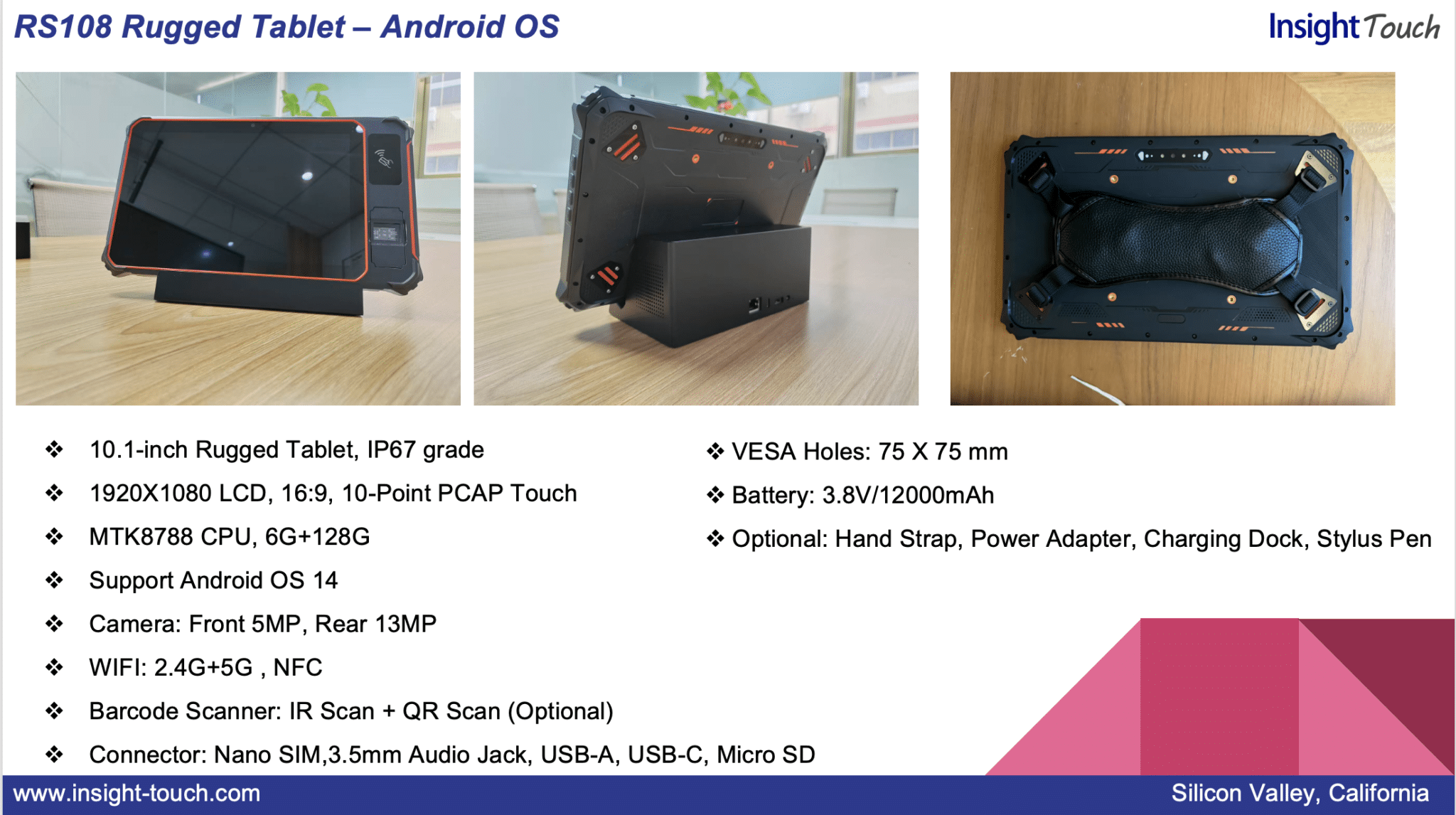
- Insight Touch touchscreens + kiosks – in 3461 – 60601 certified
- BOCA Systems Wristband & Badge Printers – in 3461
- NZTech – in 3461 — AI-Driven Healthcare Interfaces for the Modern Hospital. Hospital screens used in surgery by gloved surgeons incorporating gesture
-
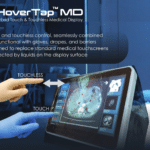
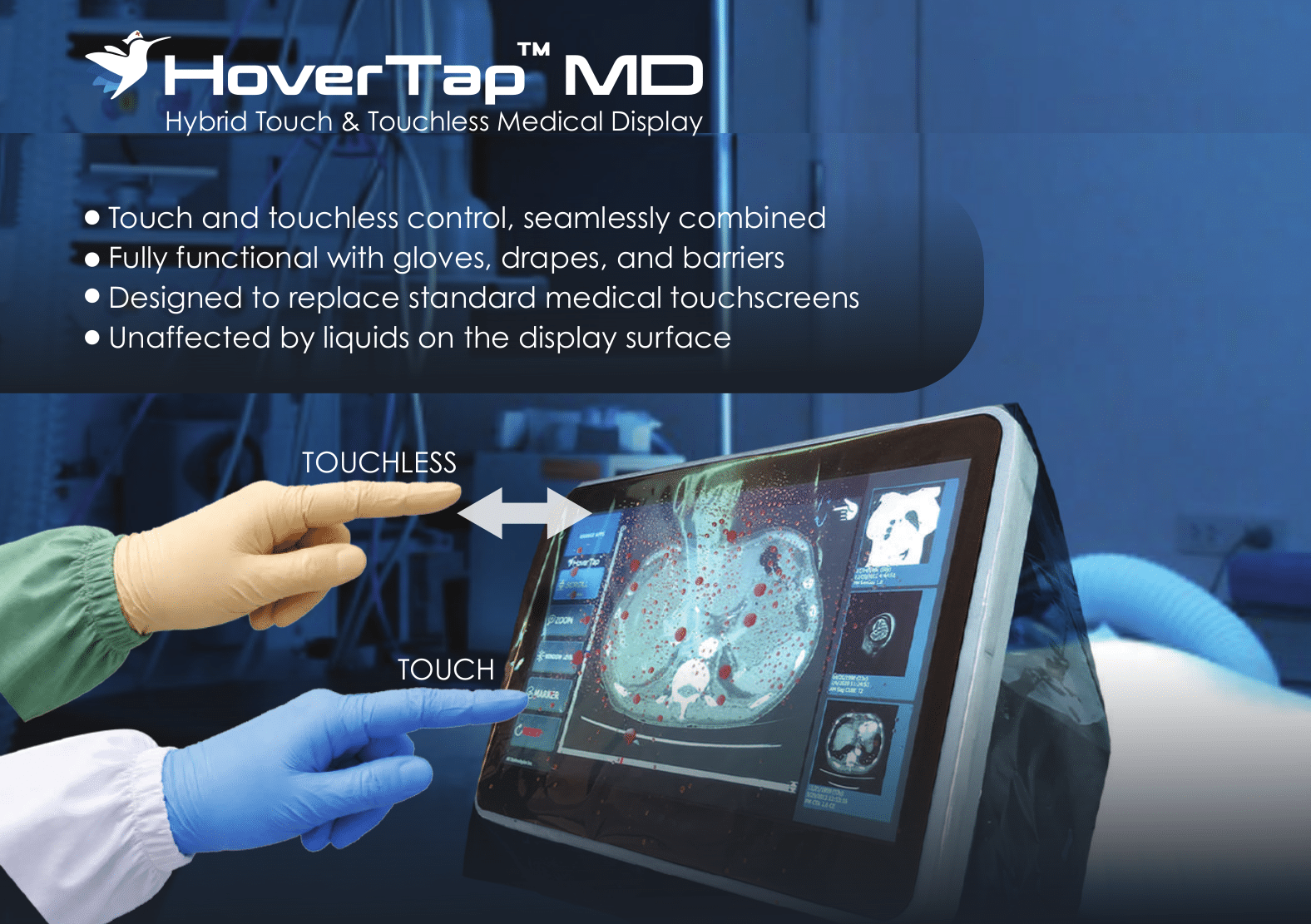
click for full size hovertap md
HoverTap MD M13A ModuleHoverTap MD M13A (M‑Series) is a 3D Touch module that adds both touch and touchless control to HMIs, kiosks, and control panels. It works through thick protective glass, gloves, and liquids, making it ideal for medical, industrial, and outdoor environments. HDMI and USB HID connections enable easy plug‑and‑play integration with existing GUIs, with an API available for advanced gesture control.
- HoverTap MD Medical Display
HoverTap MD is a hybrid medical display that supports both direct touch and touchless interaction for clinicians. It remains fully usable with gloves, drapes, barriers, and liquids on the screen, making it well suited for ORs and procedure rooms. The system combines a 3D input sensor, processing engine, and displays available in multiple medical‑friendly sizes. - AI‑Driven Hospital Interfaces
NZ Technologies offers AI‑driven interfaces that enhance workflow, precision, and infection control across the hospital. The HoverTap family (MD, Check‑In, Survey, Lift, Swipe) and TIPSO AirPad provide smart touch and touchless control for reception, surgery, wards, and discharge. These solutions modernize hospital interactions while reducing contact with shared surfaces. - NZTech_AI-Driven_Hospital_Interfaces_
- Flyer_2025_compressed M13A_HoverTap_
- Datasheet HoverTap_MD_Flyer
-
- FEC Kiosks
- imageHOLDERS – in 3461
- HIMSS Resources
- Main site
- Our 2026 Page
- Our 2025 page
- Floor Plan
- Expo Pass is $999 — Prices increase after 2/8/26
- Our Discount Code — BH29KIOS
Date and Location:- Tuesday thru Thursday
- March 9-12, 2026
- Venetian Convention & Expo Center, Las Vegas, Nevada
Be Sure and Visit
- KIOSK Information Systems in 5647
- Olea Kiosks in 643 — meldCX and LifeMed demos
- Companies We Would Visit (40) — Recommended HIMSS
- Check-in Kiosk -Digital Kiosk Solution
- Patient Kiosk website
This roadmap is provided by The Kiosk Association, a core initiative of The Industry Group (TIG)—the global leader in self-service technology research, standards, and advocacy.
The Industry Group (TIG) is the overarching self-service technology collective, providing global research and advocacy across kiosks, digital signage, and point-of-sale. The Kiosk Association is TIG’s dedicated healthcare and regulatory arm, serving as the central hub for the HMA (Hospitality), KMA (Kiosk Manufacturer), and PMA (Pharmacy) initiatives.

The Industry Group
end of content