
Last Updated on March 8, 2026 by Staff Writer
Kiosk Components
Component provider quick list
- Pyramid Computer
- Intel Kiosk
- Insight Touch
- Actineon
- BOCA Systems Ticket & Receipt Printers
- TDS TOUCH Touchscreens
- Ventus – managed wireless connectivity
- VidaBox – Transform any tablet into a professional kiosk!
- UCP Unattended Payments
- Innovative Technology
- Goldfinger Monitors – Digital Signage
- Crane CPI
- Ingenico Payment
- Storm Interface
Modern kiosk and digital signage systems are no longer just “screens on a wall.” In 2026, they have evolved into sophisticated, multi-layered ecosystems where hardware, software, and connectivity converge to create seamless user experiences. Whether for retail, healthcare, or transportation, these systems rely on a specific set of core components to function reliably in high-traffic environments.
Enclosure and Mounting
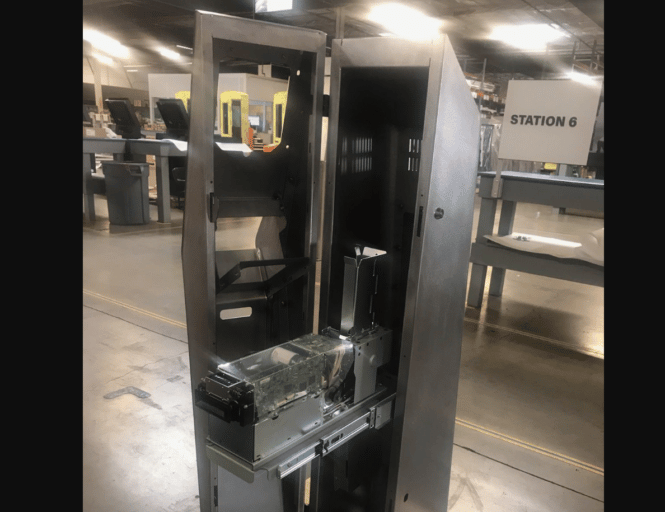
The enclosure is the first line of defense. Unlike consumer electronics, kiosk housings are typically constructed from high-grade materials like stainless steel, aluminum, or reinforced plastics to withstand physical wear and potential vandalism.
For digital signage, the mounting system—whether VESA-compliant wall mounts, ceiling suspensions, or freestanding pedestals—must prioritize both safety and serviceability. In outdoor environments, these enclosures require IP55+ ratings to protect internal electronics from dust, moisture, and extreme temperature fluctuations (often ranging from -30°C to 85°C).
The Visual Interface: Commercial-Grade Displays
While a consumer TV might look similar to a digital sign, the internal components are vastly different. Commercial-grade displays are engineered for 16/7 or 24/7 operation and feature:
-
High Brightness: Standard screens offer 250–350 nits, but outdoor kiosks require 2,500+ nits to remain visible in direct sunlight.
-
Thermal Management: Larger heat sinks and active cooling fans prevent “blackening” or panel damage from continuous use.
-
Touch Technology: Modern kiosks utilize PCAP (Projected Capacitive) for a smartphone-like multi-touch experience, or Infrared (IR) for rugged environments where users might wear gloves.
The “Brain”: Media Players and Processing Units
The processing unit (or media player) is responsible for rendering content and managing peripherals.
-
External Media Players: Dedicated devices (like those from BrightSign or Intel-based Mini-PCs) offer higher reliability and easier maintenance than built-in “Smart TV” chips.
-
Industrial PCs: For complex kiosks, Industrial Motherboards are preferred because they offer a 5–7 year lifecycle, ensuring that replacement parts remain available long after consumer models have been discontinued.
-
Edge Computing: With the rise of AI in 2026, many units now include NVIDIA Jetson or similar SoCs to handle real-time tasks like audience analytics or voice recognition locally without relying solely on the cloud.
Peripherals and Specialized Hardware
What distinguishes a kiosk from a simple digital sign is its ability to perform transactions. This requires a suite of integrated peripherals:
-
Payment Terminals: EMV-compliant card readers and NFC sensors for “Tap to Pay” (Apple/Google Pay).
-
Scanners and Printers: Barcode/QR scanners for check-ins and heavy-duty thermal printers for receipts or tickets.
-
Sensors: In 2026, IoT sensors are standard, allowing screens to “wake up” when a user approaches or adjust content based on the viewer’s estimated demographics.
The Software Stack and Connectivity
The hardware is only as effective as the software managing it.
-
CMS (Content Management System): This allows operators to schedule content, update menus, and monitor the health of the entire network remotely.
-
Connectivity: Reliable uptime requires a “wired-first” approach via Ethernet (LAN), though 5G cellular modules are increasingly used for remote or mobile deployments. Power over Ethernet (PoE++) is also gaining traction for lower-power signage to simplify installation.
The 2026 Trend: Multimodal Interaction
The modern component list now includes an “Interaction Layer.” This includes microphones for Voice AI, cameras for gesture control, and QR-based mobile handoffs. This “multimodal” approach ensures accessibility and allows the kiosk to act as a bridge between the physical location and the user’s personal device.
By selecting industrial-grade components over consumer-grade alternatives, operators significantly reduce their Total Cost of Ownership (TCO), avoiding the frequent service calls and premature failures that plague under-specced deployments
More Articles
Includes all types of components such as printers, card readers, scanners, bill acceptors, bill recyclers, touchscreens and many more.
- Assistive
- Enclosures
- Custom Design
- Tablet Kiosk – iPad Kiosk
- Software
- Touchscreen
- POS Terminal & POS Kiosks
- Outdoor
- Digital Signage
- Printers
- Service
- Access Control – RFID, Biometrics
- Monitoring
- Consulting
Related Posts