Last Updated on March 25, 2026 by Craig Allen Keefner
Walmart Self-Checkout Strategy Overview (2025)
By 2025, Walmart handles self-checkout differently. Instead of just installing extra machines, they mix smart tech into the process. Artificial intelligence helps run some checkouts now. Shoppers can scan items on their phones while moving through aisles. A few stores test systems where payment happens without scanning at all. In places with higher theft rates, fewer standard kiosks stay open. Membership-only lines appear in select spots. These moves aim to cut losses, manage staff needs, and keep service steady. The changes show how big chains adapt when technology meets real-world challenges. Vendors who make kiosks watch closely. So do companies that supply point-of-sale tools. Retailers across the industry pay attention too – what works here often spreads later.
These days, spotting changes at Walmart self checkout matters more than you might think. Not long ago, they relied on outside help – now things shift toward keeping everything inside the company. NCR once had a bigger role, but slowly that fades into background duty.
It always pays to pay attention to Walmart Self Checkout these days.

Click to Contact Olea
Key Self-Checkout Technology Changes at Walmart (2024–2025)
Over the past 12 months, Walmart has made significant strides in advancing its self-checkout technology. Here are some key developments:
Is Walmart removing self-checkout in 2025?
Insight — Walmart isn’t ditching self-checkout next year. That idea mostly pops up in headlines trying to grab attention. A few stores tweaking things doesn’t mean every location follows suit. News sites love big sweeping claims even if reality is far more measured. The company usually makes careful moves, adjusting slowly instead of tearing everything down. Changes happen block by block, not all at once across the board.
Some Walmart locations will still have self-checkout in 2025, though a few are scaling back where theft spikes or lines get messy. Rather than apply the same setup everywhere, adjustments depend on each store’s layout and loss patterns. Behind these changes sits a mix of staffed registers, tech-enhanced kiosks using smart cameras, phone-based scanning, even test runs without any checkout at all. Store type shapes what you’ll see up front – no universal plan fits every aisle now.
Walking into a store without needing to stop at a register? That is what Walmart tests now. Using cameras plus computer vision helps track items picked up by shoppers. One trial swaps out cashiers for invisible tech instead. As people exit, their bill adds up silently through sensor networks. No scanning, no lines, just walking out with groceries. This idea borrows from earlier models but builds differently. Stores watch movement, weight shifts on shelves, even hand grabs. Behind the scenes, software connects each item to a shopper’s account. Trials run quietly, not everywhere yet. Results could shape how supermarkets operate later. Technology steps forward while humans step back during checkout moments
Checkout-Free Store Pilots and Computer Vision
One big shift at Walmart involves testing checkout-free locations. These smart shops skip traditional lines entirely. That change could save money on staff, yet brings up concerns about spending and personal data. Cameras and machine learning now watch store activity closely. This helps stop theft while speeding things up. Shoppers can scan items using a phone app instead of waiting. The company leans more on digital tools than cashiers here. Some places are cutting down self-checkout stations. Stores adjust layouts based on where losses happen most. Hidden sensors plus video intelligence detect unusual behavior. Preventing fraud becomes easier with these upgrades. Certain aisles give faster service to paying members. Access costs extra, turning ease into income International Supermarket News
Walmart Self-Checkout Technology Highlights (2025)
| Category | What’s Happening | Why It Matters |
|---|---|---|
| Checkout-free pilots | Smart stores with no checkout lanes | Reduces labor but raises privacy & capex questions |
| AI & automation | Computer vision, ML | Shrink reduction + faster throughput |
| Mobile Scan & Go | App-based checkout | Shifts cost to software ecosystem |
| Rebalancing kiosks | Fewer SCO lanes in some stores | Loss-driven redesign |
| Loss prevention tech | RFID, AI vision | Fraud mitigation |
| Member lanes | Walmart+ priority | Monetized convenience |
Mobile Scan & Go Expansion Across Walmart Stores
Now rolling into more locations, Walmart’s mobile scan feature lets shoppers tally purchases on their phones while moving through aisles. Moving past old-style lines, payment happens inside the same app after scanning each item. More access means less waiting at registers across participating sites. Smaller delays shape a smoother way to finish buying what you need.
AI-Powered Self-Checkout Kiosks and Computer Vision
Out front, Walmart is trying out checkout machines that think for themselves. Not only do they scan items automatically, but they learn from each mistake too. Behind the scenes, cameras watch every move – spotting when someone forgets to ring up a purchase. Instead of pressing buttons, customers just grab what they need and walk. Over time, the system gets sharper at telling apples from oranges – literally. Even small differences in size or shape won’t fool it twice. From start to finish, less waiting happens now. Some say it feels like the store knows you’re leaving before you do
- Identify products without barcodes (like fresh produce)
- Might spot someone taking things they should not have. Could catch mistakes when items get scanned wrong
- Provide a more intuitive and user-friendly interface
Contactless Payment Options
Folks wanting touch-free ways to pay? Walmart listened. Their updated self-service kiosks now take more kinds of digital cash – phones that beam payments, credit cards you just wave near a reader. Moving fast because habits changed. Less touching, more tapping. Systems adjusted without making a big show about it. Just works when you need it.
AI-Driven Queue & Lane Management
Walmart now uses smart tech to handle lines at self-checkout spots. Sensors keep an eye on how long people wait. When the line grows, more lanes pop open without anyone needing to step in. This happens thanks to artificial intelligence watching the flow. Customers move through faster because of it. The whole process adjusts itself in real time. Efficiency gets a quiet boost behind the scenes.
Walmart+ and Member-Exclusive Checkout Experiences
Now here comes a twist – Walmart+ links directly into how members move through checkout lines. Some stores offer special paths just for them. Speed picks up when scanning items alone. Membership opens quicker exits at self-service stations.
Starting with a spoken command, shoppers can now move through checkout using just their voice at certain Walmart locations. A new kind of kiosk listens and responds, helping people who may struggle with traditional screens or buttons. Instead of tapping or swiping, you talk – like asking a question – to complete your purchase. This approach opens up easier access for many, especially those with visual or motor challenges. Behind each interaction is software that understands everyday speech patterns. Not every store has it yet, but testing continues in real-world settings.
Voice-Assisted and Accessibility-Focused Checkout
Walmart has been piloting voice-assisted kiosks in select stores. These systems use natural language processing to guide customers through the checkout process, making it more accessible for all users.
Mobile Self-Checkout Expansion
The retailer has expanded its mobile self-checkout options, allowing customers to complete their entire shopping journey using their smartphones in more stores across the country.
What Walmart’s Self-Checkout Changes Mean for Retailers and Vendors
Folks now scan items on their phones while moving through aisles – this new step rolls out further, reaching additional locations nationwide. One less stop at checkout, simply walk out after tagging each piece along the way.
- Now comes a shift at Walmart. Their new self-checkout tweaks? Not just about cutting staff numbers. Cameras plus smart software take over tasks once done by people. That means less need for cashiers. Yet setting it up demands careful tech coordination. For stores elsewhere, similar upgrades could follow. But linking systems gets harder than expected. Suppliers might face tighter digital requirements too. The balance tilts – savings on wages meet spikes in setup effort. Simplicity fades when machines watch every item scanned
- Running tabs on phones moves expenses away from physical stations into digital platforms
- Loss prevention now drives UX decisions
- Making money through subscription levels at checkout is becoming more common
- Accessibility risk increases with mobile-only flows
So What Else Has Walmart Been Up To?
What else is new with Walmart? Over the past year, the company explored fresh tech ideas to improve how things work behind the scenes and for shoppers too. One project involved smart shelves that track inventory on their own. Another test used robots to scan shelf tags and check prices. Stores tried out self-driving delivery vehicles in select neighborhoods. Workers began using wearable devices to speed up warehouse tasks. A voice-powered tool helped employees find items faster. Some locations tested cashierless checkout systems. Virtual reality training popped up in employee programs. Drones started flying through warehouse aisles to count stock. Online shopping got a boost from AI sorting recommendations. Each step aimed at keeping pace without slowing down
Drone Delivery
A bird’s-eye view shows small aircraft dropping packages near homes – Walmart now flies them in collaboration with DroneUp, Zipline, or Flytrex. Across several states, trials keep rolling, swapping long waits for quicker doorstep drops. Speed matters less than reliability, yet both are improving overhead. These sky couriers handle urgent runs when roads get crowded or slow.
AI-Powered Inventory Management
Walmart tests smart systems that learn on their own to handle store supplies better. These tools guess what shoppers will want before shelves empty. Sometimes, items move faster when the system adjusts early. Stock stays balanced because updates happen constantly behind the scenes. Supply routes get smarter over time without extra effort.
Autonomous Vehicles
Testing robots that drive themselves? That is happening now for deliveries straight to homes, also inside stores. Trucks without drivers move cargo across distances, while tiny driverless machines handle nearby drop-offs. These experiments aim to shift how goods get transported, using new tech on roads today.
Augmented Reality (AR) Shopping
Shopping at Walmart gets a tech twist with augmented reality. Through screens, customers see how clothes or makeup might look on them without stepping into a fitting room. Moving around large stores becomes easier when digital arrows guide the way overhead. Some tools let you preview furniture in your living space before buying. Experiments continue to blend physical aisles with smart overlays. What you see changes as you walk, making choices clearer. Digital layers sit atop real shelves, adding info where needed.
Blockchain for Supply Chain Transparency
A fresh move into blockchain has taken root at the store, testing how well it tracks goods from source to shelf. One step beyond paper trails, this digital ledger watches over food journeys, making sure what’s promised is what arrives. Instead of guessing origins, every ingredient gets a timestamped record. Trust builds not through claims but through shared access to data everyone can check. Safety steps up when contamination risks show early in the chain. Even distant farms get visibility, linking their harvests directly to customer confidence. Proof of authenticity travels with each item, reducing fraud chances. Behind labels, real stories unfold – grown here, shipped there, checked often.
Robotics in Warehouses and Stores
Walmart has been testing various robotics solutions, including:
- Automated pickup towers for online orders
- Shelf-scanning robots for inventory management
- Floor-cleaning robots to improve store maintenance
Voice Shopping
Now adding things by speaking is easier at Walmart. Using devices such as Google Home or Alexa, people can drop products into their online cart without typing. This feature keeps growing. Talking to a gadget helps fill the basket slowly. Not every store works this way yet. The system links voice tools straight to Walmart’s website. Some shoppers prefer saying what they need instead of clicking around. Each command moves an item inside. It started small but now covers more goods.
Advanced Analytics for Personalization
Shopping feels different now. Data shapes what shows up first. Patterns in choices guide suggestions. One click leads to another offer. Behind screens, systems learn fast. Details add up quietly. Results show right when needed. Each visit adjusts slightly.
Flying these tech tests shows Walmart is pushing new ideas while keeping pace with shifting retail currents. Though change moves fast, the company keeps adjusting without fanfare.
Crypto Bitcoin and Ethereum
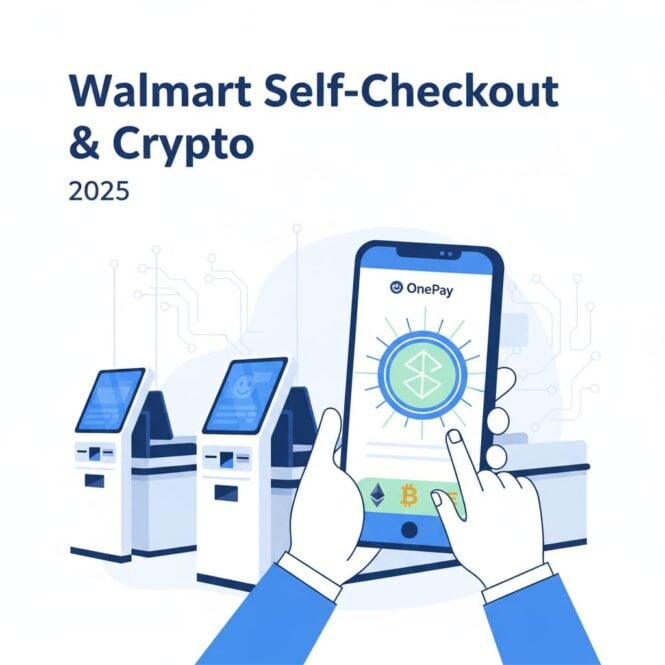
Not often talked about but Walmart is the funding for OnePay app which allows crypto buying and selling. And as of 2026 you can convert crypto into dollars, which can then be used at Walmart Checkout.
- When you “spend” crypto at Walmart, OnePay sells some of your crypto for USD and credits that to your OnePay cash balance; you then pay Walmart using that balance via card, virtual card, or app, just like any debit product.
- At the Walmart POS, the transaction clears on normal card/payment networks (Visa/Mastercard/ACH‑linked), so Walmart never touches or prices items in BTC/ETH directly; all FX/volatility and conversion logic stays inside OnePay.
- Walmart’s strategy in backing OnePay is to own more of the customer’s financial relationship, increase spend and loyalty at Walmart, and capture part of the fintech/crypto economics that would otherwise go to banks and neobanks.
-
A Walmart‑owned fintech can see granular transaction patterns, which improves targeting for promotions, BNPL/credit underwriting, and inventory decisions tied to specific customer cohorts.
-
Linking spend data, app behavior, and in‑store purchases positions Walmart to build tailored financial products (e.g., short‑term credit for frequent shoppers) that strengthen long‑term loyalty
- Demographics — The crypto features are framed as a way to attract new, younger, and more digitally savvy users and then convert that interest into more Walmart spend via easy crypto‑to‑cash conversion in OnePay.
-
Retail Adoption as a Catalyst for Bitcoin’s Utility
-
Walmart’s OnePay app already serves 150 million weekly U.S. shoppers, making it a distribution channel with unparalleled reach. By enabling users to convert crypto holdings into cash for in-store purchases, bill payments, or credit card repayments, OnePay is embedding Bitcoin and Ethereum into the fabric of daily life. This utility-driven approach addresses a critical weakness in crypto’s early adoption-its perceived lack of real-world use cases. Data from 2025 underscores the growing retail demand for crypto: 28% of American adults now own cryptocurrencies , with Bitcoin as the most sought-after asset. The ability to spend crypto at a retail giant like not only validates its utility but also reduces friction for new users
-
- https://www.kaupr.io/en/news/walmart-accelerates-crypto-adoption-through-onepays-launch-of-bitcoin-trading
Sources & Reporting Notes
Behind this review: Walmart’s own updates, talks with suppliers, early program details, along with coverage from outlets focused on store tech. A few projects are small tests – what works in one place might not show up elsewhere.
Related Walmart Self-Checkout Analysis
- Walmart Self Checkout Removing – Fact Check – Kiosk Industry
- Walmart Self Checkout NCR – The Numbers – Kiosk Industry
- Walmart Adaptive Retail and Self Checkout – Kiosk Industry
- Self Checkout Trends for Walmart and Target – Retail Systems
- Walmart Self Checkout Review – Kiosk Industry
- Walmart MoneyCenter Overview – Retail Systems
FAQS
-
Is Walmart removing self-checkout in 2025? — Walmart is not eliminating self-checkout entirely in 2025, but it is selectively reducing or reconfiguring traditional self-checkout lanes in certain high-theft or high-friction stores. Instead of a one-size-fits-all approach, Walmart is shifting toward location-specific checkout strategies that combine attended checkout, AI-assisted self-checkout, mobile Scan & Go, and checkout-free pilots depending on store format and shrink risk.
-
Does Walmart still use NCR for self-checkout? Yes, Walmart still uses NCR Voyix technology in parts of its checkout infrastructure, but its role has changed. Walmart has increasingly brought software, analytics, and decision-making in-house, reducing reliance on third-party platforms for innovation. NCR now functions more as a hardware, services, or fallback infrastructure provider, rather than the primary driver of Walmart’s self-checkout roadmap.
-
How does Scan & Go differ from kiosk checkout? Scan & Go allows customers to use their smartphones to scan items while shopping and pay directly in the Walmart app, bypassing fixed self-checkout kiosks entirely. Traditional self-checkout kiosks still require customers to scan items at a terminal at the end of the trip. Scan & Go reduces queues and hardware dependency but shifts complexity to mobile UX, account authentication, and loss-prevention controls.
-
Are checkout-free stores replacing kiosks? No. Checkout-free stores are pilots, not replacements. Walmart is testing checkout-free technology in limited environments to evaluate labor savings, accuracy, and customer acceptance. These pilots complement—not replace—self-checkout kiosks, mobile checkout, and staffed lanes. For most Walmart locations, hybrid checkout models will remain the dominant approach for the foreseeable future.
End of Article{“@context”:”https://schema.org”,”@type”:”BlogPosting”,”headline”:”Walmart Self-Checkout Strategy Overview (2025)”,”description”:”Overview of how Walmart is reshaping self-checkout using AI, mobile Scan & Go, checkout-free pilots, loss-prevention tech, member-only lanes, and Walmart-backed OnePay Crypto for Bitcoin and Ethereum conversion at checkout in 2025.”,”author”:{“@type”:”Person”,”name”:”Your Name”},”datePublished”:”2025-12-31″,”dateModified”:”2025-12-31″,”mainEntityOfPage”:{“@type”:”WebPage”,”@id”:”https://your-site.example.com/walmart-self-checkout-strategy-2025″},”publisher”:{“@type”:”Organization”,”name”:”Your Site Name”,”logo”:{“@type”:”ImageObject”,”url”:”https://your-site.example.com/logo.png”}},”about”:[{“@type”:”Organization”,”name”:”Walmart”,”sameAs”:[“https://www.wikidata.org/wiki/Q483551″,”https://www.walmart.com/”]},{“@type”:”Service”,”name”:”Walmart Self-Checkout”,”description”:”AI-assisted self-checkout, mobile Scan & Go, checkout-free pilots, member-only lanes, and loss-prevention driven kiosk rebalancing.”,”provider”:{“@type”:”Organization”,”name”:”Walmart”}},{“@type”:”Service”,”name”:”Mobile Scan & Go”,”description”:”Walmart app feature that lets customers scan items on their phones and pay in-app, bypassing fixed self-checkout kiosks.”},{“@type”:”Service”,”name”:”Checkout-free Store Pilots”,”description”:”Smart stores using computer vision, sensors, and AI so customers can walk out without traditional checkout lanes.”},{“@type”:”Service”,”name”:”AI-Powered Self-Checkout”,”description”:”Computer-vision-enabled self-checkout that helps identify items without barcodes, reduce shrink, and optimize lane management.”},{“@type”:”Service”,”name”:”Walmart+ Member Checkout”,”description”:”Member-only and priority lanes, including self-checkout experiences reserved for Walmart+ subscribers.”},{“@type”:”FinancialProduct”,”name”:”OnePay Crypto”,”description”:”Walmart-backed OnePay app feature that lets customers buy and sell Bitcoin and Ethereum and convert crypto to USD for Walmart checkout.”,”provider”:{“@type”:”Organization”,”name”:”OnePay”,”sameAs”:[“https://www.onepay.com/”,”https://www.onepay.com/walmart”]},”offers”:{“@type”:”Offer”,”category”:”Crypto-to-fiat conversion”,”description”:”Customers convert Bitcoin and Ethereum to USD inside OnePay and spend via card or app at Walmart checkout.”}}],”mentions”:[{“@type”:”Technology”,”name”:”Artificial Intelligence”,”description”:”Used for computer vision, queue management, and loss prevention in Walmart self-checkout.”},{“@type”:”Technology”,”name”:”Computer Vision”},{“@type”:”Technology”,”name”:”RFID”},{“@type”:”Technology”,”name”:”Blockchain”,”description”:”Used by Walmart for supply chain transparency pilots.”},{“@type”:”Service”,”name”:”Drone Delivery”}],”articleSection”:[“Self-checkout strategy”,”Checkout-free pilots”,”Mobile Scan & Go”,”AI and loss prevention”,”Walmart+ member lanes”,”OnePay Crypto and Bitcoin/Ethereum at checkout”,”Retail tech adoption and vendor impact”]}