Last Updated on April 1, 2026 by Craig Allen Keefner
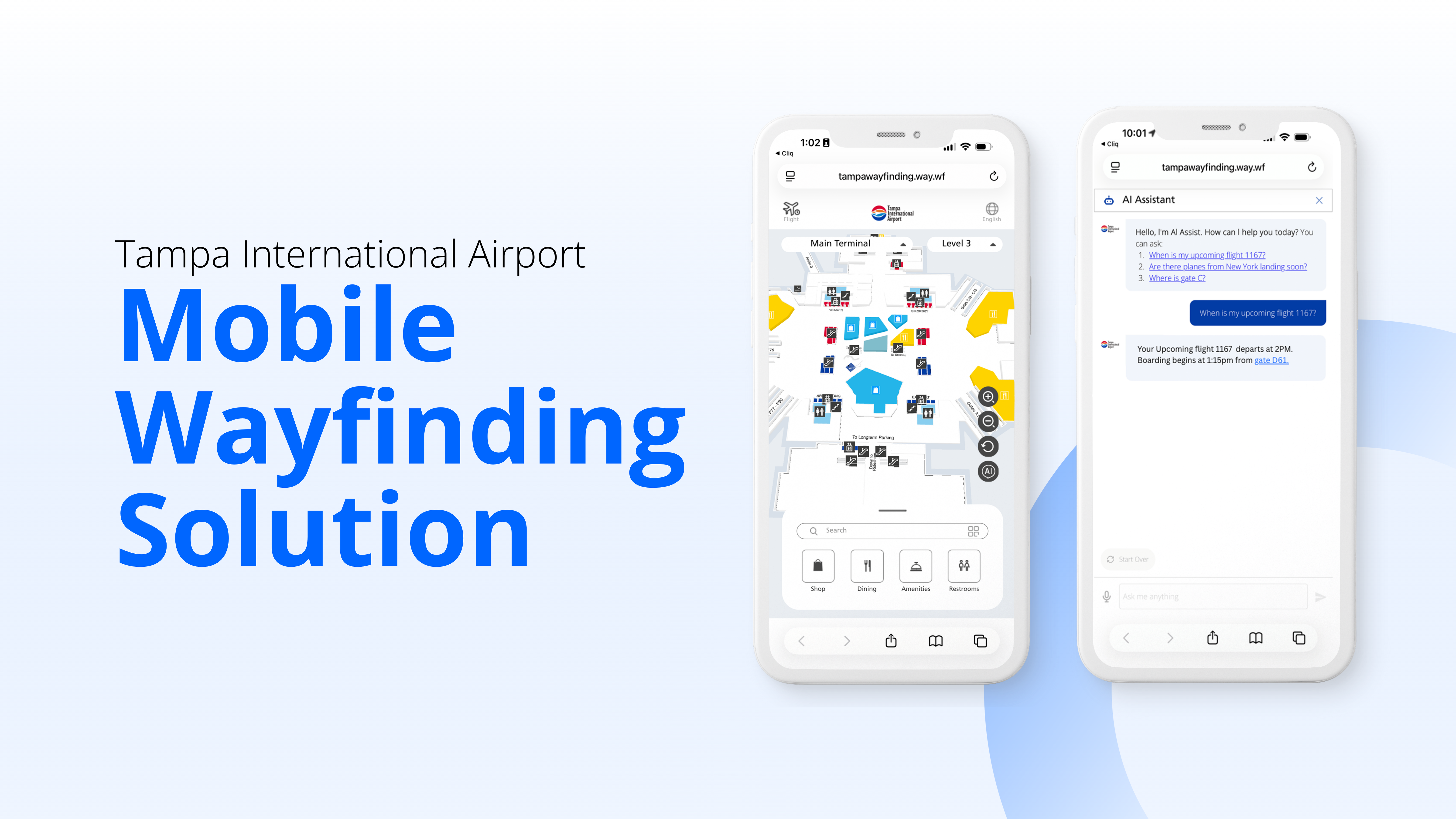
22Miles describes a phased rollout from an internal workplace app at SkyCenter One to a full passenger-facing digital experience at Tampa International Airport, with AI used mainly to make wayfinding and information access more conversational, real time, and multi-channel.
Brief summary
-
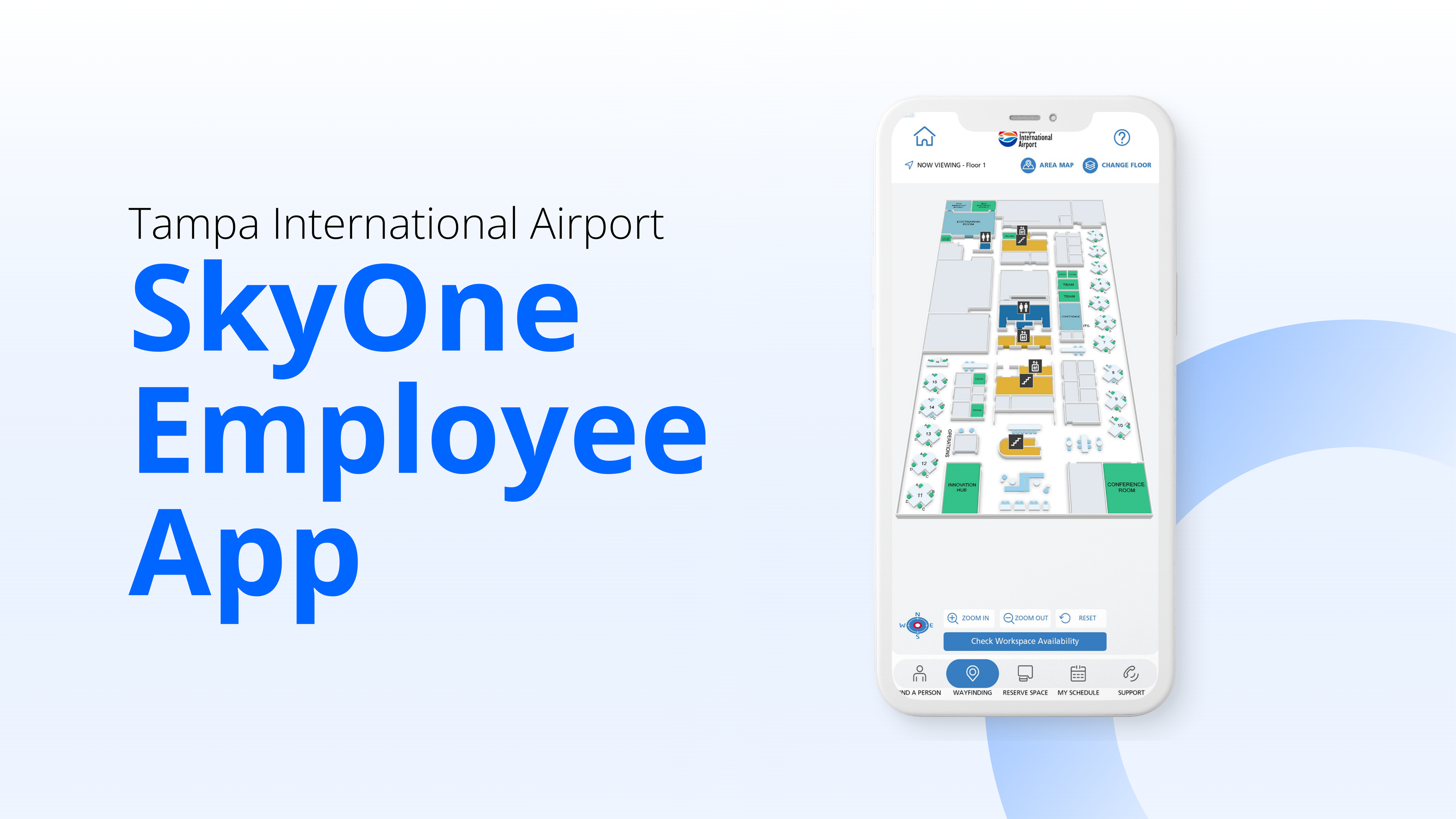
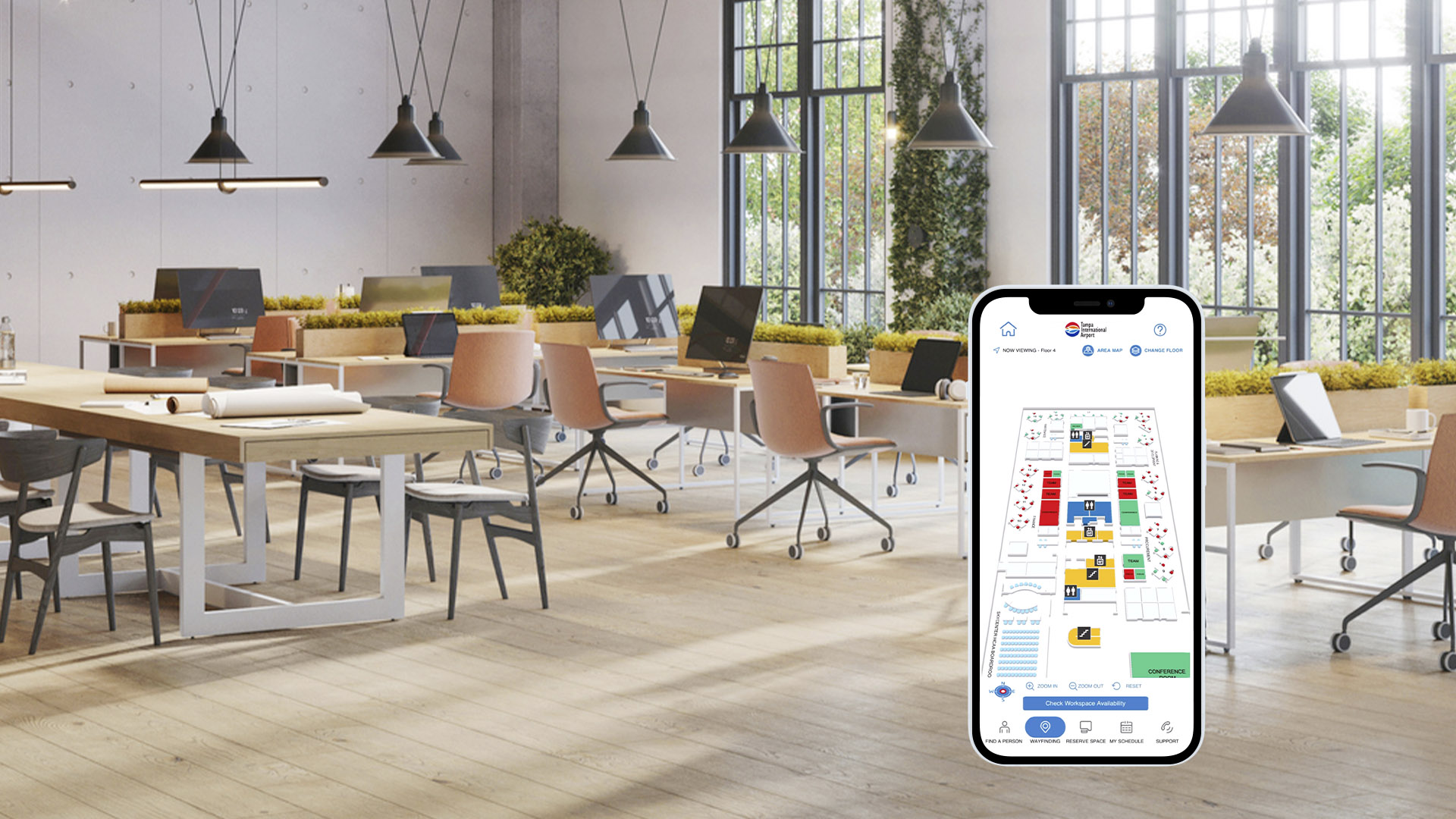
22Miles first deployed a workplace app at SkyCenter One (TPA’s HQ) focused on hybrid workforce needs: 3D wayfinding to rooms and desks, real-time desk booking integrated with Embrava and Microsoft 365, Azure SSO, sensor-backed occupancy/sanitation visibility, and ServiceNow ticketing from within the app.
-
This internal phase was about stabilizing backend integrations and data flows—authentication, calendar data, occupancy sensors, and ITSM—before touching passenger-facing systems.
-
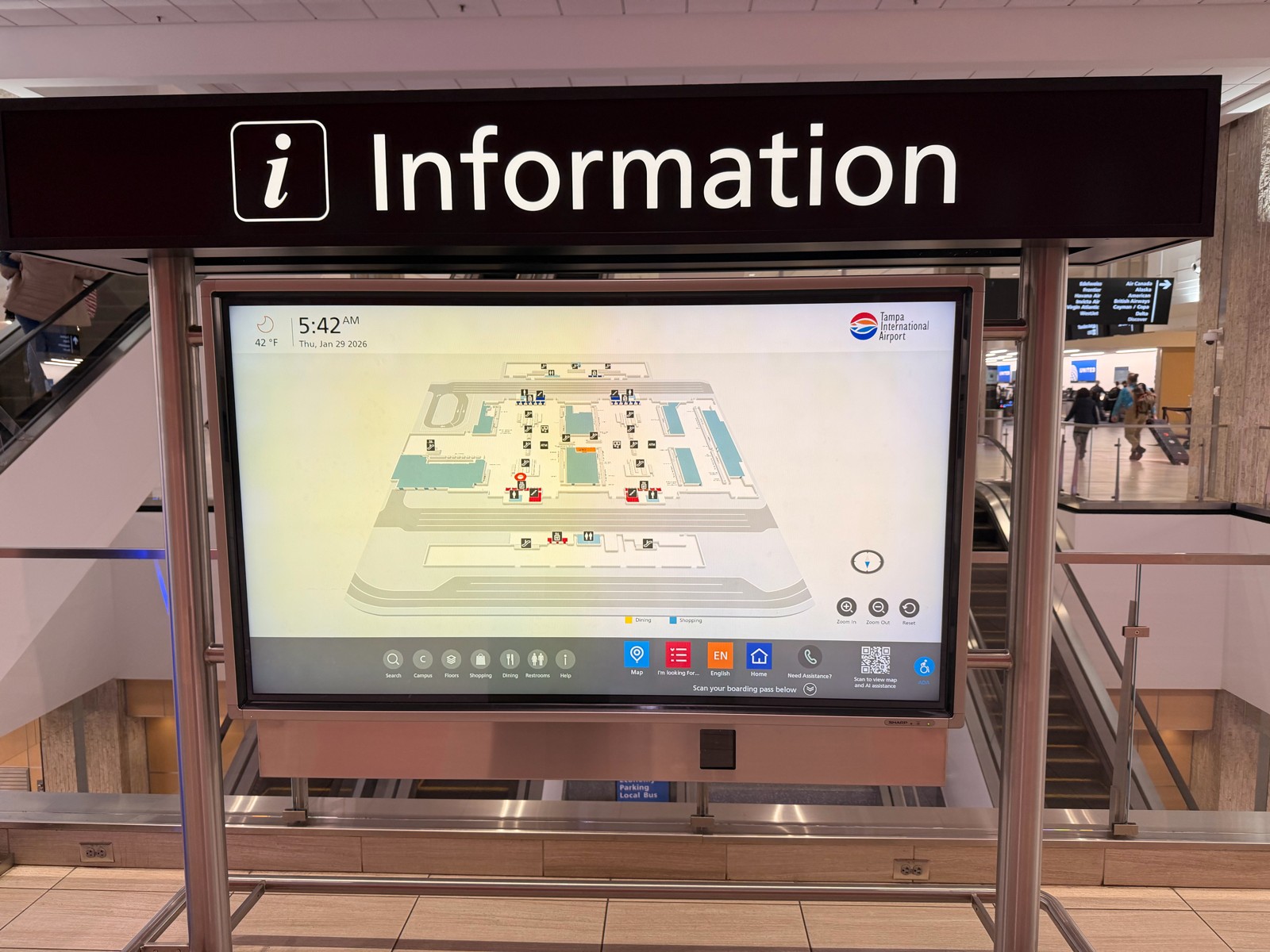
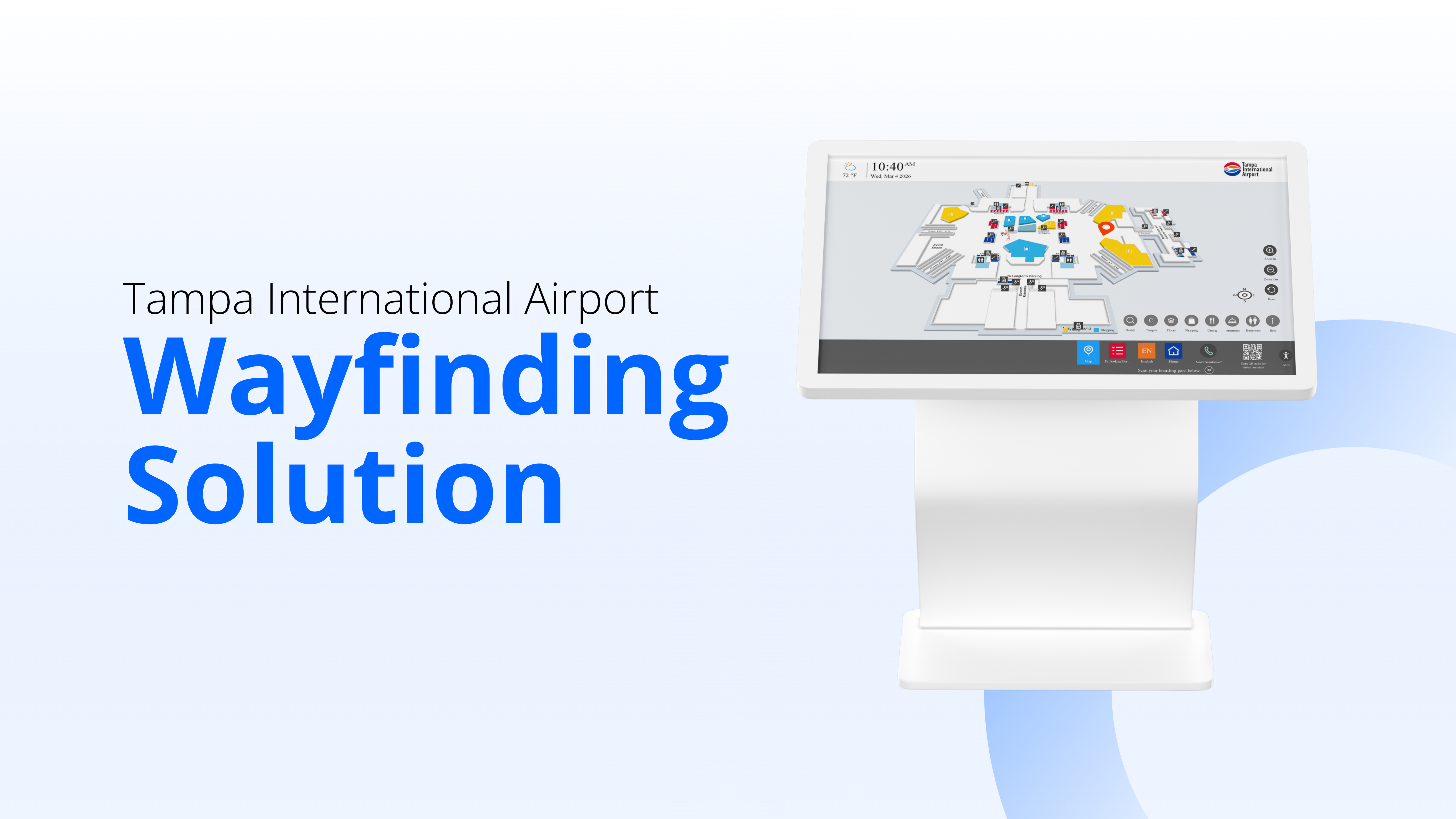
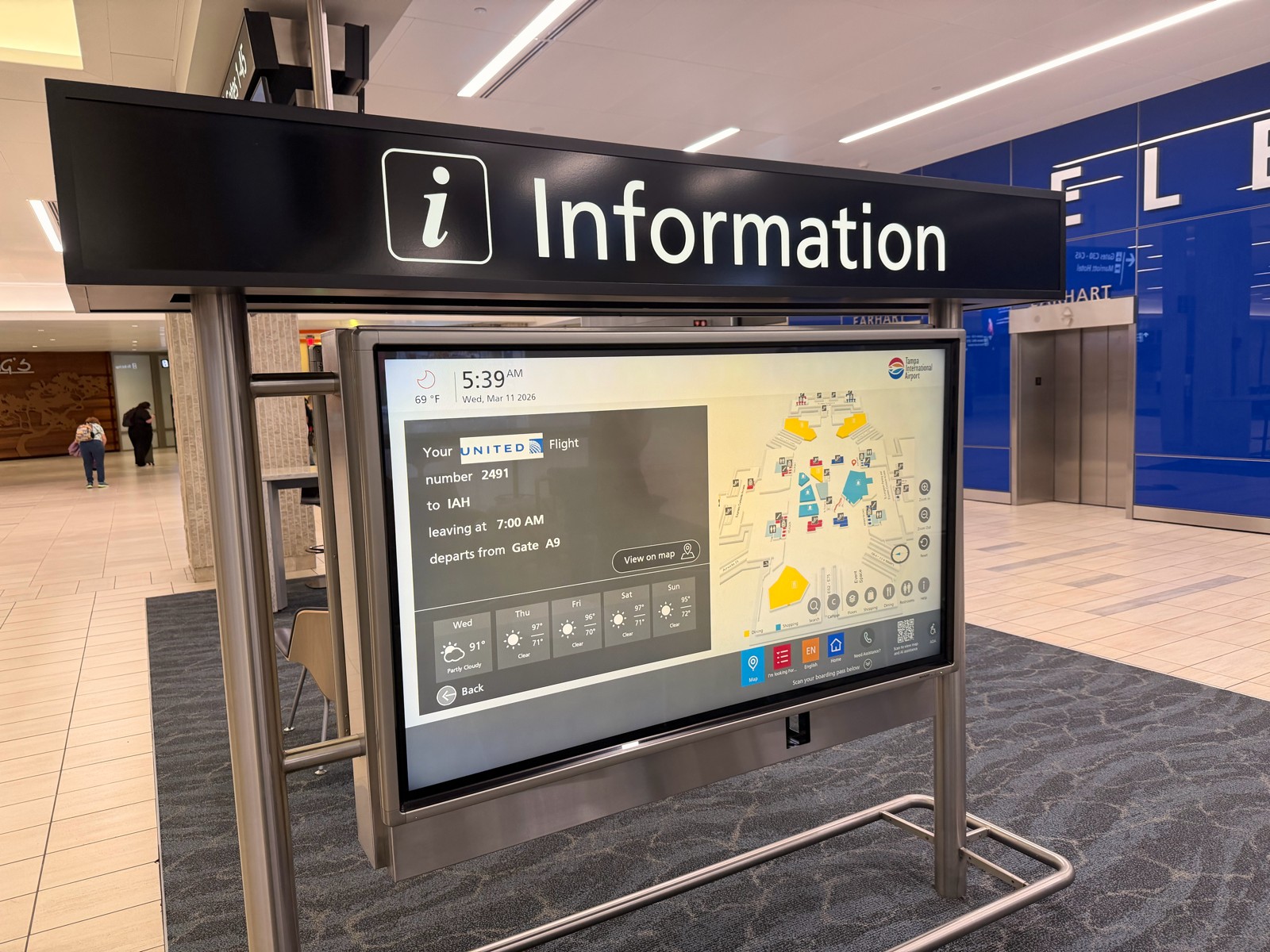
Once that backbone was proven, they extended the same CMS/wayfinding framework to the public terminal: 20 interactive touchscreens, RFID boarding-pass scanners, live FIDS and amenity feeds, multi-language UI, push-to-mobile wayfinding, and an AI-powered assistant for traveler questions.
Checklist
Here is a compact checklist to consider when assessing “AI + wayfinding/digital signage” projects.
Architecture & data backbone
-
Single content and map model serves staff, public, mobile, and AI channels.
-
Proven integrations first: SSO, calendars, FIDS, amenities, sensors, ITSM, occupancy.
-
Data is real time where it matters (flights, occupancy, bookings).
-
Same backend powers kiosks, web, mobile, and AI assistant; no AI-specific silo.
Rollout strategy
-
Phase 1 in controlled environment (e.g., staff or single building) to harden data and flows.
-
Phase 2 extends to public/high-traffic areas using same platform.
-
Clear migration path: no re-architecture required to go from internal to public.
AI experience design
-
AI sits on top of existing wayfinding and content, not separate from it.
-
Context-awareness: uses signals like boarding pass, location, language.
-
Focused intents tied to real tasks (find gate, food near gate, services on route).
-
Multi-modal by design: kiosk → mobile handoff → optional AI follow-up.
Operations and analytics
-
Unified analytics across kiosks, mobile, and AI queries.
-
Ability to see failed queries/intents and quickly add new content or intents.
-
Operational ownership clear: who tunes AI, map data, feeds, and integrations.