Category Archives: kiosk history

The History of Kiosks: An Overview

The history of kiosks stretches back several centuries and reflects humanity’s ongoing pursuit of more efficient, accessible, and self-directed ways to share information and conduct transactions. While modern kiosks are associated with digital touchscreens and automated services, the concept began long before the advent of electronics. Its evolution mirrors technological advances, changes in consumer behavior, and the rising demand for convenience.

The earliest known kiosks originated in the Ottoman Empire during the 13th and 14th centuries. These structures, known as kösks, were small, open pavilions often found in gardens, marketplaces, and city centers. They served as social and cultural spaces where people could gather, exchange information, or purchase goods. Over time, similar small booths or freestanding structures appeared in European cities, functioning as newsstands, ticket booths, and small retail shops. These early kiosks were attended by staff, but they introduced the idea of a compact, dedicated space for transactions and information.

The move toward automated kiosks began in the late 19th and early 20th centuries with the rise of vending machines. In 1883, the first commercial coin-operated vending machines in London dispensed post cards and small items. These devices demonstrated that customers were willing to interact with automated systems for simple purchases. While not “kiosks” in the modern sense, vending machines laid important groundwork by proving that unattended retail could be both practical and profitable.

A major shift occurred in the 1970s and 1980s as computing technology improved. In 1977, the first truly interactive computer kiosk was developed at the University of Illinois at Urbana-Champaign. Called the PLATO IV kiosk, it featured a touch-sensitive display and allowed users to look up information—an early demonstration of how digital kiosks could deliver self-service convenience. Around the same time, airports and transportation hubs began experimenting with automated ticketing systems, while banks adopted automated teller machines (ATMs). ATMs quickly became the most widespread form of kiosk technology, proving that large numbers of people were comfortable performing financial transactions without human intervention.

By the 1990s, touchscreens, graphical interfaces, and more compact hardware designs accelerated kiosk adoption. Retailers used them for price checking, product information, and customer surveys; hotels introduced self-check-in stations; and government agencies tested kiosks for tasks such as renewing licenses or paying fees. The rise of the internet also expanded what kiosks could offer, giving users direct access to online data and services through public terminals.

The 2000s saw explosive growth in kiosk applications, fueled by better connectivity, more intuitive interfaces, and declining hardware costs. Airports deployed self-check-in kiosks on a large scale, transforming the passenger experience. Fast-food chains and quick-service restaurants began installing ordering kiosks, reducing wait times and improving order accuracy. Retailers adopted self-checkout stations, which quickly became one of the most recognizable forms of kiosk technology. Specialty kiosks also emerged, including photo printing stations, DVD rental machines, bill-payment booths, and wayfinding systems in malls and hospitals.

In the 2010s and beyond, kiosks became more sophisticated, incorporating features such as biometric authentication, RFID and NFC readers, AI-driven interfaces, and cloud-based management systems. The COVID-19 pandemic further accelerated kiosk adoption as businesses sought to reduce physical contact through touchless technologies, mobile-connected kiosks, and voice-activated systems. Today, kiosks are integral to industries ranging from retail and hospitality to healthcare, transportation, and municipal services.

Across centuries of development, the core purpose of kiosks has remained constant: to provide accessible, efficient, self-directed service. From wooden Ottoman pavilions to AI-powered digital systems, kiosks illustrate how society adapts physical spaces and emerging technologies to meet changing needs. Their history is one of continuous innovation, driven by the desire to empower users with faster, more flexible, and more convenient ways to interact with information and services.

Kiosk Software – History and Evolution

Kiosk Software Evolution Without those who took the first steps in developing software for kiosks, the industry wouldn’t be enjoying its current dominance in the marketplace. By Richard Slawsky contributor There’s a saying in the business world along the lines of “The pioneers get the arrows.” Nowhere is that more applicable than in the world of kiosk software.… Read More »

Kiosk History – Ron Bowers Retires After 35 Years

Ron Bowers Retires From Frank Mayer and Associates, Inc. After 35 Years Senior Vice President of Retail Technology Business Development Ron Bowers will retire from Frank Mayer and Associates, Inc. on July 31, 2018. GRAFTON, WI – After 35 years as a member of Frank Mayer and Associates, Inc.’s staff, Senior Vice President of Retail Technology Business Development Ron Bowers… Read More »

Frank Mayer and Associates, Inc.

Frank Mayer and Associates, Inc. was a founding charter sponsor of the Kiosk Industry Group. A short profile follows. Frank Mayer and Associates, Inc. Frank Mayer connects with consumers at retail. Point of Purchase and merchandising displays, and also kiosks.  An authentic kiosk experience includes online sales, product demonstrations, consumer behavior tracking, mobile applications, employment, and much more.… Read More »

Kiosk Archives

Kiosk Archives kiosks.org was first official kiosk industry site devoted to kiosk developers, manufacturers, deployers and yes, even vendors… Here is where we have links to Archive content. Here are links to earlier content prior to this site: Primenet : this was the original iteration of site which was driven by the comp.infosystems.kiosks Usenet newsgroup that Craig Keefner… Read More »

3M Exits Touchscreen Monitor Market

Touch Screen Monitor Suppliers July 30, 2020 Another entry for the kiosk history file as longtime touchscreen manufacturer 3M is exiting the business. We read about it first on Sixteen:Nine who heard it from one of the manufacturers. We confirmed with longtime contacts at 3M since then.  We are sure the other self-service technology division are unaffected and… Read More »

Deleted Government Information Whitehouse

Deleted Government Information Our “404” errors have risen recently due to outbound links to government-referenced documents.  Many of those docs relate directly to “kiosk history” and general Accessibility. We are trying to “clean up” the errors but for purposes of historical record  here are the archives of those reports. There are always changes and removals on the web.… Read More »

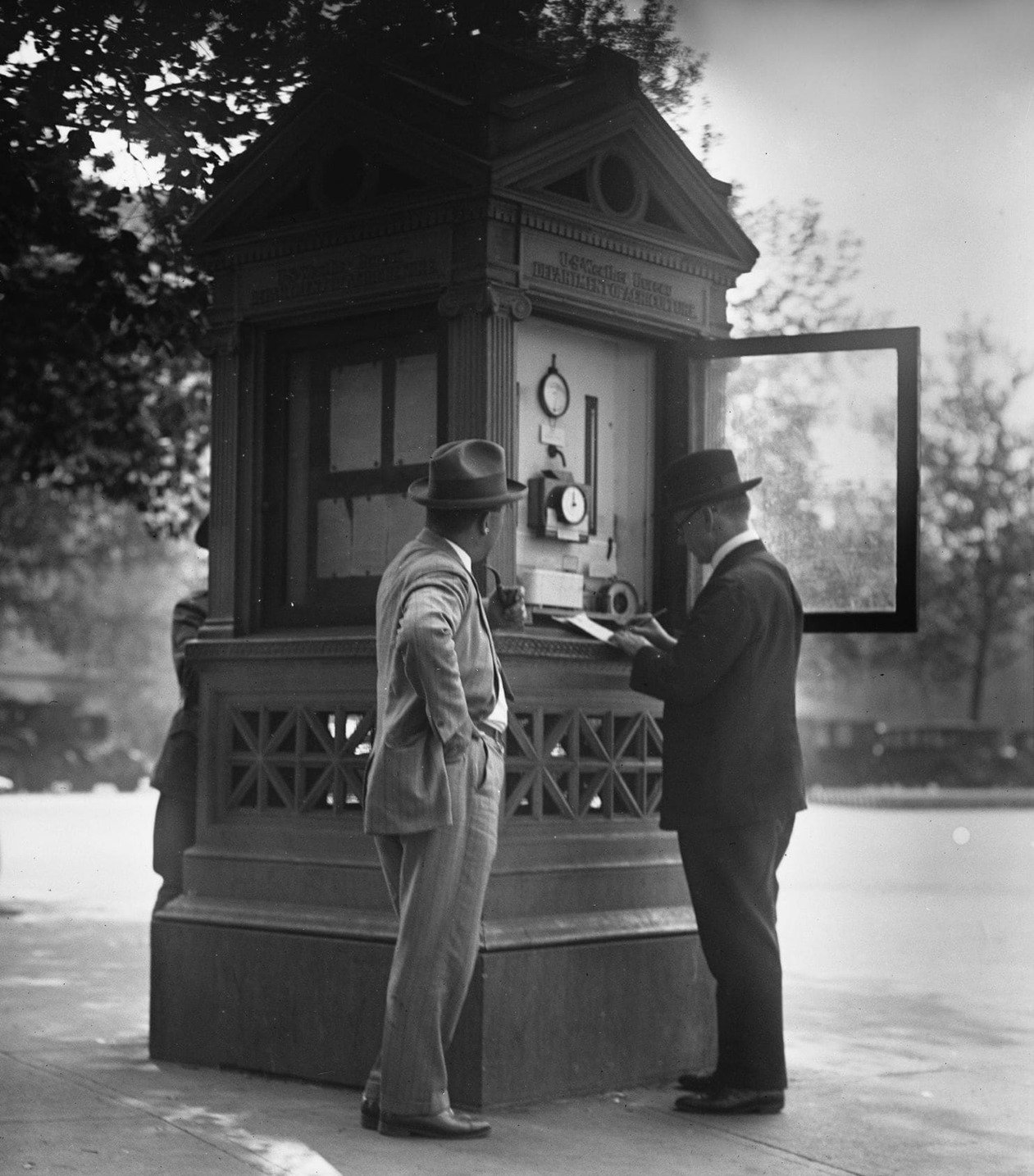
Kiosk History – the doomed weather kiosk in downtown Washington and Fake News  

The reliability of weather reports from a kiosk on Pennsylvania Avenue was a hot topic a century ago.

Source: www.washingtonpost.com

Washington’s weather kiosk was located on Pennsylvania Avenue, near E Street NW. It happened to be directly adjacent to The Washington Post building at the time.


Initially, the kiosk was quite popular with the public, and its reports were frequently cited by the media, particularly The Post. But after a couple of decades passed, Washingtonians began to complain that the kiosk was not reporting accurate temperature readings. The kiosk’s temperature was often 10 degrees warmer than the actual temperature, particularly on sunny afternoons.


The kiosk became a Great Depression-era “fake news” controversy in Washington.