Last Updated on March 16, 2026 by Staff Writer
What Was Notable at HIMSS 2026
No one questions the importance of healthcare (here is our Hub for healthcare fyi). Sooner or later, it becomes everyone’s primary concern.
The automation explosion that is changing human activities by the day is transforming healthcare in more ways than many people recognize. Those who attended last week’s HIMSS 2026 Las Vegas show sponsored by the Healthcare Information and Management Systems Society got an expansive view of how automation is both changing and challenging this critically important industry.
One show exhibitor, Cybernet Manufacturing, offered the following assessment of automation’s current and future role in healthcare. Automation will:
- Enhance patient care and safety.
- Streamline administrative tasks such as patient scheduling and paperwork handling.
- Optimize resource usage such as patient bed usage or provider assignments.
- Improve sharing of data such as lab results, heart rates and oxygen levels between providers for decision making and diagnosis.
KioskIndustry.org walked the show at the Venetian Expo with an eye on improved patient care and the challenges that such innovations pose to caregivers and government regulators.
The digital front door opens
The Industry Group, a network of self-service resources, and the Kiosk Manufacturer Association (KMA) presented a fully integrated, accessibility-focused, self-service ecosystem designed for the modern hospital campus. The ecosystem consists of:
- Touchless hygienic screens from HoverTap, enabling safer interactions across the hospital. This technology works seamlessly with gloves, liquids and plastic drapes to maintain a sterile environment.
- Medical-grade durability for clinical equipment meeting the 60601-1 certification (standard for the safety and performance of medical electrical equipment: the Insight Touch 21-inch Medical AIO.
- High-speed patient identity enabled by secure wristband and badge printing powered by BOCA Systems.
- ADA compliant accessibility for blind and disabled individuals provided by Storm Interface assistive hardware integrated with JAWS Kiosk software.
“We are entering a critical window for healthcare accessibility,” observed Craig Keefner, editor in chief at The Industry Group. “With the 2026 government regulatory deadlines approaching, our goal is to provide a clear, technical path forward for providers to remain compliant while improving the patient experience.”
What Was The Touchless Demo?
Interesting how to train and educate an AI in gesture. Imagine building library of thousands of patterns for AI to decode. How to build a data foundation. AI Gesture Recognition in healthcare. For kiosk deployers and healthcare IT leaders, the real question is no longer whether touchless interaction will arrive, but what to do now it has.
What are the challenges with AI and Healthcare?
AI’s impact on the pace of change was a major focus of seminars and exhibits at the show. AI enabled automation has moved from pilots to scalable implementations with proven returns on investment. Industry observers noted, however, that the accelerated pace of advancing technology challenges the ability to separate “AI hype” from verifiable progress.
To this end, HIMSS released the following “Executive Insights” statement identifying six focus areas that help determine whether AI actually improves patient-centered care at scale: data, integration, trust, governance/liability, economics and equity.
- Data quality/privacy/interoperability
- Fragmented electronic health records and siloed systems make it hard to assemble a longitudinal, patient-centered record for AI to learn from or act on.
- Incomplete, biased or low-quality data undermine model performance, especially for underrepresented groups, while privacy and consent requirements complicate data sharing. These requirements include HIPAA (Health Insurance Portability and Accountability Act), GDPR 42 CFR Part 2 (a federal regulation protecting the confidentiality of substance use disorder patient records requiring patient consent for disclosures) and state laws.
2) Workflow integration/change management
- Many AI tools sit outside normal clinical workflows or require “one more screen” which clinicians do not currently use at scale.
- Scaling demands deep redesign of processes (scheduling, triage, care navigation and documentation) rather than layering AI on top of broken workflows, plus heavy investment in training and change management.
3) Trust/transparency/patient acceptance
- Clinicians worry about reliability, explainability and “black box” recommendations, especially when AI touches diagnosis, triage or treatment rather than back-office tasks.
- Some patients distrust AI-driven decisions, chatbots or automated outreach, particularly if communication feels impersonal or errors are not handled with human oversight.
4) Governance/safety/liability at scale
- Organizations lack mature enterprise governance for model selection, validation, drift monitoring, incident reporting and retirement across hundreds of use cases.
- Unclear liability (who is responsible when an AI recommendation is wrong) and evolving regulation create risk aversion and slow movement from pilots to production.
5) Economics/incentives/infrastructure
- Most health systems use fee-for-service models that reward volume, not AI-enabled prevention, care coordination or navigation, weakening the business case for patient-centered AI at scale.
- Underinvestment in data platforms, machine learning operations and ongoing model maintenance means many organizations run pilots but never build the “digital core” to scale.
6) Bias/generalization/health equity
- Models often fail to generalize across sites, populations, and social contexts; performance can drop sharply for minorities, rural patients or those with sparse history.
- Without deliberate measurement and mitigation, AI can worsen disparities — for example, by preferentially helping digitally literate or commercially insured patients navigate care.
Hype versus platform thinking
During one keynote presentation, Dr. John Halamka, president of the Mayo Clinic Platform — a partnership of providers, biopharma companies, medical device companies, health tech startups and payers to drive innovation around diagnosis, treatment and operational improvement — expanded on the importance of moving away from “AI hype” and focusing on “platform thinking,” using data and digital tools to build continuous, non-episodice care systems.
The Mayo Clinic Platform leverages curated datasets for predictive modeling to ensure new infrastructure is prepared for future technology, including lidar and drone technology. The project also focuses on partnering with industry innovators to validate clinical AI solutions to ensure they meet regulatory and technology standards.
This project clearly aligns with kiosk innovations addressing personal health information (PHI) vulnerabilities.
The Industry Group has gone as far as to note that the push to modernize patient check-in has led to a dangerous oversight in hospital IT. In the rush to implement touchless interfaces, voice recognition and biometric authentication, many facilities are relying on cloud-based AI.
From a compliance standpoint, cloud AI can be a massive vulnerability, The Industry Group notes. More precisely — cloud AI introduces expanded exposure surfaces for PHI in patient-facing kiosk environments.
For example, if a patient speaks their symptoms into a kiosk or uses facial recognition to check in and that data is transmitted to an external server for processing, they have introduced latency, bandwidth strain and a complex web of business associate agreements into the workflow.
Hence, for patient-facing kiosks handling PHI, The Industry Group claims Edge AI should be the default architectural standard as Edge AI moves from concept to deployment. Edge AI refers to running AI algorithms and models directly on hardware devices. Edge AI utilizes hardware with an integrated neural processing unit (NPU), enabling a kiosk to process the data locally.
When a patient interacts with a camera for touchless vitals like rPPG technology to measure heart rate or speaks to a digital assistant, for example, the NPU interprets the data instantly. The critical compliance factor is that the raw video or audio never leaves the device’s random access memory (RAM). The resulting text or data point passes securely to the electronic health record, and the raw biometric capture is instantly purged.
HIMSS 2026 underscores automation’s promise – if paired with governance and equity – to reshape patient care.
Exhibitor hgighlights
Following are highlights from the trade show floor in alphabetical order.
Acer
Acer, a Chromebook innovation partner, has engineered its portfolio of ChromeOS Enterprise devices for healthcare, providing technical and administrative support for healthcare professionals.
Physicians, needing seamless integration when moving between patient rooms, can now use ChromeOS for on-the-go mobile care and rapid login between shifts.
Lab technicians, needing to rapidly run tests and access results, can use ChromeOS for virtualized legacy application access and cloud data storage compatibility.
Office administrators, having to manage scheduling, intake and discharge, can use ChromeOS for scheduling interface and secure patient data sharing.
Patients, wanting a higher quality experience while filling out paperwork, checking in with check-in kiosks or waiting for care, can deploy ChromeOS for waiting room entertainment.
Advantech
Advantech, a provider of embedded and Internet of Things solutions, demonstrated how its AI-ready medical platforms enable real-time clinical intelligence supporting mobile, bedside and point-of-care workflows.
The solutions provide healthcare organizations with platforms designed for local data processing to reduce latency, support compliance and deliver consistent performance in clinical environments.
Utilizing Intel processors and Nvidia GPUs, Advantech AI workloads at the medical edge now allow healthcare providers to assess performance, system responsiveness and deployment readiness at the point of care.
The solutions include all-in-one medical PCs for diverse clinical environments, medical box PCs for space-constrained hospital settings, monitors for surgical, diagnostic and clinical use, and medical carts supporting mobile point-of-care workflows.
The company’s PAX-332 3D surgical display monitor delivers high-brightness 3D imaging for endoscopy, laparoscopy and robotic surgery with serial digital interface. Features include:
- Flicker-free 3D imaging delivers stable, eye-friendly 3D visualization for long surgical procedures.
- 4K UHD resolution offers detailed imaging to support surgical operations.
- High brightness and contrast ensures visualization and enhanced depth perception in the operating room.
- Multi-format and input support works with multiple 3D formats and supports HDMI 2.0, DisplayPort 1.2, DVI, and serial digital interface.
- The surgical-grade design features reliable simulink mode and CE-certified quality (a European Union certification) for clinical use.
Altus
Altus, a manufacturer of mobile workstations and smart fleet management tools for healthcare, introduced ClioConnect, an IoT platform to improve workflow and increase uptime for clinical and IT teams. ClioConnect provides insights into cart usage, location and service needs and integrates with platforms like ServiceNow.
The solution offers real-time cart visibility, remote support, ticketing, tracking and IT integration, maximizing uptime and reducing disruptions.
Analytics and optimized cart inventory insights allow teams to manage resources more efficiently, reduce waste and make informed decisions that support both clinical care and financial sustainability.
ClioConnect integrates with existing IT systems to provide an intuitive dashboard experience, proactive battery monitoring and certified data protections.
Athenehealth
Athenahealth described how its AI-native athenaOne platform unlocks data access across the healthcare ecosystem. Additionally, the company demonstrated how its intelligent interoperability efforts are transforming the industry beyond compliance and basic data exchange to provide practices with a seamless experience that make clinical insights visible and actionable at the point of care.
The athenaOne ecosystem connects health care solutions to customers through enhanced search and specialty specific discovery, improving visibility of health care solutions and accelerating adoption. The engaged customer base actively adopts partner innovations to extend the value of athenaOne and meet evolving needs. According to the company, 71% of athenaOne customers use at least one partner solution from the marketplace.
The company also introduced athenaConnect, an intelligent interoperability layer that provides a single access point for external health systems, community hospitals, pharmacies, diagnostic labs and partners to connect and coordinate care with 170,000 athenahealth providers serving 20% of the U.S. population.
This athenaConnect intelligent interoperability layer brings together integration solutions that bridge athenaOne with external partners, enabling practices to coordinate care across local healthcare markets. It allows clinical information to reach providers at the right time in the right workflows.
Avasure
Avasure, a provider of acute care, virtual care and monitoring solutions, presented its virtual care platform that healthcare providers use to engage with patients, optimize staffing and blend remote and in-person care at scale.
The platform deploys AI-powered virtual sitting and virtual nursing solutions, meets enterprise IT standards and drives measurable outcomes with support from care experts.
The virtual care platform is designed to bring the “smart room of the future” to life, serving as the infrastructure layer that connects electronic records, devices and clinical systems across the hospital environment.
Avasure was recognized in the 2022 KLAS Emerging Solutions Top 20 Report for having the greatest impact on reducing the cost of care. The top 20 emerging solutions were selected by healthcare leaders across the county with the help of KLAS to find the solutions that had the greatest potential to disrupt the healthcare market. Solutions were rated by how well they could impact the Quadruple Aim of Healthcare.
Axiomtek Co. Ltd.
Axiomtek Co. Ltd., a provider of embedded computing technology serving a variety of industries, showcased medical technologies designed to serve healthcare environments.
The MPC241, a 24-inch AI-enhanced medical panel PC designed for seamless integration into hospitals and clinical applications, combines AI acceleration with a fanless, IP65-rated front design and a full HD multi-touch display.
The MPC241 is designed to ensure durability, reliability and an intuitive user experience in demanding medical environments.
The company also offers self-check-in kiosks that can be used in health care environments:
- The SSK722 dual 21.5-inch display with 12th Gen Intel Core i7/i5/i3 or Celeron processor.
- The SSK723 modular kiosk with 21.5-inch display and flexible payment options.
- The SSK724 15.6- and 21.5-inch modular kiosk with flexible peripheral integration and cash/cashless transaction support.
Baxter International Inc.
Baxter International Inc., a medical technology provider, highlighted its Welch Allyn Connex 360 Vital Signs Monitor, a patient monitoring device, a connectivity and security platform with customizable configurations based on a hospital’s clinical routines.
With automated clinical documentation, Connex 360 is designed to simplify the clinician experience and allow more time to focus on patients.
Connex 360 captures vital signs for adult, pediatric and neonate patients, including blood pressure, temperature, pulse rate, respiration rate and blood oxygen levels. Care teams can obtain a set of patient vitals in less than one minute and automatically send to the electronic medical record.
The data flow is powered by Baxter’s cloud-based DeviceBridge platform, which works behind the scenes to help enable accurate data transfer from Connex 360 to hospital IT systems, including the EMR. DeviceBridge also helps support secure device access and clinical data interoperability across Baxter’s ecosystem of connected devices.
Boca Systems
Boca Systems, a manufacturer of direct thermal ticket printers, demonstrated its RFID wristband and badge printers for healthcare at the KMA (Kiosk Manufacturer Association) exhibit. The company’s Lemur printers eliminate the need for ink, toner and ribbons.
The company’s badge printers are available in 300dpi and 600dpi resolution and print badges in one to two seconds.
The new Lemu-CS model can hold a 5.25-inch diameter roll of wristbands and does not require proprietary wristband cartridges.
Boca Systems printers support barcodes and graphics at maximum print speeds exceeding 10 inches per second. Premium options such as Ethernet, WiFi, Bluetooth and RFID encoding are available on all models.
Boca Systems’ product line includes kiosk printers, RFID printers, receipt printers, under-the-counter printers and specialty printers.
CDW Healthcare
CDW Healthcare, a provider of healthcare technology solutions, displayed a range of products and services, including its “intelligent value model for AI” designed to produce easier adoption, effectiveness and innovation.
The AI use cases include:
- Generative AI for producing content or insights, consisting of text, code and images.
- Predictive AI for forecasting future outcomes based on past data.
- Agentic AI which acts autonomously on tasks, such as decision making, planning and tools.
The value model includes AI in several departments of a healthcare organization: natural language data queries, workflow embedded copilots, NPL driven clinical decision support, conversational AI for patients, ambient listening, clinical documentation and machine vision for imaging interpretation.
CertifyOS
CertifyOS, which offers provider data management solutions, explained its Provider Hub, a data management platform designed to eliminate fragmentation and lower costs for health plans and digital health companies.
Provider Hub ingests, cleanses, normalizes and validates data from a wide range of sources — including credentialing, directories, claims, rosters and internal systems — to power critical workflows that sit on top of the data and deliver operational insights.
Provider Hub reduces manual effort and leads to fewer silos, fewer vendors, fewer delays and lower costs.
Capabilities include:
- Ingest and unify provider data from structured and unstructured sources into a single, complete profile.
- Clean, standardize and validate data using thousands of rules and 1,600-plus primary sources.
- Resolve duplicates and link records across systems using AI-driven logic to maintain data integrity.
- Set and apply custom rules to prioritize the most authoritative or recent data when conflicts arise.
- Model complex relationships between providers, groups, locations and plans with full audit trails.
- Integrate directly with downstream systems including credentialing, contracting, directories and claims.
- Activate insights across departments to identify gaps, flag issues and support decision-making.
- Run credentialing, monitoring and outreach workflows in real time to reduce turnaround and touchpoints.
- Continuously monitor provider data and deliver alerts on expirations, sanctions or outdated records.
Clear
Clear, a provider of identity verification technology, introduced its Clear1, a new name for its secure identity platform, to power a single, interoperable identity.
Clear1 matches a user’s face to their government issued ID, creating a unique, reusable identity so users can reverify in seconds with a selfie at Clear kiosks.
Clear1 embeds directly into core platforms such as electronic health records, patient portals and clinician tools to streamline account creation, access and recovery. By unifying digital channels with check-in touchpoints such as kiosks and handheld tablets, prior Clear1 integrations have increased digital check-in adoption, reduced duplicate records and enabled health systems to redirect staff hours back to patient care.
Clear1 is full service certified by the Kantara Initiative for NIST Identity Assurance Level 2 (IAL2) and Authenticator Assurance Level 2 (AAL2), according to a company announcement.
Cybernet Manufacturing
Cybernet Manufacturing, a computer manufacturer, showcased its certified medical grade devices, including battery powered computers, standard powered computers, power-over-ethernet computers, tablets, monitors, box PCs and AI computers.
The CyberMed Ai Series combines AI processing with certified medical safety. Features include:
- AI-Ready: Supports AI workloads with NVIDIA RTX ADA GPU and 14th-gen Intel CPU.
- Medically certified: Certified to IEC 60601-1 and 60601-1-2 standards of electrical safety.
- Efficient cooling: Fans and airflow reduce noise and maintain performance.
- Touchscreen: Optional 7-inch display for real-time video review or custom control interface.
The CyberMed GG series of battery powered medical computers available in 22- and 24-inch sizes feature 11th Generation Intel Core i3/i5 and i7 processors, a 10% smaller footprint with ultra-thin bezels, and three hot swappable batteries with carrying handles.
The CyberMed G series standard powered medical computers available in 15-, 22- and 24-inch sizes feature 14th generation Intel Ultra 5 and 7 processors, a 10% smaller footprint with ultra-thin bezels, and optional isolated USB ports.
Datalogic
Datalogic, a manufacturer of mobile computers and handheld scanners, highlighted several devices.
- The Memor 17HC mobile computer and smart docking handheld computer for point-of-care documentation features a docking station that allows clinicians to dock the mobile computer and instantly access a full desktop environment, streamlining bedside workflows and reducing hardware.
- The Gryphon 4600 HC Scanner Series features AI-driven neural decoding for reading of 1D/2D barcodes, including small, curved or poorly printed barcodes.
- The PowerScan 9600 DPX and RFID solutions feature RFID enabled workflows for surgical instrument tracking and inventory management to enhance safety and efficiency in sterile processing environments.
- The CodiSan wearable scanning solutions enable hands-free mobility to support efficient bedside care.
- The Datalogic Connect offers a software platform for IT teams to gain full device visibility, perform secure remote updates and ensure maximum uptime of healthcare devices.
- Infection control devices are designed with antimicrobial, disinfectant-ready materials to withstand harsh cleaning agents.
Dell Technologies
Dell Technologies, a provider of PCs, servers, storage, networking, security, and cloud and edge infrastructure, demonstrated AI driven care and clinical workflows highlighting AI powered medical imaging, performance computing for genomics aimed at improving diagnostic speed and accuracy, and digital pathology.
The company demonstrated:
- Digital assistants providing personalized patient treatment and computing for genomics research.
- Cyber vault approaches to protect patient data and ensure operational continuity.
- Integrated clinical workstations for enhanced staff productivity.
- Eonis Vision, a glasses-free 3D medical imaging solution.
- AI-driven medical imaging and digital pathology to improve diagnostic speed and accuracy.
Digi International
Digi International, a provider of Internet of Things connectivity solutions, desribed its Digi Connect EZ WS to enable seamless serial-over-ethernet connectivity, facilitating the integration of patient device data into hospital electronic medical records and other downstream systems.
Designed for use in patient care environments, it complies with IEC 60601 3rd Edition standards and features four RS-232 serial ports. Additionally, the Digi Connect EZ WS provides Ethernet connectivity for serial devices, ensuring data transmission to central management systems.
Digi’s RealPort technology enables communication between a host computer and networked serial devices by creating a local COM or TTY port. This allows for data transmission while providing system administrators with control over incoming, outgoing and Telnet sessions on each port.
Digi Connect EZ WS and built-in Digi TrustFence protect security and operations teams against evolving threats with encrypted connections, centralized authentication, VPN support and scalable security updates.
The company also launched its Model Context Protocol server for its Digi Remote Manager, a cloud-based device management platform, and Genesis, a remote monitoring platform, enabling customers to integrate large language model products such as Claude and other enterprise AI assistants directly with these two platforms. This protocol is designed to allow organizations to better monitor, manage and optimize connected infrastructure and wireless WAN deployments at scale.
By bridging enterprise AI tools with Digi’s device management platforms, customers can accelerate operational efficiency, reduce complexity and empower teams with context aware insights across their connectivity deployments.
Hatchmed
Hatchmed, medical device maker specializing in patient safety and communication hardware and software, displayed bedside connectivity and smart room technology to streamline clinical workflows, improve operational efficiencies and enhance the patient experience without requiring new infrastructure or system overhauls.
The company’s HallMonitor digital signage system integrates iPads into sleek, customizable enclosures, combining real-time synchronization of patient data with contextual lighting to display status information such as isolation measures or the presence of medical staff.
HallMonitor features tactile room signage and complies with relevant clinical standards.
The company’s Black Jack bed alarm reduces patient falls and connects any bed to any nurse call system with a UL listed magnetic connection. The device comes with wall and bedside mounting brackets.
The company’s PillowCase device features a built-in tether that keeps the iPad powered, secured, and safe from fluid or chemical damage around the patient.
The company’s ComCierge is a patient- facing software that digitizes hospital pillow speakers. The software brings the nurse call system to hospital or patient owned tablets and supports more than 15 languages, automatically selected via the electronic health record upon admission.
HealthAsyst
HealthAsyst, a provider of engineering and consulting services, offered information about its AI enabled product engineering for healthcare.
The company uses an AI enabled software development lifecycle, combining healthcare domain expertise with engineering practices. The AI augmented approach accelerates delivery, improves quality and reduces risk without disrupting care delivery.
Areas of expertise include electronic health records, revenue cycle management, clearing house, patient engagement, business intelligence, analytics, medical devices and hospital departments.
Whether through patient-facing apps, provider tools or internal systems, the full cycle product engineering services embed intelligence across every phase, accelerating development, improving quality and reducing risk.
The company’s teams design and engineer products aligned with U.S. healthcare regulations and certification requirements, including HIPAA (safeguarding patient data privacy and security), ONC Certification and Cures Act (ensuring electronic health record interoperability and compliance), NCQA-HEDIS, MIPS, MACRA, eCOMs (enabling clinical quality reporting) and state government requirements.
Hitekon
Hitekon, a manufacturer of terminals and tablets, discussed its medical terminals and tablets for healthcare, providing patients bedside access to communication, information and entertainment.
- The CareLink 10 Medical Infotainment Terminal features a 10.1-inch Android touchscreen device, providing patients with entertainment, communication and education options.
- The TitanTab 10 Medical Rugged Tablet, when paired with medical software, becomes a component in managing and sharing medical information. The tablet integrates essential modules like Wi-Fi, Bluetooth 5.0, 4G LTE and 5G for data transmission, and NFC for identification.
- The TitanTab 7 Mobile Rugged Tablet is a 7-inch (1280×800) IP65-rated Android tablet powered by a 64-bit RK3568 Quad Core Cortex-A55 that runs on Android 14 or Linux and integrates modules such as Wi-Fi, Bluetooth 5.0, 4G LTE for data transmission and NFC for identification.
- The TitanTab 7S Stationary Rugged Tablet is a 7-inch (1024×600) IP65-rated Android tablet that integrates essential modules like Wi-Fi, Bluetooth 5.0, 4G LTE for data transmission and NFC for identification and connects a multitude of peripherals.
- The CareLink 15 Medical Infotainment Terminal is a 15.6-inch touchscreen device that runs on Android or Linux and integrates with hospital IT, electronic health record and patient’s own devices and provides patients with entertainment, communication and education options.
- The CareLink 21 Medical Infotainment Terminal is a 21.5-inch touchscreen device that runs on Android or Linux and integrates with hospital IT, EHR and the patient’s own devices to provide patients with entertainment, communication and education options.
Honeywell Industrial Automation
Honeywell Industrial Automation outlined its portfolio of mobile computers, barcode scanners, printers and software tailored to healthcare environments, focusing on the use of technology to create smarter healthcare, improved accuracy and stronger connections among staff, patients and data.
The company’s CT37 mobile computer enables electronic medical record charting, scanning and clinical communication in a single device.
The company’s workflow optimization tools enhance connectivity and reduce complexity for clinicians.
The disinfectant-ready products are designed to withstand harsh cleaning agents in clinical settings.
The company also demonstrated how its Swift Decoder serves as a count solution for counting and receiving multiple pills at once by locating and decoding multiple barcodes simultaneously. The SwiftCount solution provides real-time feedback on scanning progress using an augmented reality overlay. For example, a green check mark shows the user which barcodes have been successfully counted.
Howard Med Technology Solutions
Howard Med Technology Solutions, a provider of medical equipment, power options and services to hospitals, presented carts, mounting arms, cabinets, cameras and storage options designed for point-of-care efficiency and telehealth integrations with partners like Vitalchat for virtual nursing.
The company presented its Hi-Care Pro, featuring Apple’s Mac platform, which allows clinicians to power through medical workflows while integrating the emergency medical room systems. Standard features include:
- Capacitive touch control panel with haptic feedback, visual and audio alerts, height adjustment and light controls.
- OLED screen with battery run time and fuel gauge.
- Programmable red-green-blue task light with customizable accent lighting.
- Raised edge work surface with translucent protective cover.
- 150-watt inverter with 50 amp-hour class lithium iron phosphate battery.
- Fan cooled PC compartment.
- Multiple universal accessory mounting locations.
- Four 5-inch casters with two locking casters on front.
- Electronic steering assist.
- 8-foot hospital grade coiled power cord with integrated hooks.
- USB charging port on keyboard tray.
- Programmable secure access to storage drawers and patient bins via keypad or software with independent bypass key.
- Automatic relock with adjustable timer.
- Electronic storage with auto on/off storage lighting, open drawer alert and audit logging.
- Meets UL and CE (European Union) standards.
Hyland
Hyland, a provider of content services and enterprise content management, described its AI solutions to assist healthcare organizations in using unstructured content to improve operational and patient outcomes.
The company’s Intelligent MedRecords and Intelligent Correspondence for Revenue Cycle tools use generative AI to boost efficiency and accuracy across health information management and revenue cycle workflows.
By leveraging AI-powered document capture, classification and data extraction, the solution streamlines workflows, improves data accuracy and enhances both clinician and health information management team experiences. The solution reduces bottlenecks, minimizes errors and accelerates access to critical patient information.
The Intelligent Correspondence for Revenue Cycle streamlines the intake and processing of revenue cycle documents, such as faxes, lockbox files and emails, using AI automation. By eliminating manual tasks and accelerating data extraction, this solution helps healthcare organizations reduce operational costs, improve data accuracy, and enhance staff and patient experiences.
Both solutions feature a GenAI prompt-based interface that simplifies automation design and accelerates deployment, helping healthcare organizations scale automation with limited IT resources.
Running on Hyland’s AI‑native Content Innovation Cloud, these solutions benefit from built-in intelligence and provide a foundation for increasingly context‑aware automation across clinical and financial workflows.
Imprivata
Imprivata, a provider of access management solutions for healthcare and other mission-critical industries, launched its Agentic identity management, a capability specifically designed to secure and govern AI agents in healthcare, treating them as managed identities to prevent data leaks and unauthorized access.
The company is extending its healthcare access management platform to securely integrate AI agents across both modern and legacy healthcare systems, enabling organizations to safely unlock the productivity benefits of AI without disrupting existing infrastructure.
Imprivata Agentic identity management treats AI agents as managed identities within the organization’s identity and security framework. By authenticating agents, enforcing least-privilege access and monitoring activity in real time, Imprivata enables healthcare organizations to safely deploy AI agents that enhance clinician productivity while maintaining oversight and accountability.
The company also demonstrated its passwordless authentication, its latest in enterprise access management — which recently won a 2026 Best in KLAS award — to reduce authentication bottlenecks for clinicians.
The company also presented shared mobile device management solutions designed to improve workflow efficiency for shared-use mobile devices in clinical environments.
Insight Touch Technology
Insight Touch Technology, a manufacturer of POS hardware, announced its introduction to the U.S. healthcare market at the KMA (Kiosk Manufacturer Association) exhibit by introducing three touch all-in-one PCs.
The company specializes in IEC 60601-1 certified medical-grade touchscreens and kiosks designed for healthcare, featuring antimicrobial, IP65-rated and glove-compatible PCAP technology. The displays and self-service terminals are built for clinical environments, offering high-speed identity (wristband/badge printing) and secure patient data access.
- The 21.5-inch Touch AIO PC-Medical Grade PC supports Windows OS and runs on Intel i5 (5G+128G). Features include a 10-point PCAP touch; 12920X1200 DPI LCD; dustproof, waterproof and explosion proof front panel; memory storage with added RF absorbing material; internal cable with ferrite rings to resist electromagnetic interface; along with HDMI, USB, Wi-Fi, RJ45 and audio and power button interfaces.
- The 15-inch Touch AIO PC white color PC features a 1024X766DPI LCD, and runs on Intel i3 CPU, 4G+64G. The PC also features a 10-point PCAP touch, zero-bezel design and a dustproof front panel that is both waterproof and explosion proof. The unit supports Windows OS and features HDMI, USB, Wi-Fi, audio and power button interfaces.
- The 10.1-inch RS108 Rugged Tablet supports Android OS 14 and features a front 5MP camera and a rear 13MP camera. The unit also features a 1920X1080 LDC (16.9), a MTK8788 CPU (6G+128G), Wi-Fi (2.4G+5G), NFC, a barcode scanner (IR Scan and optional QR Scan) and a connector (NanoSIM, 3.5mm audio jack, USB-A, USB-C and Micro SD).
IPORT
IPORT, a provider of device management hardware and software solutions, reviewed its IPORT Connect platform, consisting of four modes of use: dock, station, mount and mobile, each designed to match how iPads and iPhones are used. Healthcare applications include bedside, check-in, caregiver workflow and telehealth.
The IPORT interfaces enable wireless docking, stationing and transitioning to mobile. IPORT protects the iOS devices’ lighting or USB-C receptacle, preventing damage to the most commonly broken part of an iOS device.
Dock mode supports rest and recharge. The user drops the case into the magnetic dock and automatically aligns it for charging with no cables. The MultiDockSync can sync it to a computer via USB for updates or device management.
Station mode allows the iPad to temporarily mount while charging wirelessly. Optional locking features and connectivity to network or USB peripherals enable sharing.
Mount mode is for permanently installing an iPad in a fixed location, always charging and connected, enabling continuous operation with support for hardwired power, network and USB peripheral integration.
Mobile mode is for using the iPad or iPhone on the go, protected by cases that enhance mobility without sacrificing style or function. Accessories include straps, stands, payment devices and scanners.
Kiosk Information Systems
Kiosk Information Systems, a provider of interactive, AI enabled and self-service digital smart boards for retail, hospitality and healthcare environments, highlighted its recent partnership with AOPEN, a provider of commercial grade computing, to integrate industrial-grade computing into its self-service kiosks to eliminate downtime and reduce infection risks with fanless technology.
The AOPEN industrial grade computing engine serves as a fortified clinical asset offering users an intuitive interface. In addition, the commercial grade hardware operates 24/7 to ensure seamless user experiences that flow without fatigue from consumer grade devices.
In addition, the AOPEN fanless thermal design inside every kiosk enclosure means no circulating dust or pathogens, a mandatory standard for sterile hospital environments.
The units are designed and manufactured in the United States, supporting secure, HIPAA-compliant and ADA-compliant deployments.
The solution also features integration with electronic health record systems like Epic, Cerner, and Meditech, as well as AI-augmented, touchless control, including outdoor high-brightness displays for wayfinding.
The company also demonstrated its KNECT IoT, a remote monitoring application for real-time visibility of an unattended kiosk.
Kontron
Kontron, an IoT equipment manufacturer that has partnered with medical OEMs, performed a live, remote robotic surgery utilizing an AI-powered bedside patient monitoring technology from MedAcuity, a medical device consulting and engineering firm. The teleoperation can enable a doctor in a remote location to conduct an extensive operation.
The demo showcased AI-powered bedside patient monitoring using Kontron’s K4021-mTX motherboard. The companies have teamed to provide software engineering, AI capabilities and embedded computing platforms for healthcare, robotics and medical device manufacturers.
Kontron has provided patient diagnostic imaging such as CT, MR, ultrasound and X-Ray equipment; clinical care including patient monitoring, ventilation, anesthesia, analyzer, laboratory and point-of care equipment; therapy including radiotherapy, linear accelerators and dialysis equipment; and surgical, including “in situ” devices and surgical consoles.
According to Kontron’s website, the company provides connectivity and intelligence for digital healthcare applications, including the Kontron MediClientPanel PC based on Intel Core and Intel Celeron processors.
The MediClient Panel PC is designed to adhere to international standards for safety with interoperability based on service oriented device connectivity (SDC) architecture.
Lenovo
Lenovo, a technology provider, demonstrated its AI-assisted diagnostic guidance, digital microsopy, digital pathology and AR/VR solutions for healthcare.
The company demonstrated its Thinkpad Rollable XD laptop concept, featuring a 16-inch flexible OLED display housed in the lid, not in the base, which rolls vertically to allow for a 13.3-inch standard size extending to about 16 inches.
The screen wraps around the top edge of the lid, allowing for a “world facing” display when the laptop is closed. The display is protected by a 180-degree Corning Gorilla Glass Victus cover.
The device features a “Swipe to X” touch gestures to control expansion.
The company also demonstrated the Insight Touch 21-inch Medical AIO, which is 60601-1 certified for clinical environments, and the NZ Technologies’ HoverTap touchless screens for sterile environments.
Livemed
Livemed, a nationwide network of board certified medical specialists that provide telemedicine services, discussed its services to the health care industry.
Benefits include reduced transfers, faster access to specialists, support for admissions to retain patients locally, ICU decision making support and scalable support across facilities. The network offers the following benefits:
- Automatic, real-time coordination across departments and facilities.
- One unified view aggregating data across the hospitals.
- AI prioritization of cases.
- HIPAA compliant communication built specifically for healthcare teams.
- Universal integration of EMR platforms, including live dashboards surfacing operational insights and clinical metrics when needed.
The network utilizes virtualis intelligent medicine, which features AI prioritized triage and state-of-the-art medical technology, including PTZ medical care camera, Elo TOuch screen display, 10-15 hour rechargeable battery, hospital grade lockable rubber wheels and chat enabled tablet integration.
Meditech Greenfield Workspace
Meditech Greenfield Workspace described its open space for vendors to test API integration with its Expanse electronic health record, which streamlines work for clinicians and boosts patient engagement. The company has expanded its Expanse AI portfolio to further improve clinician experiences, empower patients and maximize financial performance.
Meditech has extended its support for ambient listening by integrating its native ambient intelligent solutions within the workflows of the Expanse Now mobile app for physicians and the Expanse Point of Care app for nurses.
These fully integrated solutions reduce documentation burden by capturing conversations in real time, automatically generating clinic visit notes and inpatient assessments, and queuing next steps in workflow.
The native nursing ambient intelligence solution enables more face time with patients by automatically parsing patient interactions directly into the appropriate assessments, which can then be reviewed and edited before filing. Nurses are prompted with an up-to-date checklist of documentation status to ensure all components of an assessment are complete, and will be able to query for key information to receive timely suggestions for care.
The company has also introduced a “MyHealth” assistant and an “Ask Expanse” forum.
Rural hospitals having joined the group represent more than 250 rural sites operating the web and cloud native platform.
Mindray North America
Mindray North America, a developer of healthcare technologies and solutions specializing in inpatient monitoring, anesthesia and ultrasound, introduced its TE Air e5M wireless handheld ulstrasound device. The whole-body scanning solution meets the needs of healthcare professionals in primary care, acute care, remote medicine and educational settings.
The one-click optimization instantly adjusts the image parameters with a single click to deliver optimal image quality, while the auto preset adjustment automatically detects the anatomical structure being scanned and simplifies the scanning process.
The more than 20 dedicated presets include abdomen, musculoskeletal, small parts, vascular and adult cardiac, and OB/GYN.
An intuitive user interface supports one-hand operation.
On-board patient data management solutions provided connected patient care.
The solution offers up to 120 minutes of mixed use scanning and supports 35 minutes fast charging from zero to 90%.
The TE Air 5M can be fully enclosed with a sterile probe cover to prevent contamination.
Modernsold
Modernsold, a manufacturer of ergonomic products for workspace, healthcare, industrial, education and public spaces, activated its electric wall-mounted medical workstation for hospital and clinical environments. The workstation is designed to enhance workflow and ergonomics with seamless on-touch operation. Features include:
- One-touch electric height adjustment.
- Smooth and quiet vertical movement.
- Space-saving wall-mounted design.
- Ergonomic support to reduce caregiver strain.
Bedside infotainment mounting solutions feature flexible systems, including a medical monitor arm for beds, a medical wall mount arm for small PCs and tablets, a medical bedside tablet arm and an overbedtable.
The company’s Otto e-lift workstation features an electric wall-mounted workstation with an electric height adjustable system to allow effortless up and down movement with one touch. The workstation eliminates the need for mobile computer carts.
MSI
MSI, a manufacturer of laptops, desktops and all-in-one PCs, demonstrated hardware offerings for the healthcare sector. The desktops offer built-in AI acceleration, compact and VESA mountability, multiple display support, secure dual Ethernet ports and customizable configuration.
The company recommends its Cubi NUC , DP10 and DP21 desktops for emergency and clinical stations, supporting patient intake and electronic health record access, real-time clinical decision support and care coordination dashboards.
For radiology and imaging, it recommends its DP80, DP180 and DP400 desktops, supporting diagnostic image review (X-ray, CT and MRI), multi monitor reading environments and AI assisted imaging workflow.
For patient room and digital care, the company recommends its Cubi NUC, DP10 and DP21 desktops to support bedside chart access, patient education and discharge guidance and in-room communication systems.
For hospital administration, the company recommends its Cubi NUC, DP10 and DP21 desktops to support scheduling, billing and records management; staff coordination and reporting; and secure access to hospital systems.
Nihon Kohden America
Nihon Kohden America, a manufacturer of medical electronic equipment, highlighted its digital health platform, offering AI driven software for clinical decision making,
The company’s AlarmSense solution transforms raw alarm data to actionable intelligence, from hospitalwide patterns down to individual patient insights. Built on the company’s cloud platform, the solution tracks notifications across multiple units and analyzes up to 90 days of trends and adjusting for outliers caused by high risk patients.
The company’s RemoteSense solution offers remote patient monitoring to help healthcare providers respond to staffing shortages while maintaining patient care. The solution addresses healthcare challenges by offering monitoring for patients across multiple locations, streamlined documentation through electronic medical record integration, and 24-hour vital signs and waveforms for improved clinical decision-making.
NZ Technologies
NZ Technologies, a manufacturer of human machine interface platforms, presented its HoverTap MD and TIPSO Airpad for medical use at the KMA (Kiosk Manufacturer Association) exhibit.
HoverTap MD, a touch-free technology, enables contactless screens for clinical interfaces. The AI enabled technology utilizes a proprietary capacitive sensor to detect finger positions in 3D space, eliminating the need for a camera. It enables intuitive touch-free controls like finger-taps and air swipes above surfaces such as touchscreens or physical buttons.
The handheld interface for bedside image navigation features a 120mm proximity 3D detection range and a 30-50mm 3D detection actuation range.
HoverTap MD enables healthcare professionals to access and input information through the devices seamlessly even with the use of sterile drapes and gloves. This not only enhances efficiency but also reduces the risk of cross-contamination, ultimately improving both patient care and clinical workflows.
HoverTap MD is agnostic to sterile gloves and drapes to enable touch-free screen interactions directly by the patient bedside. It provides instantaneous feedback and an intuitive user interface to facilitate a superior user experience.
The company’s TIPSO Airpad offers a wireless, portable interface for image navigation inside a sterile field. The palm-sized solution enables touchless finger movements over the sensing surface, supporting the activation of a routine set of controls to interact with procedural imaging.
The physician can activate commands by performing finger twirls and swipes over the device, eliminating the need for awkward limb movements or learned hand gestures. Functionality covers all routine imaging controls, including scroll, zoom, pan, window/level and rotation.
The TIPSO Airpad enables over-the-drape controls for physicians to navigate and manipulate the live and historical imaging records.
By connecting the USB dongle to the workstation and setting up a wireless router for WIFI communications, the TIPSO Airpad can wirelessly control radiology images on the chosen workstation. While not all operating rooms have a designated control room, an area is always designated for non-sterile access to a computer workstation.
Olea Kiosks Inc.
Olea Kiosks Inc., a kiosk manufacturer, reviewed its partnerships with meldCX, Lifemed Gateway, Intel and Dell Technologies for its patient check-in kiosks.
The meldCX smart device management software enables real-time monitoring, over-the-air updates, plug-and-play peripheral integration, and built-in self-recovery features to help keep kiosks up and running with minimal IT intervention.
Faster check-ins reduce wait times and free up staff for higher-priority tasks.
In addition, enterprise-grade security enabled by meldCX’s software to ensure compliance with regulations like PCI-DSS Level 1 and GDPR.
Lifemed Gateway’s check-in software enables exception based workflows, allowing routine intake and verification tasks to be handled automatically so teams can focus on more complex patient needs.
Solutions powered by Intel processing and supported by platforms like Dell Technologies help ensure the security, reliability and performance.
Optum
Optum, a UnitedHealth Group health care provider organization, highlighted its AI powered solutions designed to connect care across providers, payers and patients.
The company presented its Value Connect, an AI powered platform that connects payers and providers. By connecting clinical, financial and operational data in real time, it is designed to streamline clinical workflows and help optimize administrative strategy.
The company also provided information about its clinical analytics platform, Crimson AI, designed to improve operating room utilization and operations by using predictive analytics. The company reports the technology can deliver a 13-to-1 return on investment for health care providers by optimizing operating room schedules, reducing staffing costs and minimizing surgical supply waste.
The platform uses GPT-based technology to surface real-time insights for providers to eliminate the need for manual data mining while featuring a conversational interface to enhance decision making.
Oracle Health
Oracle Health, a provider of health information technology, showcased how AI is being integrated into cloud applications to address operational and clinical challenges in health and life sciences with its AI powered electronic health record.
The company’s electronic health record helps clinicians enhance care quality with AI-fueled intelligence that is contextual and conversational. Instead of drowning in a sea of screens and clicks, clinicians can simply use voice commands to ask for the information they need, such as a patient’s recent lab results and current medications.
Designed in partnership with providers, this voice-first solution is reimagining care by empowering clinicians with personalized, streamlined workflows that help keep them informed and in control while cutting administrative busywork.
Oracle is also promoting its new, vendor-agnostic validation framework designed to standardize, secure and streamline connectivity for medical devices.
Padholder
Padholder, a maker of tablet and mobile device enclosures, mounts and stands that integrate with business environments, demonstrated its tablet mounting solutions for healthcare environments.
The company’s check-in kiosks, bedside mounts, wall mounts, carts and floor stands are designed to optimize the electronic health record experience for mobile workflows.
The company’s purpose built carts offer language access, video remote interpreting and clinical communication workflows.
Hospitals use interpreting carts for providing instant, on-demand video remote interpretation, reducing waiting times for in-person interpreters and eliminating language barriers in emergency and clinical workflows.
The carts also feature an anti-tip medical grade base, hidden cable routing and a modular mounting system for workflow that supports iPad, Surface and Samsung tablets.
Cart accessories include a VESA tilt arm, a single articulating arm, a dual articulating arm, a basket, a tray, a wipe holder and a handle.
Pioneer Solution Inc.
Pioneer Solution Inc., a maker of medical touchscreen computers, introduced its Vantage Vitals cart, an 18-inch mobile touchscreen computer on a cart with a vitals essentials kit. The configurable cart is designed to automate the capture, collection and documentation of patient vitals gathered at bedside.
The cart comes paired with Bluetooth diagnostic devices for blood pressure, pulse oximeter, thermometer and more.
It features a keyboard tray, storage bin, two hot swappable batteries, a 4-bay battery charger, a washable keyboard and mouse, a camera, a bracket and a power cable for the company’s CT18M mobile touchscreen computer.
The CT18M mobile touchscreen computer has an optional embedded privacy filter and can be wall or desk mounted.
PLS
PLS, which stands for Professional Label Solutions, reviewed its managed service provider services for the healthcare industry. An authorized partner for Zebra Technologies, ELO Touch, HP Retail and Star Micronics, the company resells mobility, barcode and healthcare solutions, including printers, printer media, software and accessories.
Hardware manufacturer partners also include POSBank, Touch Dynamic, Epson, Honeywell, Datalogic, MicroTouch, Havis, Lenovo, Microsoft, Samsung, Fortinet, Cisco Meraki and HP.
PLS assists healthcare organizations in the following ways:
- Staying HIPAA compliant.
- Managing Office 365 accounts.
- Managing healthcare IT infrastructure.
- Providing cybersecurity solutions.
- Providing procurement, installation and long-term support for IT hardware and accessories.
Samsung Electronics America
Samsung Electronics America demonstrated how its healthcare technology solutions optimize operations, empower care teams and put patients at the center of care across different environments.
On the first day of the HIMSS show, b.well Connected Health and Samsung Electronics announced a partnership aligned with the federal “Kill the Clipboard” initiative — a nationwide effort led by the Centers for Medicare & Medicaid Services (CMS) to modernize healthcare by eliminating repetitive forms and giving patients direct control of their medical data. The federal initiative aims to ensure medical information follows the patient, not the provider.
The Samsung/b.well collaboration helps move healthcare interoperability from policy to practice. Instead of health records being locked inside hospitals, patients will be able to carry their electronic health record data through b.well, wherever they go.
Samsung Galaxy smartphone users can securely access their complete health history, understand it in plain language, and share it with participating providers instantly — from the health records feature via the Samsung Health app.
The Samsung/b.well collaboration demonstrates what the future can look like in everyday life: no repeating forms at every visit, no guessing medication lists, no waiting weeks for records and no juggling multiple patient portals. Patients simply choose to share their verified data when care is needed.
Consumers can also understand their records through conversational AI grounded in their verified clinical history, translating complex medical language into everyday explanations.
Unlike device-centric health platforms that require hospital-by-hospital integrations, Samsung’s open ecosystem connects consumer devices directly into clinical workflows using national standards.
Health data can move securely into electronic medical records without manual entry, reducing administrative burden for providers and patients alike.
Soundhound AI
Soundhound AI, a provider of voice enabled, conversational AI, offered AI tools that reduce administrative burden, improve patient experience and streamline operations for healthcare organizations.
The company’s Amelia 7 AI masters the art of dialogue with voice AI, generative AI, and agentic reasoning to deliver experiences patients and staff never expected from healthcare. Amelia comes with customizable AI agent frameworks for healthcare, enabling facilities to build and deploy agents that schedule appointments, provide medication reminders, deliver health information and more.
Ameila is interoperable with electronic health records and integrates with business critical systems, taking action on behalf of patients, members and employees.
For diagnostic tests, Amelia helps patients find appointment slots, verify order details, schedule tests, complete pre-test questionnaires and confirm their preferences.
Amelia makes it easy to pay medical bills. Patients interact with healthcare AI agents that retrieve outstanding balances, explain charges, process payments, set up payment plans, and more.
Amelia fully handles patient requests for Rx refills — verifying patient identity, checking eligibility, submitting requests to the pharmacy or EHR and giving status updates.
Storm Interface/Vispero
Storm Interface, a manufacturer of keypads, keyboards, pin entry devices, displays and access controls, explained how its assistive hardware integrates with JAWS Kiosk software to create an ADA compliant and user friendly experience for patients at the KMA (Kiosk Manufacturer Association) exhibit.
Storm Interface’s AudioNav is an ADA compliant assistive USB device offering menu navigation by means of audible content description. Users with impaired vision, reading difficulties or impaired motor skills can navigate through menus or directories that would typically be presented on a visual display or touch screen.
Screen content is represented and summarized by recorded or synthesized language via a headset or handset.
AudioNav provides a tactile/audio interface for any accessible self-service application. The externally mounted version of the AudioNav provides options for manufacturers and operators to permanently affix an AudioNav device to the outer casing of a host terminal or to adjacent surfaces such as walls or service counters.
An optional quick release cradle allows the AudioNav to be detached from the host system for use as a hand-held device. In this hand-held configuration AudioNav can, if required, be passed directly to any user with limited reach or impaired dexterity.
Used in combination with SpacePole products, this externally mounted version of the AudioNav can be conveniently positioned and adjusted to ensure maximum accessibility.
AudioNav integrates with Vispero’s JAWS for Kiosk screen reader software that converts on-screen text and controls into speech and Braille, enabling people who are blind or have low vision to navigate websites, documents and Windows applications efficiently and independently.
Teguar
Teguar, a manufacturer of medical computers, unveiled several touchscreen computers.
- The Horizon 18.5-inch industrial touchscreen computer is powered by Intel Core Ultra 5 Processor 125U, which brings 12 cores for strong multitasking and a built-in neural processing unit, an AI accelerator for machine vision and AI projects. Features include DDR5 RAM, aluminum fanless build and Wi-Fi antenna, while options include a 5MP camera and 2D scanner.
- The TIM-3937-22 features a powerful 11th generation Intel Core Tiger Lake i5/i7 processor capable of running Windows 11. The front is IP65 rated with medical grade, anti-bacterial coated plastic to withstand spills, sprays and repeated wipe downs with cleaning chemicals. The fanless cooling system allows quiet operation and prevents the spread of dust and germs. For easy integration with other medical devices, the unit comes standard fully packed with WiFi 6 BT 5.2, a front camera and an I/O. Healthcare personnel can switch rooms without having to power down the computer or use a heavy battery powered cart, thanks to an optional battery pack that provides about two hours of power.
- The Prism Healthcare Tablet TMTF-7465-13 displays on a PCAP touchscreen while the 13-inch screen boasts a brightness of 1,000 units, making it readable in sunlight or under bright operating room lights. The antimicrobial enclosure, equipped with a carry handle, houses a magnesium chassis, which provides greater strength at a lighter weight than aluminum. In addition, the accessible backside bay allows for hot swapping the battery without interrupting use.
- The TMT-5957-13 medical tablet offers a 13.3-inch screen coupled with a lightweight frame weighing less than 4 lbs. The unit features the processing power of an 11th Gen Intel Tiger Lake CPU plus a drop rating of 6 feet at any angle. The custom docking station accessory allows the tablet to be easily docked for charging. If mobility is not a priority, the TMT-5957-13 can function as a panel PC alternative when paired with the custom VESA mounting bracket accessory.
Topaz Systems
Topaz Systems, a manufacturer of electronic signature hardware and software, displayed its GemView 10 Tablet Display which provides all the display advantages of a high-performance tablet without IT drawbacks.
With its half-page, 10.1-inch high resolution display and electronic pen, the GemView 10 allows for signing documents, playing videos, running ads and more. Features include:
- Sleek, thin tablet design.
- Half-page TFT LCD display.
- GemGuard antimicrobial pen.
- Kensington mounting slots and standard VESA mounts.
- Bundled with Topaz software solutions.
- Signature seen on both the tablet display and computer screen.
Ultralife Corporation
Ultralife Corporation, which provides medical cart batteries, introduced its X5-SuperLite for pole/mobile carts and devices that only require USB-C power. Hospitals can now use the same bank of batteries for all their carts, removing worries about battery compatibility while reducing costs.
The X5-SuperLite utilizes one battery to power up to two USB-C compatible devices simultaneously. These can be laptops or tablet computers, such as iPads, commonly used for patient record keeping.
When carts need to power more than two devices simultaneously, another X5-SuperLite can be attached to the cart. Both chargers can then be connected to an optional state-of-charge indicator that displays the remaining run-time of each battery, based on existing load.
Both the X5-SuperLite and the X5 Power System have been designed to provide uninterruptible power. At any time during or after cart use, users can plug the power solutions into AC mains to charge batteries.
When AC mains are unavailable or inconvenient, Ultralife has designed hold-up batteries for both the X5 Power System (as standard) and X5-SuperLite (optional) that can provide up to five minutes of power.
Ultralife Corporation developed the X5 series in collaboration with Karta Healthcare so that it would be compatible with that company’s medical carts that feature a nesting design.
Ultralife also demonstrated its hot swappable 12.8V, 276.5 Wh battery that is compatible with both its X5 power system for large carts and devices that require 120VAC.
Zagg Mophie
Mophie, a Zagg brand focused on mobile power solutions, activated its power charging stations for health care environments.
The company also introduced its iPhone cases, iPad folio covers, AirTag accessories and cases for MacBook.
- Mophie’s Check Case and Optical Check Case designed for the new iPhone 17 models feature a microsuede interior that cushions the device and raised camera rings that help prevent scratches. The cases are MagSafe-compatible and include an integrated sapphire glass camera control button for responsive, precise photo capture.
- The Fabric Knit Case offers a premium fabric exterior made from AeroKnit material and features metallic accents, a soft microsuede interior and MagSafe compatibility.
- The Knit Folio Tablet Case for iPad Air and iPad Pro features Mophie’s signature knit cover that folds into a stand for viewing, streaming or typing. A transparent backplate protects the device while showcasing its design, and a magnetic closure secures and accommodates an Apple Pencil while allowing it to charge.
- The Knit Loop Case features a twist-and-lock installation, an integrated lanyard loop, and interchangeable colored ID bands to help users identify multiple AirTag devices at a glance.
- The Knit Puck Case offers a screw-lock design for security and interchangeable colored ID bands.
- The Slim Hardshell Case for MacBook is a lightweight two-piece protective case that snaps securely onto compatible MacBook Air and MacBook Pro models.
Zebra Technologies Corp.
Zebra Technologies Corp., a provider of automation solutions, introduced its Orchestrated Care framework to transform healthcare operations, including mobile computers, scanners, printers, touchscreen displays, RFID and real-time location solutions and software.
The company’s DS82-GC Series scanner features a sealed design to help eliminate microbial build up and the spread of bacteria with disinfectant-ready plastics, a sealed inductive trigger, anti-microbial labels and contactless charging.
With a scanner that accurately captures virtually any 1D or 2D barcode and a multi-function button enabling clinicians to quickly switch between applications, the device streamlines workflows. And with four days of battery life and swappable power sources, clinicians can expect less interruptions during patient rounds.
The company also presented information about how Texas Children’s Hospital co-created an RFID powered solution with Zebra and one of its ISV partners, Tecsys, to track and reduce the waste of medications.
By equipping its high-dollar satellite pharmacy with Zebra DS9908R hybrid scanners and ZD621R desktop printers, the hospital transformed the tedious tagging process into a fast workflow. Staff used the scanners to instantly scan each medication’s barcode. Tecsys’ solution then connected the data captured with the printers, which generated an RFID label ready to be affixed to every medication worth more than $250.
What once took two minutes of a pharmacist’s time per item now takes just seven seconds. The process also shifted tagging from pharmacists to technicians, freeing clinical experts to focus on patient care.
Once items are tagged, they can be located instantly on the shelves with Zebra HC50 mobile computers paired with RFD40 UHF RFID sleds. All of this connects through Tecsys middleware, so product, dose, and location are verified automatically in real time.
The hospital also introduced Zebra reusable RFID tags tucked inside 3D-printed boxes. Each box holds the RFID tag along with the medication, creating a self-contained unit with much higher read rates than traditional solutions, even for liquid medication.
-

- Lesly Gonzalez presents the Zebra Technologies electronic health records workstation with a 43-inch Elo display screen.

-
- James Pope presents the X5-SuperLite solution at the Ultralife Corporation exhibit.

-
- Tom Scott presents the GemView 10 Tablet Display at the Topaz Systems exhibit.

-
- Matt Nadolny presents medical PCs at the Teguar exhibit.

-
- Nicky Shaw of Storm Interface presents the Vispero JAWS for Kiosk software for medical use at the KMA (Kiosk Manufacturer Association) exhibit.

-
- Reed Gabrielsen presents the conversational AI for healthcare at the Soundhound AI exhibit.

-
- Tony Morela describes how Samsung healthcare technology solutions optimize operations, empower care teams and put patients at the center of care across different environments.

-
- Cory Stacy presents managed service provider services at the PLS exhibit.

-
- Kenneth Yoo shows the Vantage Vitals cart at the Pioneer Solution exhibit.

-
- Phil Sobol of CereCare, a manufacturer of postoperative compression garments, explores healthcare solutions at the Padholder exhibit.

-
- Caitlin Williams presents information about Oracle’s AI-fueled intelligence that is contextual and conversational.

-
- Attendees converged on the Optum exhibit to learn about AI powered solutions designed to connect care across providers, payers and patients.

-
- Bill Nulf and John Dittig of MicroTouch join Daniel Olea at the Olea Kiosks exhibit.

-
- Pranav Saxena and Nima Ziraknejad present the HoverTap MD and the TIPSO Airpad touchless medical technologies at the KMA (Kiosk Manufacturer Association) exhibit.

-
- Elizabeth Budi presents the digital health platform at the Nihon Kohden America exhibit.

-
- Hao Yu shows the Cubi NUC desktop at the MSI exhibit.

-
- Tina Wilder presents a power charging station at the Zagg Mophie exhibit.

-
- Sunny Wong presents the electric wall-mounted medical workstation at the Modernsold exhibit.

-
- Juan Pablo Miranda presents the TE Air e5M wireless handheld ultrasound device at the Mindray North America exhibit.

-
- Kate Silvia introduces attendees to the Meditech Expanse AI portfolio.

-
- Jonathan Goldberg and Saamer Siddiqi present Livemed, a nationwide network of board certified medical specialists that provide telemedicine services.

-
- Amy Rosenthal demonstrates the Thinkpad Rollable XD laptop concept at the Lenovo exhibit.

-
- Jim Roman of MedAcuity presents a live, remote surgery at the Kontron exhibit.

-
- Joe Sawicki and Diego Pulido present AI enabled and self-service digital smart boards to drive engagement at the Kiosk Information Systems exhibit.

-
- Rachel Wu at Insight Touch presents touch all-in-one PCS at the KMA (Kiosk Manufacturer Association) exhibit.

-
- Kristen Sacky introduces attendees to Imprivata Agentic identity management at the Imprivata exhibit.

-
- Paton Marshall presents device management solutions at the IPORT exhibit.

-
- Attendees converge at the Hyland exhibit to learn about the company’s generative AI tools.

-
- Chris Marker presents the Hi-Care Pro at the Howard Med Technologies Solutions exhibit.

-
- Kalpit Vadnerkar demonstrates the SwiftCount pill count solution for counting and receiving multiple pills simultaneously at the Honeywell Industrial Automation exhibit.

-
- Joseph Coffia presents the Hitekon bedside terminals and tablets.

-
- Sonam Sodhi introduces attendees to HealthAsyst consulting services.

-
- Chelsea Hogan presents hospital digital signage solutions at the Hatchmed exhibit.

-
- Alyssa Ellis and Ron Elliott present the Connect EZ WS at the Digi International exhibit.

-
- Kaleb Kuenther presents medical imaging at the Dell Technologies/Intel exhibit.

-
- Kelly Haarmann demonstrates scanners and mobile computers at the Datalogic exhibit.
-
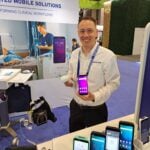
- Christopher Lynch presents the CyberMed G24/G248 Gen 2 24-inch medical panel PC at the Cybernet exhibit.

-
- Kerri Arlesic and Veronica Lee of Ellkay, a healthcare data management software provider, visit the Clear exhibit.

-
- Mitchell Gorodokin presents provider data management solutions at the CertifyOS exhibit.

-
- Kali Chithambaram presents an AI avatar as part of the “intelligent value model for AI” at the CDW Healthcare exhibit.

-
- Louis Rosner of Boca Systems presents RFID wristband and badge printers for healthcare at the KMA (Kiosk Manufacturer Association) exhibit.

-
- Dexter Littlefield presents the Connex 360 vital signs monitor at the Baxter International exhibit.

-
- Seamus Shu presents a medical panel PC for healthcare applications at the Axiomtek Co. Ltd. exhibit.

-
- Christina Brown presents the virtual care platform at the Avasure exhibit.

-
- Amy Roberts presents the athenaOne ecosystem at the athenahealth exhibit.

-
- Kyle Zerkle presents the ClioConnect IoT platform to improve workflow and increase uptime for clinical and IT teams at the Altus exhibit.

-
- Hamilton Yeager presents a display monitor demonstrating the use of AI in surgery at the Advantech exhibit.

-
- Michael Dennison presents ChromeOS Enterprise healthcare solutions at the Acer exhibit.

Related Content
HIMSS 2026: The “Digital Front Door” Survival Guide
How Cloud AI Becomes a HIPAA Liability for Patient Kiosks (And The Edge Inference Fix)