

Last Updated on August 6, 2026 by Craig Allen Keefner
Cash and Coin Self-Order Kiosk
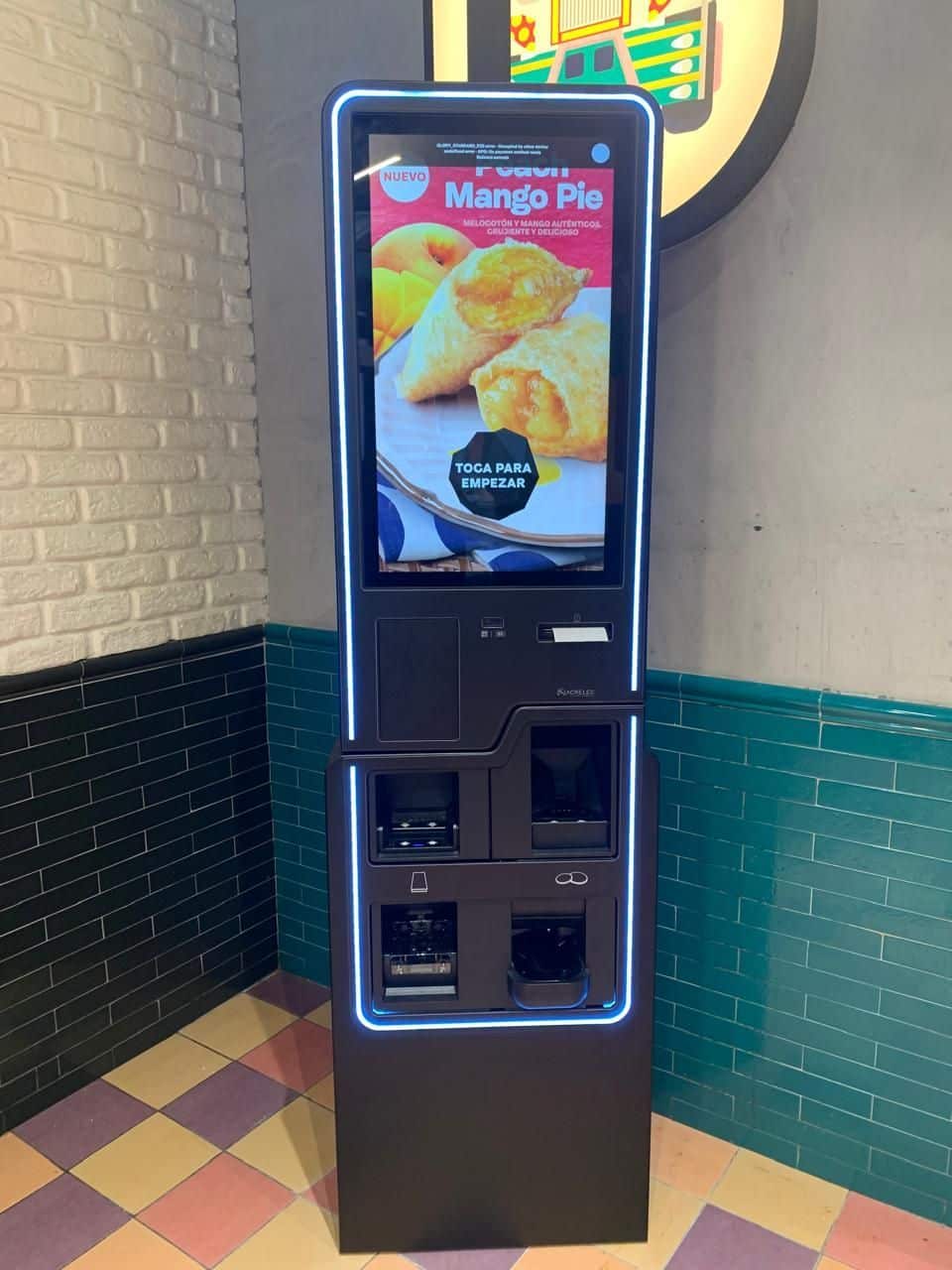
Click for full size — The McDonalds-type self-service kiosk features a vibrant touchscreen showcasing an ad for Mango Pie. With illuminated edges, it stands against a brick and tiled wall. Convenient payment options, including cash and coin, are available right below the screen.
We are impressed with the new cash and coin self-order kiosk from Acrelec and Glory. Good note and coin capacity and reasonably fast.
From LinkedIn
We are delighted to share with you the first installation in Spain of the new C27 kiosk developed by ACRELEC and GLORY.
Located in Jollibee, Calle Arenal (Madrid), the kiosk will assist in a high traffic environment where order efficiency and collection is key.
Glory-Acrelec-C27-Datasheet-US
More From Acrelec
- Acrelec Rebrands for Future Growth and Innovation – Kiosk Industry
- McDonald’s Kiosk – ACRELEC World Leader
- ACRELEC – AI Voice Ordering – Kiosk Industry
- Wendy’s Kiosks Deployed ACRELEC – Kiosk Industry
Background
Benefits of Offering Cash and Coin Transactions at Fast Food Kiosks
Inclusivity and Accessibility
-
Accepting cash and coins ensures that all customers, including the unbanked and underbanked, can make purchases. Millions of people globally do not have access to credit cards or digital payment methods, and removing cash options can alienate or exclude these customers, particularly lower-income individuals and families24.
-
Cash payments are also important for those who prefer to use cash for budgeting, privacy, or teaching children about money management2.
Customer Convenience and Satisfaction
-
Kiosks that accept both cash and electronic payments provide greater flexibility, allowing customers to choose their preferred payment method. This leads to a smoother, more inclusive checkout experience and reduces the likelihood of lost sales due to payment limitations19.
-
Cash-accepting kiosks can reduce wait times and streamline the ordering process, as customers do not need to queue separately for cash transactions at a staffed register45.
-
Providing a seamless, end-to-end self-service experience for cash customers increases customer loyalty and repeat business, as these customers are not penalized with longer lines or additional steps5.
Operational Efficiency and Cost Savings
-
Self-service kiosks that handle cash reduce the need for dedicated cashiers, allowing staff to be redeployed to higher-value tasks such as food preparation or customer service, which can improve overall efficiency and reduce labor costs47.
-
Automated cash handling minimizes human error, reduces opportunities for employee theft, and increases security and visibility of cash flow within the business5.


