

Last Updated on May 31, 2026 by Craig Allen Keefner
The Field Museum in Chicago implemented self-service ticketing kiosks and digital signage to enhance visitor experience and streamline ticket purchases, integrating with their Ticket Return system. These kiosks, featuring enclosures by Kiosk Innovations, successfully managed approximately 20% of all sales during their busiest period between Christmas and New Year's. This implementation improved guest journeys, offered engaging and time-saving interactions, and reduced overall maintenance costs through a unified management interface.
Why did The Field Museum choose a Ticketing Kiosk solution?
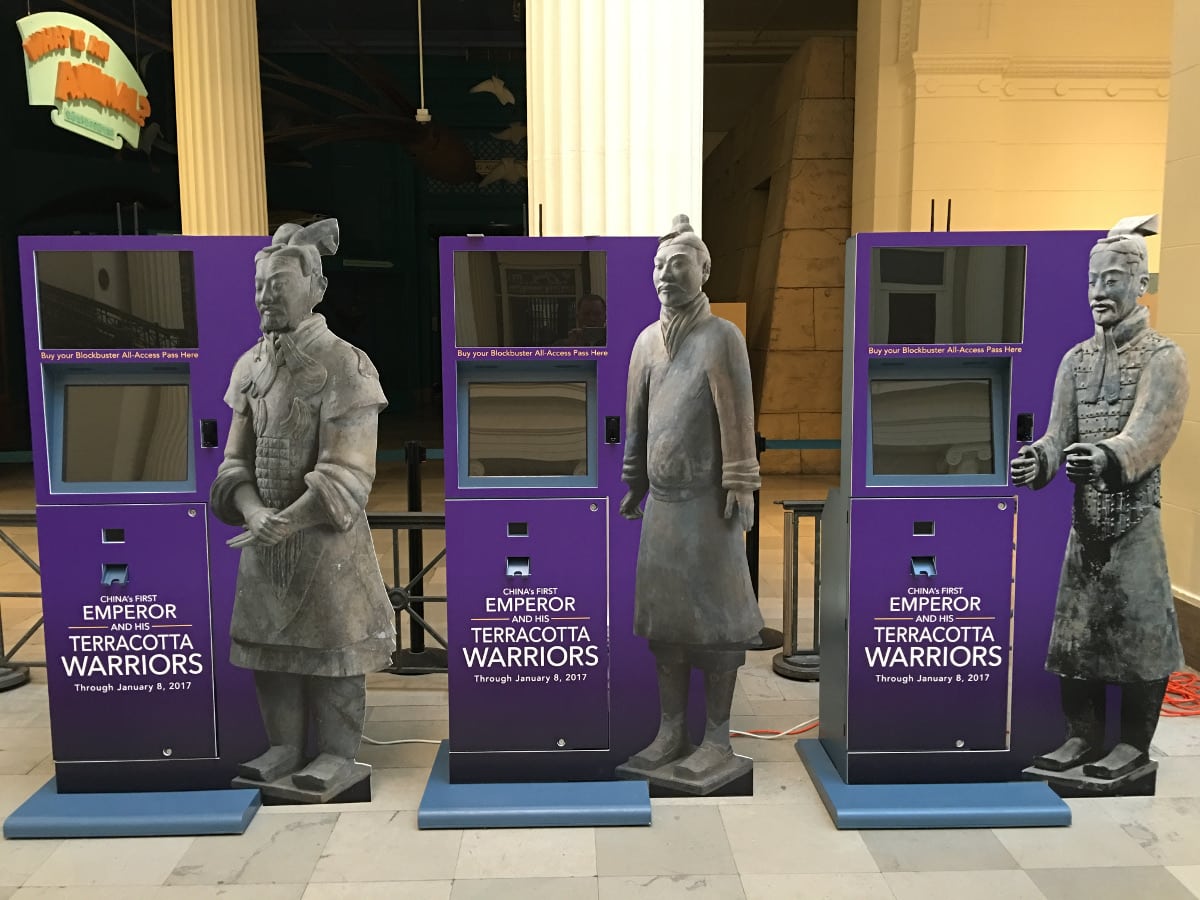
Click to see full size image of the ticketing kiosk digital signage project. Enclosures by Kiosk Innovations,
July 19, 2016 – YORK, PA. The Field Museum in Chicago takes pride in being one of the world’s largest natural history museums in the world. Their diverse array of permanent exhibitions and quality educational programs attract over 2 million visitors annually.
The Field Museum is constantly looking for ways to enrich their guests’ journeys and engaging them through interactive ways to continuously improve the experience they receive. Field Museum had recently implemented a new ticketing system from Ticket Return, and they soon recognized that they could improve their customer’s experience by investing in self-service ticketing kiosks and digital signage.
Ticket Return wanted a new engaging kiosk. The kiosk had to provide guests easy and quick navigation through the product purchase process and allow them to view and select show times for various exhibits. The kiosks were also to power a secondary display screen to show advertisements and messages about upcoming events and exhibits to guests.
How did the Ticketing Kiosks perform after Going Live?
The ticketing kiosks were ‘thrown into the fire’ as they were made live during the week between Christmas and New Year’s, historically one of the museum’s busiest periods each year. During the first week of their release the kiosks worked flawlessly while handling roughly 20% of all sales. Having a single-source for support and one management interface to handle all aspects of their digital needs greatly reduces overall maintenance costs and long-term total cost of ownership.”
Field Museum personnel agree that ‘history was made’ during that first week of operation and beyond. The new kiosks have added to their guests’ journeys, offering an engaging and time-saving start to every new exploration of the museum’s story into life on Earth.


