Last Updated on March 28, 2026 by Craig Allen Keefner
And The Winners Are
LG’s new self-order kiosk offers easy access for all and smart chat features — What stands out about LG’s newest kiosk is how it puts access first. Instead of treating ease of use as something added later, the system uses voice-driven AI so people can speak their choices – browsing options, selecting items, finishing payments – all without touching a screen. By doing this, it responds to legal standards like the ADA but goes further by tapping into a shift already underway: more shops are turning to spoken commands because they just work better for everyone. The result? A machine that listens, adapts, includes.
Self-Order kiosk launched by USEN in Japan with LG Business — “Ticket and Pay” — Out front, a new kind of machine has appeared in Japanese eateries – developed by USEN alongside LG Business. This isn’t just another screen to tap your meal choice. It handles tickets, takes orders, then collects payment – all without switching tasks. Speed matters most where lines move fast, so every step flows into the next. Behind it, tight coordination between tech and software cuts setup time. Locations get identical tools, thanks to shared design rules. Not flashy, but built to keep pace.
Conversational AI Voice by URway with AI Connect Bar — Out of nowhere, sound becomes smarter. Not just words heard but meaning caught – right the first time. A new kind of voice steps into stores and eateries where noise never stops. Instead of screens or taps, people speak. What sets it apart? Understanding intent even when things get loud. Built for kiosks, yet flexible enough to adapt on the fly. This isn’t about flashy tech talk – it works quietly behind the scenes. Clarity matters most when orders pile up fast. Context keeps replies accurate, not robotic. Real situations shape how it performs, not lab tests. As demands rise, so does its role. The future of service might not be seen – but heard.
Picture this. An actual scene unfolds – cameras rolling on the AI Connect Bar handling drink requests during loud kitchen chaos. Sound matters when machines listen. Here, it picks up words clearly even with clattering pans nearby. Not magic. Math tuned sharp. Think fast food spots where headsets strain against blaring fryers. Or stadiums packed with yelling fans. Places most voice tech stumbles. This doesn’t skip beats. Works while others quit. Proof? Orders go through right the first time. Real talk in real noise wins again.
Vending – Skittles project with Giada — From bright screens to smart tech inside, the Skittles vending effort with Giada proves machines are more than just snack dispensers now. Built on strong hardware plus eye-catching design, it turns routine purchases into moments that connect with people. Instead of only selling candy, this setup lets the brand speak directly through motion, color, and response. With each interaction, buyers see what Skittles stands for – without a single ad playing. Technology here doesn’t shout; it invites. Moments like these reshape how products meet public spaces.
Industry Recognition – Giada Named Intel® Prestige Partner –Awarded Intel Prestige Partner status, Giada stands out in the world of embedded systems. Not just another name on a list, their work aligns tightly with real-world needs at the network edge. Performance over time has proven they deliver solid results using Intel technology. Reliability matters most when digital signs run nonstop or factory setups depend on stable hardware. Meeting those long-term demands is where Giada shows strength. Their partnership isn’t about titles – it ties directly to how well products hold up under pressure.
Product MiniPC AIO – Giada AIO 10.1″ with Rockchip Now Available — A fresh take on compact tech arrives. This 10.1-inch all-in-one system from Giada runs on a Rockchip processor. Small size meets solid output – ideal when budgets tighten but demands stay high. Built-in screen plus tight build suits self-service stations, dashboards, machine interfaces. Runs light on energy while keeping costs down. Fits neatly into setups where space matters just as much as spending.
Drive-Thru Innovation – Acrelec and SoundHound — A fresh take on fast food service begins with smarter technology behind the scenes. Instead of relying only on staff, machines now handle orders using natural speech recognition. One company pairs voice tools with order systems so customers speak just once. This approach cuts down mistakes that happen with handwritten tickets. When employees spend less time clarifying items, lines move faster without extra hires. Pressure builds on restaurants to keep up – fewer workers want these roles, while people demand speed and precision. What results is a quieter shift: fewer misunderstandings, smoother pickups, more consistency during rush hours. Behind it all sits software trained to understand muffled requests through cracked car windows.
Accessibility Leadership – Starbucks Inclusive Framework — Starting strong on access, Starbucks built an Inclusive Framework that shapes how people interact with stores and screens. Not just policies, but real design choices guide every kiosk, app, and counter layout. One step at a time, their model shows what wide-reaching inclusion can look like when baked into everyday systems. Across cities and devices, the experience stays grounded in practical ease. This isn’t trend-driven – it grows from consistent decisions behind the scenes. What stands out is how normal it feels, despite the complexity underneath.
Accessibility Hardware – Dot-X Braille Pad — Not far below the surface of everyday tech lies the Dot-X Braille Pad. This tool changes how people who are blind or have weak eyesight engage with kiosks. Touch becomes the main way to navigate, giving control back to the user. Instead of relying on someone else, individuals can move through menus quietly and alone. A quiet independence takes shape here, step by step. For those managing public systems, it’s one less hurdle in meeting access standards. Usability deepens when design listens closely. The experience feels smoother because barriers start to dissolve.
Telemedicine – Mayo Clinic and Remote Flight Physicals — Out in the open, far from hospitals, pilots get checkups through screens. A booth with cameras and tools sends data straight to Mayo Clinic doctors. These visits happen without paper trails, using tight digital locks for safety. Instead of driving miles, aviators sit inside a pod that talks to experts live. Machines guide part of the exam while physicians watch remotely. Trust stays strong because rules are followed exactly. No middlemen step in; it goes directly from person to system. What once needed appointments now fits into a quiet corner at an airport.
Digital Signage – LG Expansion into Hotels and C-Stores — Not just shops anymore. LG moves its screen tech into motels and corner stores, where screens now guide guests, share updates, leave notes about deals. A shift happens quietly – displays do more than flash ads, they help people move, choose, understand. Kiosks blend in, part of a bigger plan where every screen has a job. This isn’t future talk, it’s what’s going up on walls today.
Digital Signage Software – Studio DX by Acquire Digital — What you see on screen matches exactly what creators intended, thanks to Studio DX. This software, built by Acquire Digital, keeps every image sharp and aligned across displays. Where high-end visuals matter just as much as reliable operation, companies choose this tool. It ensures uniform results, whether used in one location or many. Performance stays steady even when demands grow.
POS Solution – Honeybee Payment Terminals — One thing you notice about Honeybee payment terminals? They work smoothly with many different platforms. Whether it is a self-service booth or a traditional checkout, these devices fit right in. What helps? Support for multiple operating systems out of the box. For teams setting up payment tech, that kind of adaptability cuts down complications. Even in stores without staff at every corner, they hold up well. Standardizing across setups suddenly feels less messy.
Bill Payment – EasyPay’s European Footprint — Across Europe, EasyPay runs thousands of standalone machines where people pay bills without help. These units handle payments for power, water, city fees, plus loan installments. Even now, many choose this way over digital tools. Cash remains central here, fitting how some manage daily finances. Machines stay busy in neighborhoods far from banks. Their spread shows trust in hands-on, automatic stations. Not everyone clicks online – some prefer pressing buttons on a screen outdoors.
Visitor Management – Utah Housing Authority Kiosks — Out front, a kiosk stands ready at a housing complex run by the Utah Housing Authority. One after another, guests check in using the touchscreen station instead of waiting for help from an employee. This shift means less time spent tracking who comes and goes. Staff now handle fewer routine tasks tied to entry logging. People living there find it easier to get what they need without confusion piling up. Each visit gets recorded automatically, cutting down on errors made by hand. Behind the scenes, data flows straight into secure databases for review later. Over time, patterns emerge that help adjust how spaces are managed day to day.
Information Kiosk – Schiphol Airport PRM Call Points — Airport zones often overlook access needs, yet here at Schiphol, something different takes shape. Scattered across terminals, help stations built by SiteKiosk, Storm Interface, and Prestop become quiet tools of autonomy. Travelers who face mobility challenges reach out through these units without delay or dependency. Built tough, placed smart, they answer a simple need – dignity in movement. When support arrives fast, inclusion feels less like policy, more like habit.
- Self Ordering Kiosks – New LG Kiosk — totally accessible with conversational AI voice
- Self-Order kiosk launched by USEN in Japan with LG Business — “Ticket and Pay”
- Audio — Conversational AI Voice by URway with AI Connect Bar
- Live video of AI Connect Bar taking orders in high noise environment
- Vending – Skittles project with Giada
- Giada Honored as Intel® Prestige Partner
- Product Brief – AIO 10.1″ with Rockchip Available Now from Giada
- Drive Thrus – Acrelec and Soundhound Do Drive-Thrus
- Accessibility – Starbucks Inclusive Framework
- Accessibility – New Dot-X Braille Pad
- Telemedicine – Mayo Clinic and Remote Flight Physicals
- Digital Signage – LG Moves Into Hotels and C-Stores
- Digital Signage – Pixel-perfect digital signage software – Studio DX by Acquire Digital
- POS – Honeybee payment terminals on wide range of platforms
- Bill Payment – huge footprint in Europe is EasyPay
- Visitor Management Kiosk – Utah Housing Authority kiosks
- Information Kiosk – Schiphol and Airport Airlines — PRM call point – Sitekiosk, Storm and Prestop
Here is more technical overview.
Self-Ordering Kiosks – New LG Kiosk with Full Accessibility and Conversational AI
LG’s latest self-ordering kiosk represents a meaningful step forward in inclusive self-service design. Built with accessibility as a core requirement rather than an afterthought, the platform integrates conversational AI voice interaction, allowing users to navigate menus, place orders, and complete transactions without relying solely on touch. This approach addresses ADA concerns while also aligning with broader industry trends toward voice-enabled interfaces that improve usability for all customers.
Self-Order Kiosk – USEN “Ticket and Pay” with LG Business in Japan
In Japan, USEN and LG Business Solutions launched the “Ticket and Pay” self-order kiosk, blending ticketing, ordering, and payment into a single streamlined experience. Designed for high-efficiency foodservice environments, the system reflects Japan’s advanced adoption of self-service while showcasing how integrated hardware and software partnerships can accelerate deployment and consistency across locations.
Audio Innovation – Conversational AI Voice by URway with AI Connect Bar
URway introduced its Conversational AI Voice solution through the AI Connect Bar, delivering hands-free ordering and interaction in demanding retail and restaurant environments. By emphasizing audio clarity, contextual understanding, and kiosk-ready deployment, URway demonstrates how voice AI is maturing beyond novelty into a practical interface layer for real-world self-service use cases.
Live Demonstration – AI Connect Bar in High-Noise Environments
A live video demonstration of the AI Connect Bar taking orders in a high-noise environment highlighted a critical industry challenge: voice reliability under real conditions. The system’s ability to accurately capture and process speech amid background noise reinforces the viability of conversational AI for QSRs, drive-thrus, and public venues where traditional voice systems often fail.
Vending – Skittles Branded Project with Giada
The Skittles vending project powered by Giada illustrates how modern vending has evolved into a brand-driven digital experience. Combining vibrant visuals, reliable embedded computing, and interactive engagement, the deployment shows how consumer brands can use vending as both a sales channel and a marketing platform.
Industry Recognition – Giada Named Intel® Prestige Partner
Giada’s recognition as an Intel Prestige Partner underscores its technical credibility in the embedded and edge-computing ecosystem. This designation reflects consistent performance in delivering Intel-based solutions that meet the reliability, performance, and lifecycle demands of kiosk, signage, and industrial deployments.
Product Brief – Giada AIO 10.1″ with Rockchip Now Available
Giada’s new 10.1″ all-in-one platform powered by Rockchip targets cost-sensitive yet performance-driven applications. The compact form factor, integrated display, and ARM-based efficiency make it well-suited for lightweight kiosks, control panels, and interactive signage—expanding options for deployments where power consumption, price, and footprint are critical.
Drive-Thru Innovation – Acrelec and SoundHound
Acrelec and SoundHound continue to push drive-thru automation forward by combining intelligent ordering software with conversational voice AI. Their work demonstrates how AI-driven ordering can reduce friction, improve accuracy, and increase throughput at a time when labor constraints and customer expectations are reshaping the drive-thru experience.
Accessibility Leadership – Starbucks Inclusive Framework
Starbucks has taken a proactive approach to accessibility through its Inclusive Framework, influencing both digital and physical customer touchpoints. By embedding accessibility principles into design standards, Starbucks sets a benchmark for how large enterprises can scale inclusive self-service experiences across thousands of locations.
Accessibility Hardware – Dot-X Braille Pad
The Dot-X Braille Pad introduces a tactile accessibility solution that enhances kiosk usability for blind and low-vision users. By enabling private, independent interaction without external assistance, the device addresses a longstanding gap in self-service accessibility and provides operators with a more robust compliance and usability option.
Telemedicine – Mayo Clinic and Remote Flight Physicals
Mayo Clinic’s use of telemedicine for remote flight physicals highlights how secure, kiosk-enabled healthcare services can extend specialized care beyond traditional clinical settings. This application demonstrates the growing role of self-service and remote diagnostics in regulated, high-trust medical workflows.
Digital Signage – LG Expansion into Hotels and C-Stores
LG’s expansion of digital signage solutions into hotels and convenience stores reflects a broader shift toward experience-driven displays. These deployments focus on operational messaging, promotions, and wayfinding, showing how signage and kiosks increasingly converge as part of a unified in-store digital strategy.
Digital Signage Software – Studio DX by Acquire Digital
Studio DX from Acquire Digital emphasizes pixel-perfect content control for premium signage environments. Designed for accuracy and consistency, the platform appeals to brands and venues where visual fidelity is as important as uptime and scalability.
POS Hardware – Honeybee Payment Terminals
Honeybee payment terminals stand out for their broad platform compatibility, supporting a wide range of operating systems and deployment scenarios. This flexibility makes them attractive for integrators seeking to standardize payments across kiosks, POS systems, and unattended retail environments.
Bill Payment – EasyPay’s European Footprint
EasyPay has built a substantial bill-payment kiosk footprint across Europe, demonstrating the continued relevance of unattended payment systems for utilities, government services, and consumer finance. The scale of deployment highlights strong demand for reliable, cash-friendly self-service options.
Visitor Management – Utah Housing Authority Kiosks
Kiosks deployed by the Utah Housing Authority modernize visitor management and service access in public housing environments. These systems improve efficiency, reduce staff workload, and provide residents with clearer, more consistent access to services.
Information Kiosk – Schiphol Airport PRM Call Points
At Schiphol Airport, PRM (Passengers with Reduced Mobility) call point kiosks supplied by SiteKiosk, Storm Interface, and Prestop demonstrate best-practice accessibility in aviation. These information kiosks ensure travelers can request assistance quickly and independently, reinforcing how thoughtful kiosk design directly supports inclusive travel.
Historical — Best of 2024
We can also look back at 2024 and see who won last year for reference.
Best of 2024 Self-Service Kiosk Award Winners – Press Release
Self-Service Kiosk and Digital Signage Award Winners for 2024 —
Innovations in Immersive Technologies
WESTMINSTER, Colo., Jan. 8, 2025 — Kiosk Industry Group, the marketing arm of KMA Kiosk Association, announces the Best of 2024 Self-Service award winners. The winners exemplify the best in self-service and kiosk design, including kiosks. You can meet many of the winners and chat at NRF this week. Stop by 1602 (the first booth down A lower level). If you are attending, look us up on the mobile and matchmaking app and say hello. We also donated $100 for every entry made (which were free) to Retail Orphans and IHL.
Reference: PRnewswire and APnews
: AND OUR WINNERS ARE
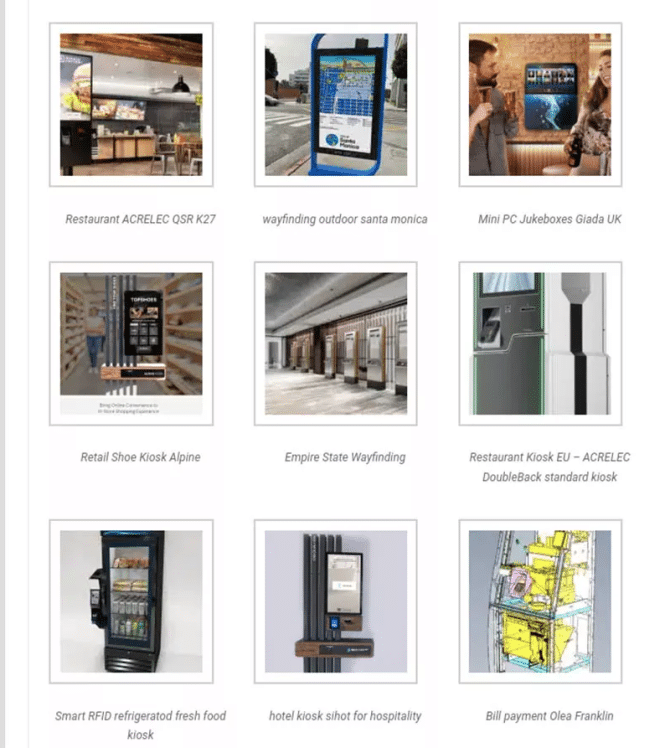
- KIOSK EK Series — KIOSK Information Systems new EK pedestal kiosk (aka Wallaby Killer 🙂
- Olea Kiosks Hotel Check-In — not unlike patient check-in
- Elo – Tap to Pay Kiosk — Android AIO
- ACRELEC K27 QSR Kiosk — very sleek single-side design
- ACRELEC K27 Kiosk Double Back kiosk — very sleek design
- LG MRI – Outdoor Wayfinding – Smart City and more
- Giada DK310 Jukebox – literally 1000s of Giada
- Alpine – Shoe Kiosk — when self-service increases sales and customer satisfaction
- Olea Kiosks – Empire State Building — custom kiosks with exceptional design
- RedyRef Smart Food – the new smart vending solutions
- Alpine Hotel Check-In — modular and doesn’t look like a kiosk 🙂
- Olea Bill Pay — the ultimate bill pay machine, the Franklin
- Toshiba MxP Vision – to be demoed at NRF
- EKAA Ultra Slim display — this unit requires LESS than 4″ mounted. Totally ADA
- WelcomeWare – Visitor Kiosks – Case Study
- Zhilai – Smart Lockers — think Amazon Hubs, Sam’s Club and USPS
- LG – CLOi Robot — as seen in Tulsa International
- Pyramid Pixi – latest and greatest from Pyramid Computer
- Olea Chicago Healthcare — totally tuned for EPIC EHR Welcome
- LG — EV Charger — announced and available in 2024
- LG – Transparent OLEDs — everybody is using these
- KIOSK Automated Returns Kiosk – Return Kiosk Brochure — And for deployment check out Amazon Return Lockers kiosk at Whole Foods
- Prestop Evolution Kiosk — 80 deployed with another 450 on tap
- Sitekiosk software
- Storm Interface Audio Nav
End of Article{“@context”:”https://schema.org”,”@type”:”CollectionPage”,”name”:”Best of 2025 Awards – And The Winners Are”,”description”:”Kiosk Industry Group’s Best of 2025 Awards recognize standout self-service, kiosk, AI, accessibility, digital signage, payment, and telemedicine innovations across retail, hospitality, healthcare, transportation, and government.”,”url”:”https://kioskindustry.org/best-of-2025-awards/”,”publisher”:{“@type”:”Organization”,”name”:”Kiosk Industry Group”,”url”:”https://kioskindustry.org”},”about”:[“Self-Service Kiosks”,”Conversational AI”,”Accessibility Technology”,”Digital Signage”,”Unattended Retail”,”Telemedicine Kiosks”,”Payment Terminals”],”mainEntity”:{“@type”:”ItemList”,”name”:”Best of 2025 Award Winners”,”itemListOrder”:”Unordered”,”numberOfItems”:18,”itemListElement”:[{“@type”:”CreativeWork”,”name”:”LG Accessible Self-Order Kiosk with Conversational AI”,”description”:”Voice-driven, accessibility-first self-order kiosk enabling touch-free navigation, ordering, and payment.”,”award”:”Best of 2025 – Accessibility & Conversational AI”,”provider”:{“@type”:”Organization”,”name”:”LG Business Solutions”}},{“@type”:”CreativeWork”,”name”:”USEN Ticket and Pay Self-Order Kiosk with LG”,”description”:”Integrated ticketing, ordering, and payment kiosk designed for high-throughput foodservice environments in Japan.”,”award”:”Best of 2025 – Integrated Self-Order Deployment”,”provider”:{“@type”:”Organization”,”name”:”USEN”}},{“@type”:”CreativeWork”,”name”:”URway Conversational AI Voice with AI Connect Bar”,”description”:”Hands-free conversational AI voice system optimized for noisy retail, QSR, and kiosk environments.”,”award”:”Best of 2025 – Voice AI Interface”,”provider”:{“@type”:”Organization”,”name”:”URway”}},{“@type”:”CreativeWork”,”name”:”AI Connect Bar High-Noise Live Demonstration”,”description”:”Live demonstration showing accurate voice ordering in loud, real-world environments.”,”award”:”Best of 2025 – Real-World AI Performance”},{“@type”:”CreativeWork”,”name”:”Skittles Branded Smart Vending with Giada”,”description”:”Brand-driven interactive vending deployment combining vivid design with embedded computing.”,”award”:”Best of 2025 – Experiential Vending”,”provider”:{“@type”:”Organization”,”name”:”Giada”}},{“@type”:”CreativeWork”,”name”:”Giada Named Intel Prestige Partner”,”description”:”Recognition of Giada’s leadership in Intel-based embedded and edge computing solutions.”,”award”:”Best of 2025 – Industry Recognition”,”provider”:{“@type”:”Organization”,”name”:”Giada”}},{“@type”:”CreativeWork”,”name”:”Giada AIO 10.1 Inch with Rockchip”,”description”:”Compact all-in-one ARM-based platform optimized for cost-sensitive kiosk and signage deployments.”,”award”:”Best of 2025 – Value Embedded Platform”,”provider”:{“@type”:”Organization”,”name”:”Giada”}},{“@type”:”CreativeWork”,”name”:”Acrelec and SoundHound Drive-Thru Voice AI”,”description”:”Conversational AI-powered drive-thru ordering improving accuracy, speed, and labor efficiency.”,”award”:”Best of 2025 – Drive-Thru Innovation”,”provider”:{“@type”:”Organization”,”name”:”Acrelec”}},{“@type”:”CreativeWork”,”name”:”Starbucks Inclusive Framework”,”description”:”Enterprise-wide accessibility framework guiding inclusive design across physical and digital touchpoints.”,”award”:”Best of 2025 – Accessibility Leadership”,”provider”:{“@type”:”Organization”,”name”:”Starbucks”}},{“@type”:”CreativeWork”,”name”:”Dot-X Braille Pad for Kiosks”,”description”:”Tactile Braille input device enabling private, independent kiosk interaction for blind and low-vision users.”,”award”:”Best of 2025 – Accessibility Hardware”,”provider”:{“@type”:”Organization”,”name”:”Dot-X”}},{“@type”:”CreativeWork”,”name”:”Mayo Clinic Remote Flight Physicals via Telemedicine Kiosks”,”description”:”Secure telemedicine kiosks enabling FAA flight physicals with remote Mayo Clinic physicians.”,”award”:”Best of 2025 – Telemedicine Deployment”,”provider”:{“@type”:”Organization”,”name”:”Mayo Clinic”}},{“@type”:”CreativeWork”,”name”:”LG Digital Signage Expansion into Hotels and C-Stores”,”description”:”Operational and experience-driven signage deployments across hospitality and convenience retail.”,”award”:”Best of 2025 – Digital Signage Expansion”,”provider”:{“@type”:”Organization”,”name”:”LG”}},{“@type”:”CreativeWork”,”name”:”Studio DX Digital Signage Software by Acquire Digital”,”description”:”Pixel-perfect content management software ensuring visual accuracy and consistency at scale.”,”award”:”Best of 2025 – Signage Software”,”provider”:{“@type”:”Organization”,”name”:”Acquire Digital”}},{“@type”:”CreativeWork”,”name”:”Honeybee Multi-Platform Payment Terminals”,”description”:”Payment terminals supporting multiple operating systems for kiosks and POS environments.”,”award”:”Best of 2025 – Payment Hardware”,”provider”:{“@type”:”Organization”,”name”:”Honeybee”}},{“@type”:”CreativeWork”,”name”:”EasyPay European Bill Payment Kiosks”,”description”:”Large-scale unattended bill payment kiosk network supporting cash and digital transactions across Europe.”,”award”:”Best of 2025 – Bill Payment Network”,”provider”:{“@type”:”Organization”,”name”:”EasyPay”}},{“@type”:”CreativeWork”,”name”:”Utah Housing Authority Visitor Management Kiosks”,”description”:”Self-service kiosks streamlining visitor check-in and service access in public housing.”,”award”:”Best of 2025 – Government Deployment”,”provider”:{“@type”:”Organization”,”name”:”Utah Housing Authority”}},{“@type”:”CreativeWork”,”name”:”Schiphol Airport PRM Call Point Kiosks”,”description”:”Accessible information kiosks enabling independent assistance requests for passengers with reduced mobility.”,”award”:”Best of 2025 – Transportation Accessibility”,”provider”:{“@type”:”Organization”,”name”:”Schiphol Airport”}}]}}{“@context”:”https://schema.org”,”@type”:”VideoObject”,”name”:”AI Connect Bar Voice Ordering in High Noise Environment”,”description”:”Live demonstration of URway’s AI Connect Bar accurately taking orders in loud, real-world QSR and retail environments.”,”thumbnailUrl”:”https://vumbnail.com/1106898726.jpg”,”uploadDate”:”2025-11-01″,”contentUrl”:”https://vimeo.com/1106898726″,”embedUrl”:”https://player.vimeo.com/video/1106898726″,”publisher”:{“@type”:”Organization”,”name”:”Kiosk Industry Group”,”url”:”https://kioskindustry.org”}}