
Last Updated on August 4, 2026 by Craig Allen Keefner
Payment Terminals for Customers Point of Sale
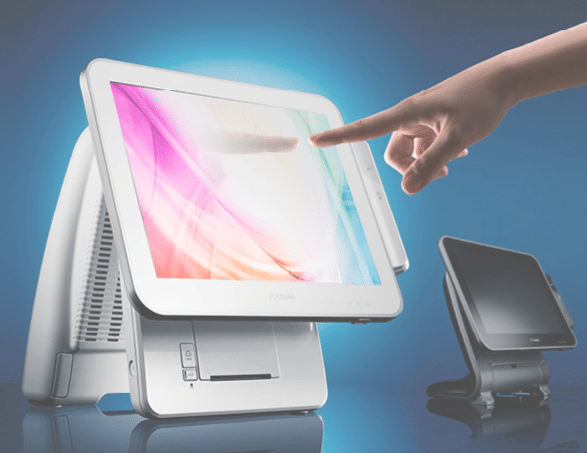
POS Order Terminal Station by POSBank e.g.
The POS terminal is generally employee-facing. It is hardware and software. It is transactional but it can also be informational. Consider digital menus and messaging, for example, digital advertising and branding. Simply put — Point-of-sale (POS) systems are all types of solutions that allow businesses to process customer payments and manage sales data. POS systems are used in various industries, including retail, hospitality, and healthcare. POS systems components? A cash register, a receipt printer, and a card reader. They may also include additional features such as inventory management, customer loyalty programs, and e-commerce integration.
POS Terminal covers the widest possible range of verticals:
- Retail
- Restaurants
- Hospitality & Hotels
- Ticketing
- Many more
Providers
- Intel Kiosk – computing solutions used in POS
- Crane CPI
- Posiflex of KIOSK — all types of order terminals
- Ingenico – premier provider of payment terminals
- POSBANK – complete line of POS touch stations
- UCP Unattended Payments – complete line of payment terminals
- FEC Kiosks – POS Hardware
- Datacap Systems, Inc. – widest possible payment methods
- Insight Touch – touchscreens and terminals
- Pyramid Technologies – printers
- BOCA Systems – printers
- TDS TOUCH – touchscreens and POS stations
- NMI is a leading payment gateway and technology provider in the fintech industry.
- meldCX – Analytics
- Innovative Technology – currency + biometrics
- DPL Wireless Connectivity
- Honeybee Kiosk – A versatile, user-friendly self-service solution designed for financial services
- SelfPay — Since 2009, we develop and operate a global Network of Automated Payment Stations
- Ventus – managed wireless connectivity
Other Resources
- Panasonic — point of sale for Wendys.
- Volcoro — windows based
- SuzoHapp
- StarMicronics – printers
- Epson – printers
- Elotouch – now Zebra – scanners and printers
- MicrcoComm – printers

Click for full size – Panasonic POS for Wendys
POS Posts
- Point Of Sale Market Report – POS Survey – This week, RestaurantOwner.com released its 2022 POS Survey Report. The survey asked over 800 independent restaurant owners to rate and comment on their POS systems’ installation and operational costs, system and contract characteristics, and their satisfaction with POS features and support.
- POS Clover Customer Self-Order Kiosk Case Study – Customer Self-Order Kiosk Case Study Complete case study on the positive impact that customer ordering kiosks provide to a relatively small retail shop.
- Touchscreens for Retail & POS – New Sponsor Elo – Every 21 seconds, a new Elo Touchscreen is installed somewhere in the world.
- Wendy’s POS System Case Study – Touch Screen POS – Wendy’s POS System Case Study In the self-service world, the employee is an absolute critical component for success. Equipping employees with reliable and training them to easy-to-use technology becomes extremely important.
- Payment Solutions for Point of Sale (BNPL, txt, QR, Facial) – Turnkey Point of Sale Payment Solutions One of the biggest trends that broke out of the pandemic was the massive uptick in alternative ways for consumers to pay.
- Global Point of Sale POS Terminal Market Size Worth USD 103 Billion by 2023 – Point of Sale (POS) Terminals Market size is forecast to be worth USD 103.52 Billion by 2023; as per a new research report by Global Market Insights, Inc.
- Examining ADA lawsuits on point of sale devices – Redbox’s recent settlement of a class action lawsuit alleging that its video rental kiosks in California were not accessible to the blind provides a good example of the potential exposure businesses face.
- PSA Kiosk – FBI Raids Chinese Point-of-Sale Giant PAX Technology – PAX Security Executive Resigns a Day After FBI Raids on Offices American Banker “The Bloomberg Article” –Worldpay Switches to Verifone and Ingenico due to “unsatisfactory answers”.
- In-Store Kiosk 2021 Predictions – Retail and Point-of-Purchase – When I wrote the “What’s in Store for 2020” blog last December, I could not have predicted what was to come in three short months.
- Visually Impaired Consumers & Payment Terminals
- POS and PCI DSS Compliance – Opinion
AVIXA Posts
- Customer Self Order & Digital Messaging
- Small Format PCs, iPads and Tablets Come in Handy
- Digital Menu Board Technical Considerations – Indoor & Outdoor
- Interactive Self-Order ROI – BurgerFi Case Study
- Enhancing C-Store customer experience with digital signage
- Accessibility and Digital Menus For Restaurants
What Does Google Bard say?
Point-of-sale (POS) systems are software and hardware solutions that allow businesses to process customer payments and manage sales data. POS systems can be used in a variety of industries, including retail, hospitality, and healthcare.
POS systems typically include a cash register, a receipt printer, and a card reader. They may also include additional features such as inventory management, customer loyalty programs, and e-commerce integration.
POS systems can help businesses improve their efficiency and profitability. They can automate tasks such as order processing and inventory tracking, which can free up employees to focus on other tasks. POS systems can also help businesses track sales data, which can be used to make informed business decisions.
There are many different POS systems available on the market, so businesses should carefully consider their needs before choosing a system. Factors to consider include the size of the business, the industry, and the desired features.
Here are some of the benefits of using a POS system:
- Increased efficiency: POS systems can help businesses streamline their operations and save time.
- Improved accuracy: POS systems can help businesses reduce errors in order processing and inventory tracking.
- Increased security: POS systems can help businesses protect customer data and prevent fraud.
- Enhanced customer service: POS systems can help businesses provide a better customer experience by streamlining the checkout process and offering loyalty programs.
If you are looking for a way to improve your business’s efficiency, accuracy, and security, then a POS system is a worthwhile investment.
Resources
- Top 50 Point-of-Sales Systems Market Data Report — TIG Analysis – Self-Service “Hooks”, experiments and functions the POS ..
- Best Restaurant POS For Small Restaurants — Consensus Recommendations for Feature-Rich and Cost-Effective Restaurant POS
- Payment Kiosks – Latest in Terminal Certifications and Last Buy Opp — Axium RX, DX, and EX – Now Certified
Here are some of the most popular POS systems on the market:
- Square
- Shopify POS
- Lightspeed POS
- Toast
- Clover
- Revel Systems
- NCR Silver
- AccuPOS
- ShopKeep
These systems offer a variety of features and pricing options, so you can choose the one that best meets your needs.


