

Last Updated on November 30, 2025 by Craig Allen Keefner
Intel Kiosk Computers – SDM Series
The pluggable SDM boards are pretty cool stuff to just say it out loud.
- Typically computing combinations have been connecting a PC to Monitor.Touchscreen and comes with its advantages and disadvantages.
- Servicing a bad monitor or a bad pc is modular – advantage
- pricing generally is going to be two separate items both with their own margin – disadvantage
- Outdoor can be more expensive having to cool and heat two separate items with A/C unit
- Then came the AIO or All-In-One computer. Primarily an Intel CPU (i5 or J1900). Also with their advantages and disadvantages.
- most popular are the 22 inch but they get small (see MimoMonitors for examples)
- Many of the large format screens offer backpack mounting for an Android . Some lower power Intel options as well.
- Next Generation
- High end CPU — 8th gen Intel® Core™ i7/i5/i3 processor (Whiskey Lake-U)
- Low End — starts at ATOM then Celeron/Pentium
- SDM-S and SDM-L options (small and large)
- 11th Generation Tiger Lake supported
- With Tiger Lake support 8K resolution is now available
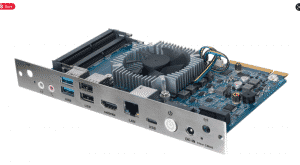
SDM-L 8K Tiger Lake Main Features: ● Intel Tiger Lake UP3 Processors ● PCIe X 8 Edge Connector ( HDMI, DP1.4 ),Supporting 8K Display ● 1 x HDMI ● 2 x SO-DIMM DDR4 Memory, Up to 32GB ● 1 x M-key M.2 (2280) for SSD ● 1 x RJ45, 1 x E-Key M.2 (2230) for WiFi/BT (WiFi 6) ● Support Intel vPro Technology (Core i5-1145G7 — see link Tiger Lake
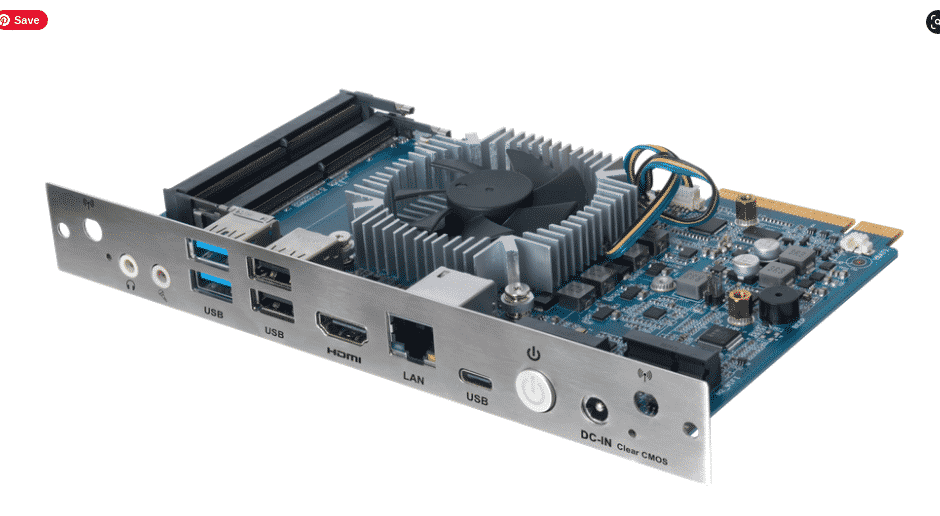
Intel® SDM comes in two form factor size options—the Intel® SDM Small (Intel® SDM–S) and Intel® SDM Large (Intel® SDM–L). This allows for new and scalable all-in-one designs that benefit from the cost-effective implementation and management of integrated Intel® processor-based media players. Its design omits housing, so it can be fully integrated into visual IoT applications like hospitality screens and bedside terminals that require minimal space with maximum performance.
Intel® SDM incorporates high-speed PCIe* connectivity with a custom I/O receptacle board that eliminates the need for external I/O. Multiple offerings spanning Intel Atom® to Intel® Core™ processors support both basic and extended features with a connector that is future-proofed to support 8K resolution displays and video capture, when available.
8K Media Players
Question — What is 8K resolution anyway? —
Answer — An 8K display is a screen with 7,680 horizontal and 4,320 vertical pixels for a total of approximately 33 million pixels. The “K” in 8K stands for Kilo (1000), meaning a TV that has achieved a horizontal resolution of about 8,000 pixels.
8K TV is the highest resolution display that has been released recently among UHD (ultra high definition) TVs. With four times more pixels than a 4K display —another type of UHD resolution—8K displays show a sharper and more detailed picture quality. This is because in 8K displays pixels are so small they cannot be distinguished even from close up, making highly detailed images a reality. Samsung has a nice side-by-side comparison.
Read the Intel® Smart Display Module product brief ›
Top 5 Reasons to Design With the Intel® Smart Display Module ›
Intel Kiosk Examples
-
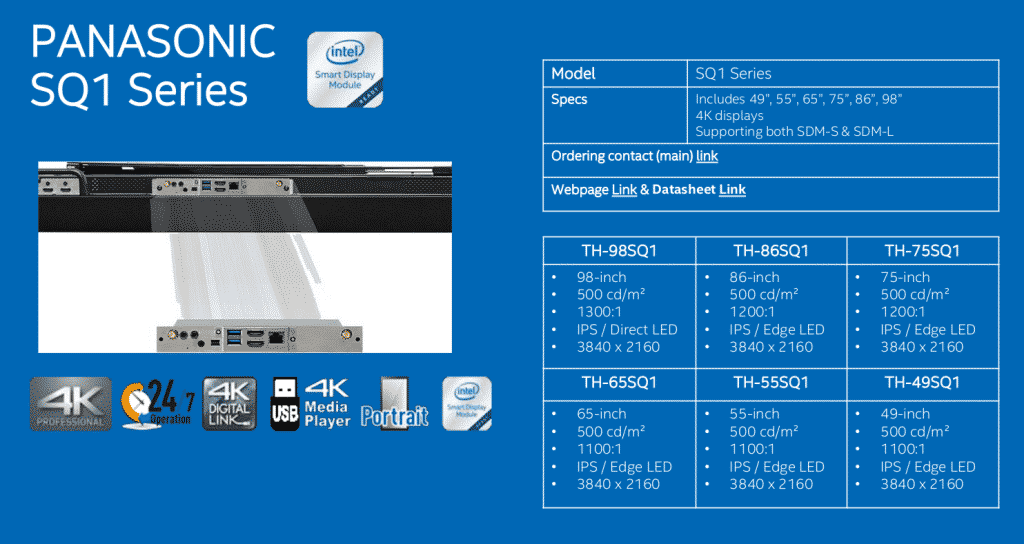
- Informational graphic for Panasonic SQ1 Series displays, highlighting features like Intel Smart Display Module and Intel Kiosk Computers. Offers 4K resolution, one-to-one ordering control, and screen sizes from 49 to 98. Includes model specs and features.

-
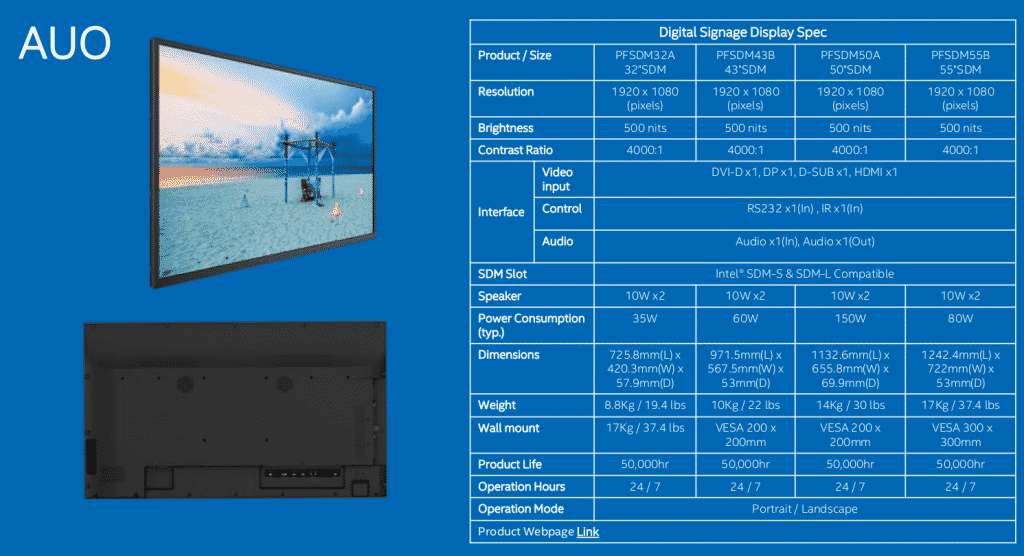
- Explore our blue digital signage display, compatible with Intel Kiosk Computers. Discover size specifications, resolution options, brightness, contrast ratio, inputs, outputs, dimensions, weight, and power consumption. The product image features a serene beach scene on the screen.

-
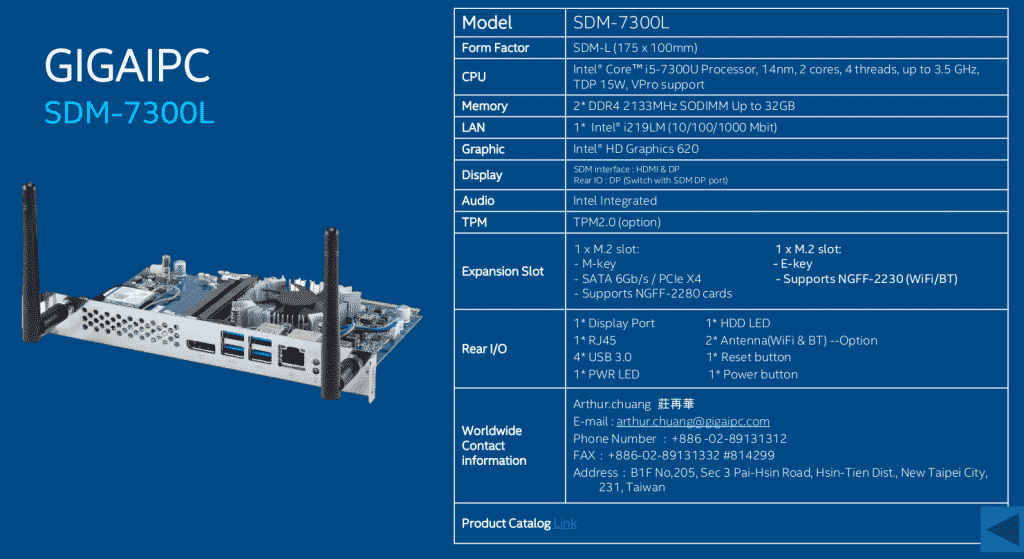
- An image outlines the specifications for the GIGAIPC SDM-7300L Intel Kiosk Computer. It features an Intel CPU, 2 DDR4 slots, HDMI and DP support, Intel HD Graphics, TPM 2.0, a LAN port, and various expansion slots. Contact details and model image are included.

-
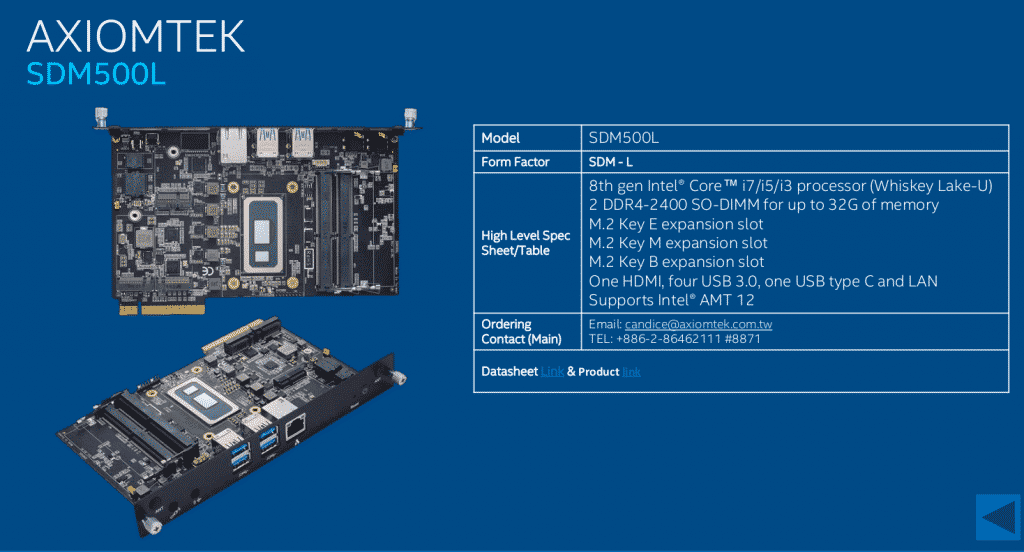
- The technical diagram of the AXIOMTEK SDM500L motherboard is designed for Intel Kiosk Computers. It features a comprehensive layout with labeled components like expansion slots and ports, complemented by a specification summary detailing processor type and connectivity options.

More Intel SDM Information
- Top Five Reasons to Design with Intel
- AUO displays
- Panasonic Displays
- Intel Retail Solutions Guide(Opens in a new browser tab)
- Contact craig@catareno.com for more information if you would like full copy of SDM catalog (62 pages dated November 2021)
More Posts
- Social Security Kiosks – Visitor Intake Awarded to KIOSK
- EV Charging Station – Volta Billion Impressions (Peerless-AV)
- iPad Kiosk News – Human Services Kiosk with Scanning Tennessee
- CREATE Restaurant Show in Denver Next Week – Press Release
- Kiosk Manufacturer Video Olea Kiosks circa 2022
- LG EV Charging Stations – LG Electronics Buys Mango
- Samsung EV Charging Stations by Iotecha
- CREATE Restaurant Technology Event in Denver Next Week
- Digital Menu Board – Nanonation includes LG System-On-A-Chip SOC
- EV Charging Standards – Participate ANSI Roadmap Standards
- NRF 2023
- Samsung Kiosk – All-In-One Self-Service Solution for Retailers
- Legal Action Kiosk ADA
- McDonalds Coates Group Announcement – DMBs
- Kiosk Mobile App for Open Omaha Event by Nanonation
- Kiosk Engineering Examples – Real Life – Video
- DSE Tradeshow – Digital Signage Experience 2022 Agenda


