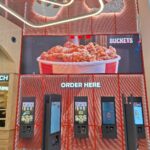
Burger King AI Voice Ordering Drive-Thru – ACRELEC

ACRELEC Kiosk Wendys

ACRELEC News from Around the World

Logo featuring Acrelec in bold white letters with a GLORY company below, all elegantly set against a black background. The design subtly hints at innovation, reflecting the cutting-edge potential of ACRELEC AI Voice technology.

📣 A New Era for ACRELEC
We’re proud to unveil the new ACRELEC logo.
With 20+ years leading the QSR industry and more than 120,000 installations worldwide, we’re reimagining the way the world engages with restaurants and retail.

Very nice video of new Burger King drive-thru AI ordering and regional updates. Not surprising as it seems the most accomplished of all kiosk providers in the world is ACRELEC (and especially ACRELEC America).  Acrelec just rebranded too.

We actually awarded “Best of 2024” to two separate kiosk models (K27). Here is our awards page.  ACRELEC might be the smartest acquisition Glory ever makes.  The ACRELEC AI Voice article caught our attention. They are very adept at knowing the news pulse.

Insight: The idea of upselling and greater sales without people is fine, but, as a customer, what I really want is a speedier transaction.  The concept of “Pre-processing” comes to mind. If providing my loyalty number is only good for getting pitched, then I might NOT provide my loyalty number. How many times does it take calling customer service for them to recognize your number and dispense with the usual “We are experiencing extra time blah blah”, then something about latest whizbang and then they ask you for your phone number?  Where is AI when you want it?

Taco Bell talks all the time about AI in the drive-thru. Maybe Wall Street likes hearing that but the local ordering attendant at my brand new Taco Bell CANNOT hear me or me her thru the ultracheap microphone and speaker they use.

With 300 restaurants installed, it might seem odd that there is no single recorded video of it in operation.  That is not the case apparently with ACRELEC. See below.

Why Write About Drive Thru AI Voice Order When We can listen to it (At Burger King)?


Here is summary of AI article

AI is the New Voice at the Drive-Thru – Are You Ready?” discusses the integration of AI-powered voice assistants in fast-food drive-thru systems. Here are the key points:

  • Enhanced Order AccuracyAI voice assistants are being implemented to take orders with near-perfect accuracy, significantly improving the customer experience.
  • Reduced Wait Times: AI technology is designed to streamline the ordering process, leading to shorter wait times for customers.
  • Modernization of Drive-Thrus: This shift toward AI is part of a broader trend to modernize drive-thru operations, making them more efficient and user-friendly.
  • Impact on Staff: The introduction of AI may also change the roles of restaurant staff, allowing them to focus on other aspects of customer service while the AI handles order taking.
  • Consumer Readiness: The article raises questions about how ready consumers are to embrace this technology and the potential implications for the fast-food industry.

This development reflects a significant shift in how fast-food chains leverage technology to enhance service and efficiency.

ACRELEC AI Voice

In a recent article for The AI Journal, ACRELEC US CEO Thibaud Denolle dives into how AI-powered voice ordering is transforming the quick-service restaurant (QSR) industry. From improving order accuracy to enhancing customer interactions, AI-driven drive-thrus are no longer the future—they’re happening now. 🚀

With labor shortages and evolving customer expectations, restaurants need technology that delivers both speed and consistency. AI voice ordering is not just an upgrade—it’s a game-changer.

Read the full article here: 🔗 https://lnkd.in/gGWAGx-E

How do you see AI shaping the future of drive-thru experiences? Let’s discuss in the comments! ⬇️

LinkedIn


ACRELEC Spain

¡Comienza el segundo día de hashtagHIP2025! 🚀
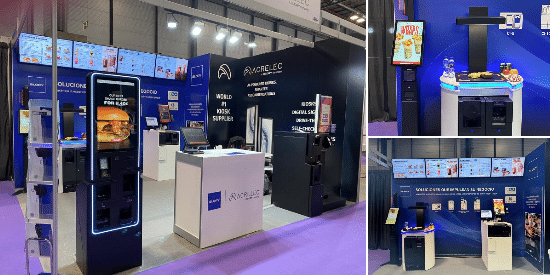
ACRELEC Spain - The exhibition booth, adorned with a purple carpet, showcases digital kiosks and screens featuring technology products. Brand logos like AURES Group, EuroCIS, and ACRELEC are prominently displayed, alongside interactive displays highlighting AI Voice Ordering and a brochure stand.

The exhibition booth, adorned with a purple carpet, showcases digital kiosks and screens featuring technology products. Brand logos like AURES Group, EuroCIS, and ACRELEC are prominently displayed, alongside interactive displays highlighting AI Voice Ordering and a brochure stand.

¡Acercaos a nuestro stand en el pabellón 4, F664 y os mostraremos todos los equipos que hemos traído a la feria!
Agradecemos a todos los que os habéis pasado a visitarnos, para compartir ideas y poder enseñaros las distintas soluciones de ACRELEC y GLORY!. Si aún no lo has hecho, ¡te esperamos en nuestro stand!

📍 4F664 IFEMA
📅 10-12 Marzo

LinkedIn


ACRELEC United Kingdom

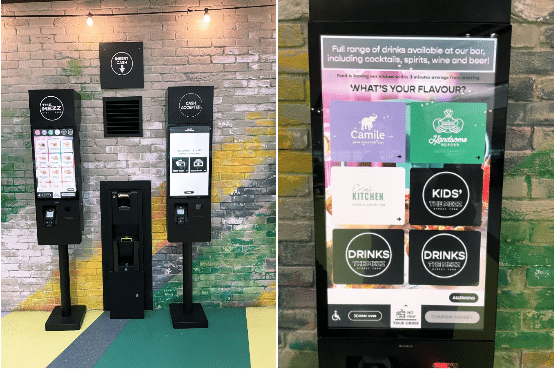
Two ACRELEC self-service kiosks sit against a colorful brick wall. The left kiosk features a digital menu, while the right screen presents drink options with Whats your flavor?—highlighting cocktails and kids drinks—enhanced by AI Voice Ordering for a seamless experience.

Two ACRELEC self-service kiosks sit against a colorful brick wall. The left kiosk features a digital menu, while the right screen presents drink options with Whats your flavor?—highlighting cocktails and kids drinks—enhanced by AI Voice Ordering for a seamless experience.

The SSP Unit in The Mezz at Terminal 2, Dublin Airport features ACRELEC cutting-edge technology, bringing a revolutionary dining experience to travellers. ✈️

🍽️ Four Kitchens in One: ACRELEC‘s custom software brings a unique concept to airport dining, allowing customers to explore and order from four diverse menus, all from a single kiosk. Whatever your pre-flight craving, we’ve made it simple and got you covered!

💡 A Seamless Ordering Experience: With ACRELEC‘s K27 Kiosks, customers can view all menus and place orders effortlessly. The integrated cash recycler from GLORY ensures a smooth and secure transaction every time.

🔧 State-of-the-Art Hardware and Software: The combination of ACRELEC‘s advanced software and robust K27 Kiosks guarantees a reliable and efficient service, enhancing the customers overall dining experience.

Join us at The Mezz and experience the ease and future of airport dining!🍴

Learn more 👉 🔗 https://bit.ly/3Cfac3Y

Linkedin


ACRELEC Italy

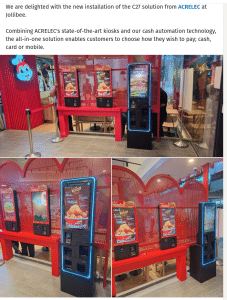
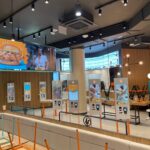
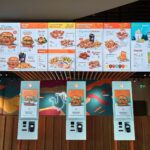
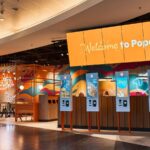
Three images depict a brightly lit fast-food restaurant with self-service kiosks featuring large touchscreens and ACRELEC AI Voice technology. Branded kiosks offer menu options for ordering, and customers can choose payment methods like cash, card, or mobile.

Three images depict a brightly lit fast-food restaurant with self-service kiosks featuring large touchscreens and ACRELEC AI Voice technology. Branded kiosks offer menu options for ordering, and customers can choose payment methods like cash, card, or mobile.

ACRELEC MALLORCA

Airport visits to Palma de Mallorca & Ibiza to get ready for summer peak season ☀️✈️ (PMI) (IBZ)

https://www.linkedin.com/in/niklasagerup

Fantastic airports, outstanding SSP units, and an impressive digital journey with great potential! It’s great to see digitalization taken to such a great level, with a strong focus on enhancing the entire guest experience.
We have a few final touches to take care of, and then we’ll be ready to maximize sales and value for the summer peak season with Mobile Order, Ordering Kiosks, and Digital Signage. ☀️☀️☀️

A big thank you for your hospitality! Looking forward to an exciting summer season ahead!
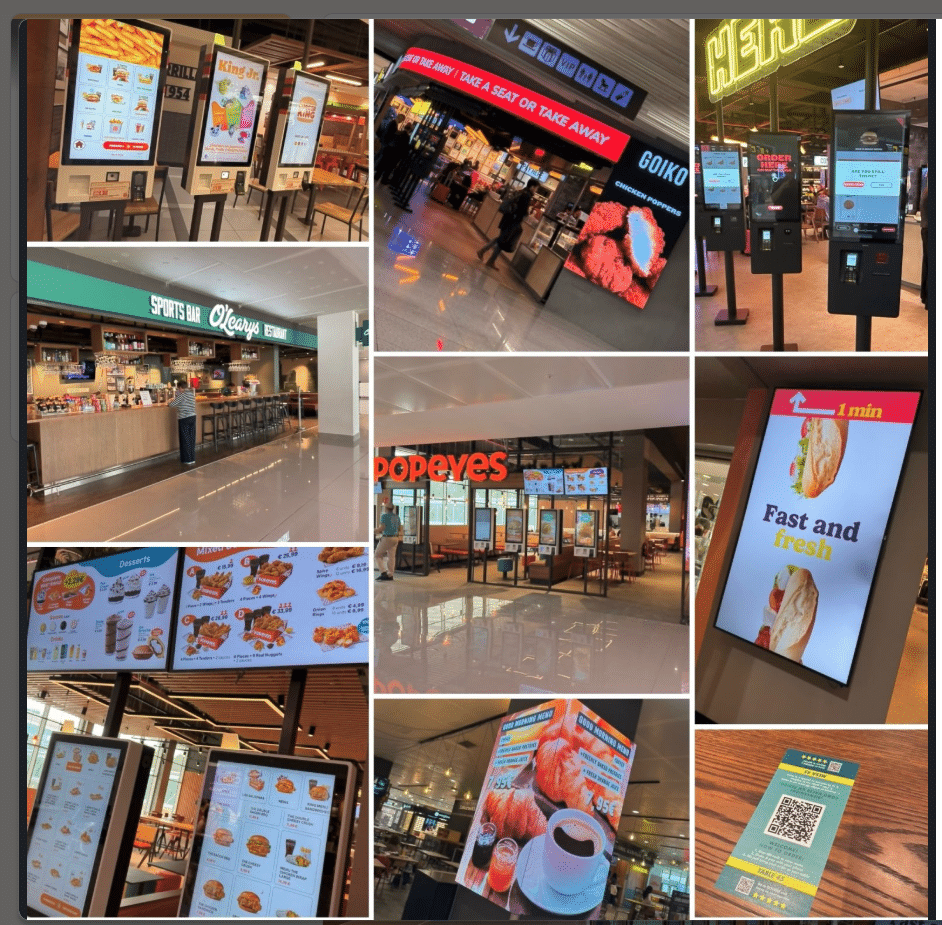
ACRELEC MALLORCA Collage of various fast food restaurant interiors and digital menu displays. Images showcase colorful menu boards, ordering kiosks enhanced by ACRELEC AI Voice technology, and seating areas with bright signage, highlighting different meal offerings in a modern setting.

Collage of various fast food restaurant interiors and digital menu displays. Images showcase colorful menu boards, ordering kiosks enhanced by ACRELEC AI Voice technology, and seating areas with bright signage, highlighting different meal offerings in a modern setting.

More ACRELEC Kiosk Posts

ABOUT ACRELEC

ACRELEC is recognized as a world leader in the kiosk industry, particularly in the self-ordering kiosk market. Here are some key points that support this status:

  1. Market Share and Leadership: ACRELEC holds a significant share of the global self-ordering kiosk market, with a reported 16% of global hardware shipments. This positions them as a leading supplier to major quick-service restaurant (QSR) chains like McDonald’s, Burger King, and KFC14.

  2. Global Presence and Partnerships: ACRELEC collaborates with prominent brands across various sectors, including SSP in airports, enhancing customer experiences through tailored self-service solutions6. Their technology is used in multiple countries, further solidifying their global influence7.

  3. Innovative Solutions: ACRELEC offers a range of cutting-edge digital solutions, including self-service kiosks, drive-thru systems, and self-checkout products. These solutions are designed to boost efficiency and customer satisfaction, making them a preferred choice for many leading brands57.

  4. Parent Company and Financial Backing: ACRELEC is owned by Glory, a global leader in cash technology solutions, which provides strong financial backing and expertise in cash handling technology35. This partnership enhances ACRELEC’s capabilities in developing kiosks that accept various payment methods, including cash and credit3.

Taco Bell AI Drive Thru News

Taco Bell has frequently discussed its use of AI in drive-thru operations, particularly in recent months. Here are some key instances where Taco Bell has highlighted its AI drive-thru technology:

  1. Expansion Announcement: In July 2024, Yum! Brands announced plans to expand AI voice technology to hundreds of Taco Bell drive-thrus across the U.S. by the end of the year. This was a significant step after successful trials in over 100 locations across 13 states135.

  2. Benefits and Testing: Taco Bell emphasized that AI helps streamline operations, improve order accuracy, reduce wait times, and enhance customer experience. The technology was developed over two years of testing and refinement235.

  3. Employee and Customer Experience: The company highlighted that AI eases team members’ workloads, allowing them to focus on hospitality. It also enables new ways to engage with customers237.

  4. Global Ambitions: Taco Bell aims to implement AI globally, with ongoing tests in KFC locations in Australia57.

  5. Recent Updates: As of November 2024, Taco Bell’s AI drive-thru was operational in 300 U.S. locations, processing over 2 million orders since its pilot began6.

Taco Bell’s leadership has consistently emphasized the role of AI in enhancing both employee and customer experiences, positioning it as a core part of their innovation strategy
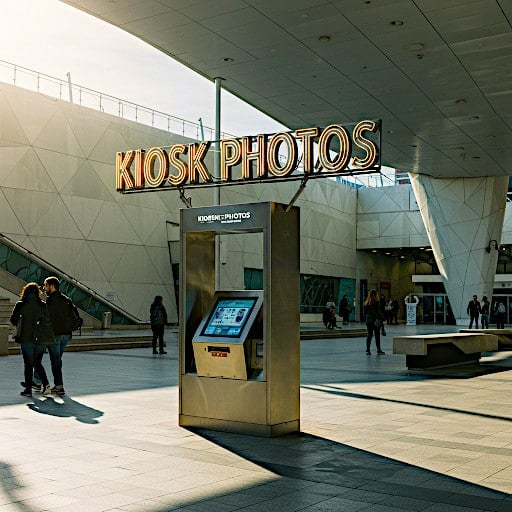
Kiosk Photo – Gallery of Selected Kiosk Models

A sleek public area showcases a modern kiosk labeled Kiosk Photos with a digital interface. The sun casts long shadows on the open space as people stroll by, and a contemporary building with geometric shapes stands in the background, resembling an avant-garde gallery.

Kiosk Photo Gallery

We keep track of new kiosk photos and new kiosk designs and catalog them in Pinterest. Here are some current ones.

  • Kiosk Designs – Full catalog of 1100 pins
  • kiosk photo snapshot 2026

    click for full size — kiosk photo snapshot

Reviewing the latest kiosk design photos can be highly valuable for several reasons:

  1. Inspiration and Innovation: Looking at recent designs can inspire new ideas and help you stay updated on the latest trends in kiosk technology and aesthetics. Trends such as human-centered designintegration of advanced technology like AI and AR, and contactless solutions are reshaping the industry23.

  2. Enhanced User Experience: Modern kiosks focus on user-friendly interfacesergonomic design, and accessibility to improve customer satisfaction and engagement. Seeing how these elements are implemented can guide your own design decisions27.

  3. Market Insights: The kiosk market is growing rapidly, driven by consumer demand for self-service options and technological advancements. Reviewing designs can provide insights into how businesses are leveraging kiosks to boost efficiency, customer engagement, and brand identity13.

  4. Design Strategies: Well-designed kiosks can significantly increase usage and profitability by enhancing brand recognition and streamlining operations. Photos can illustrate how successful kiosks incorporate consistent brandingintuitive navigation, and advanced technology to achieve these goals14.

  5. Competitive Advantage: Staying informed about the latest kiosk designs can help businesses differentiate themselves and stay competitive in a rapidly evolving market68


More Kiosk Photos

Walmart Self Checkout – AI and RFiD To Rescue

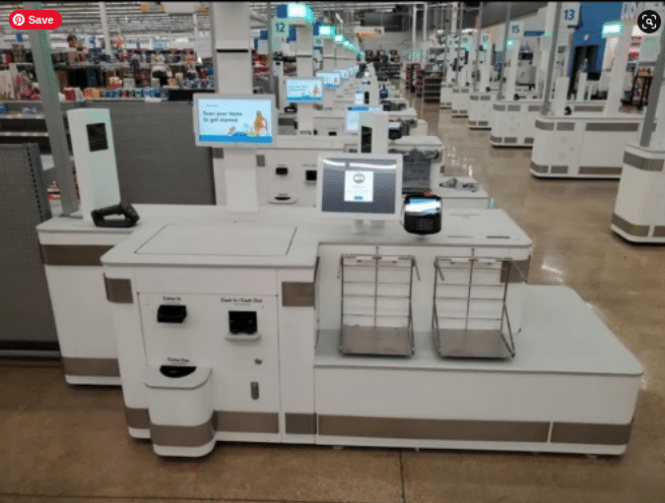
walmart self-checkout

Walmart Self Checkout – AI and RFiD Battle Theft

Walmart‘s innovative measures to combat theft, particularly focusing on new technology being implemented at self-checkout stations. Here are the key points:

Olea Kiosks Inc. provides standard and custom check-out and self-order kiosks for restaurants, healthcare, ticketing and more

Click to Contact Olea

  • ATM TechnologyWalmart is introducing advanced ATM-like technology at self-checkout areas to enhance security and reduce shoplifting incidents. This system aims to monitor transactions more effectively.
  • Impact on Shoplifting: The new measures are designed to significantly decrease theft, which has been a growing concern for the retailer.
  • Community Service for Shoplifters: In a related initiative, a judge has ruled that individuals caught shoplifting at Walmart may be required to perform community service, such as washing cars in the store’s parking lot, as a form of punishment.

These steps reflect Walmart‘s commitment to improving security and addressing the challenges posed by theft in retail environments.

Excerpt

Retail theft is a massive issue that costs companies billions every year. Self-checkout, while convenient for customers, has also opened the door to new ways of stealing — whether by accident or on purpose. Walmart, as one of the largest retailers in the world, has been hit hard by this problem. Traditional methods like security guards and receipt checks haven’t been enough to stop shoplifters, so Walmart is now turning to smarter tech.

How Walmart’s New Anti-Theft Technology Works

At the heart of this new system are RFID tags and AI-powered cameras. Every product will carry an RFID tag — a tiny chip that holds product information. As shoppers scan their items at self-checkout, sensors will make sure each product is properly scanned. If something isn’t scanned, the system will instantly alert store staff.

What About Kroger?

Kroger is indeed using AI in its self-checkout systems. The company has implemented a visual AI-based self-checkout solution developed with Everseen’s Visual AI technology. This system uses high-resolution cameras and AI to detect and correct errors at self-checkout stations, reducing the need for employee intervention and improving the checkout experience for customers12.

However, Kroger is not specifically using RFID in its self-checkout systems. Instead, Kroger is deploying RFID technology in its inventory management, particularly in the bakery department, to improve inventory accuracy and reduce waste. This RFID initiative involves attaching RFID-embedded labels to bakery products to track freshness and automate inventory counts367.

In summary, while Kroger is leveraging AI in self-checkout, its RFID adoption is focused on inventory management rather than self-checkout processes.

What About Costco?

Costco is actively using AI to enhance various aspects of its operations, including inventory management and customer experience. However, AI is not specifically mentioned in the context of checkout processes at Costco. Instead, AI is used for tasks like demand forecasting, personalized marketing, and fraud detection. With  RFID, Costco has explored in inventory management. The company has conducted pilot programs to assess the benefits of RFID in tracking inventory, which could potentially improve supply chain efficiency and product tracking

More Walmart Self-Checkout Posts

InfoComm Digital Signage and Media

Kiosk Manufacturer Association is exhibiting at InfoComm Interactive 2025. Register with code KIO978 for a free exhibit hall pass. Includes event dates, location, and a Register Now button.

InfoComm Interactive

Visit us at the InfoComm interactive tradeshow. This year Kiosk Industry has a booth at InfoComm and #3489.  June 11-13 Orlando. Free Customer Invites (use KIO978). 

What you will see in our booth:

Four featured speakers with headshots and titles appear on a purple gradient background for this InfoComm interactive IC25 event. Text details a session on Retail Revolution set for June 12, 3:15–4:00 PM, at Spotlight Stage - Booth 4327.

Four featured speakers with headshots and titles appear on a purple gradient background for this InfoComm interactive IC25 event. Text details a session on Retail Revolution set for June 12, 3:15–4:00 PM, at Spotlight Stage – Booth 4327.

Neil Farr

AcquireDigital Digital Signage

Click for full size

A leader in digital transformation, Neil Farr brings deep expertise in user engagement and technical innovation. As CEO of Acquire Digital, he has spearheaded the development of industry-leading solutions for digital signage and interactive experiences. At InfoComm, Neil will be showcasing Acquire’s latest advances in wayfinding technology and StudioDX—the next evolution in high-performance digital signage management.

LinkedIn https://www.linkedin.com/in/neilfarr1/


Peter Kaszcyki

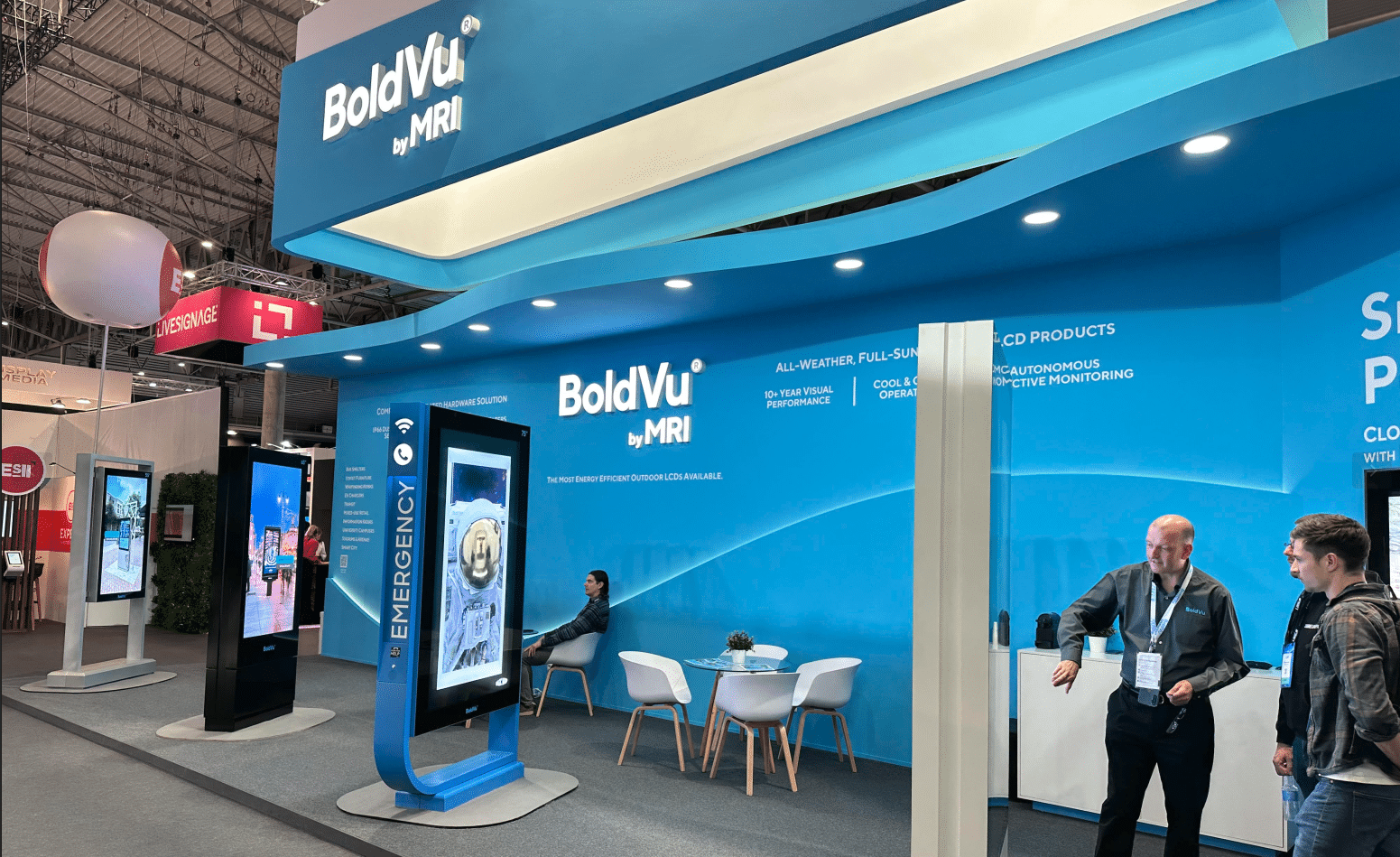
A trade show booth featuring BoldVu by MRI offers an interactive experience. The large digital display highlights The Emergency as two people converse nearby. With a blue, curved design, the booth exudes a sleek infocomm vibe, complete with branding and seating at the back.

Click for full size

BoldVu Large Format Outdoor Digital Signage and Smart City terminals. LG outdoor displays used.

VP – Business Development at BoldVu by MRI  Alpharetta, Georgia, United States Rochester Institute of Technology Manufacturing Resources International (MRI) https://www.linkedin.com/in/peter-kaszycki-14b2264/


Heinz Horstmann

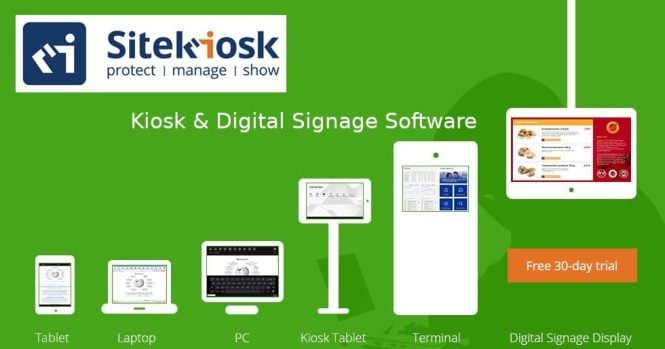
Android lockdown kiosk mode https://kioskindustry.org/digital-signage-software-sitekiosk-online-kiosk-software-new-release/

Click for full size

CEO – SiteKiosk – Interactive Digital Signage & Kiosk Software for Public Computers and Displays. LinkedIn is https://www.linkedin.com/in/heinz-horstmann-760b783/


John Wagner

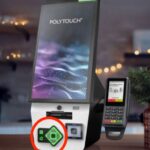
A modern self-service kiosk with a large angled touchscreen labeled POLYTOUCH, a payment terminal, and a fingerprint scanner, set against a plain gray background. This ChromeOS Certified device ensures secure and seamless user interactions.

Pyramid Pixi ChromeOS Certified

Solution architect for Pyramid Computer. Self-Order, miniPC, media player and rackmount 1U and 2U servers. LinkedIn is https://www.linkedin.com/in/john-wagner12/


Edward Crowley

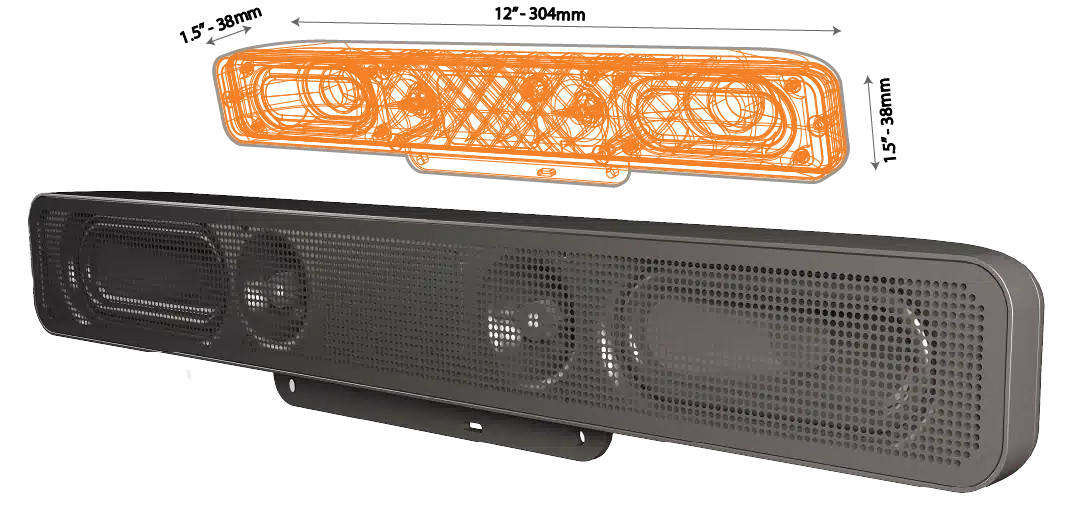
AI Connect Bar for conversational AI audio

AI Connect Bar for conversational AI audio

The first unified communications product designed to leverage the full power of Conversational AI. The new AI Connect Bar combines the industry’s best microphones with a tuned, amplified speaker system into one sleek peripheral with a single USB connection to seamlessly attach to most All-in-One (AiO) touchscreen computers and kiosks.

https://www.linkedin.com/in/edwardjcrowley/


Why Go To InfoComm?

InfoComm is the largest and most comprehensive professional audiovisual trade show in North America, produced by the Audiovisual and Integrated Experience Association (AVIXA). The event brings together manufacturers, integrators, dealers, and end-users worldwide to showcase the latest technologies, products, and services in the professional audiovisual (pro AV) industry. InfoComm’s origins date back to 1946 when the National Association of Visual Education Dealers (NAVED) held its first conference, and since then, it has grown significantly to support the pro AV industry2.

AVIXA, established in 1939, is the international trade association representing the audiovisual industry. It has more than 3,000 enterprise members representing over 20,000 AV professionals from more than 80 countries. AVIXA is a hub for professional collaboration, information, and community, offering resources such as AV standards, certification, training, market intelligence, and thought leadership14.

InfoComm 2025, scheduled for June 7-13 at the Orange County Convention Center in Orlando, Florida, will explore key trends in the pro AV industry, including the intersection of AV, IT, and broadcast, and the impact of AI on AV solutions1. The event will feature over 150 new exhibitors, showcasing advancements in LED displays, AV-over-IP solutions, and interactive technologies. The education program will include sessions across 10 tracks, with a focus on AI applications in various areas of the industry1.

InfoComm provides a dynamic environment for AV solution providers and buyers to conduct business, facilitating growth in the $325 billion pro AV industry, which is expected to add nearly $100 billion in revenues over the next five years1. The event allows attendees to network, learn about industry trends, and explore new technologies and business partnerships.

Featured Exhibitors

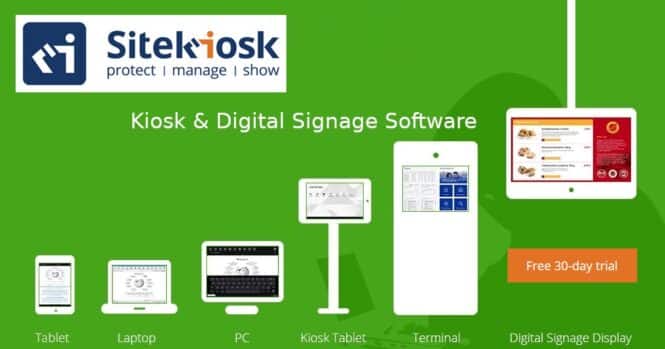
SiteKiosk Online is a cloud-based software solution designed to manage and secure public-access devices such as kiosks, digital displays, public computers, tablets, and laptops. It is compatible with both Windows and Android systems, offering a comprehensive platform for creating and managing interactive kiosks and digital signage displays.

Key Features of SiteKiosk Online

  • Protection:

    • Customizable and Hardened Browser: Ensures secure browsing by restricting access to unauthorized websites and protecting against malware.

    • Device Lockdown: Secures devices from tampering and unauthorized access from startup.

    • Data Security: Automatically clears session data after each use to maintain privacy.

  • Management:

    • Remote Access and Monitoring: Allows administrators to manage and monitor devices from a centralized dashboard, receiving real-time alerts for any issues.

    • Two-Factor Authentication: Supports secure login options, including LDAP and Active Directory integration.

    • Configuration Management: Enables remote updates and configuration changes across all devices.

  • Digital Signage and Content Management:

    • Powerful CMS: Supports various content types like videos, images, and PDFs, allowing for customizable menus and multilingual support.

    • Time and Event-Controlled Displays: Enables scheduling of content based on time, day, or external triggers.

    • API for Custom Scripts: Allows integration with external sensors and devices using common scripting languages like JavaScript and HTML.

Benefits

  • Customization: Offers flexibility in creating interactive user interfaces tailored to specific business needs.

  • Scalability: Supports expansion as businesses grow, allowing easy addition of new devices.

  • Security and Compliance: Ensures comprehensive privacy and compliance management, protecting customer data and maintaining regulatory standards.

Overall, SiteKiosk Online is designed to enhance customer experience through interactive digital solutions while ensuring operational efficiency and security across various industries.

Smart City Peerless-AV Project in North Carolina

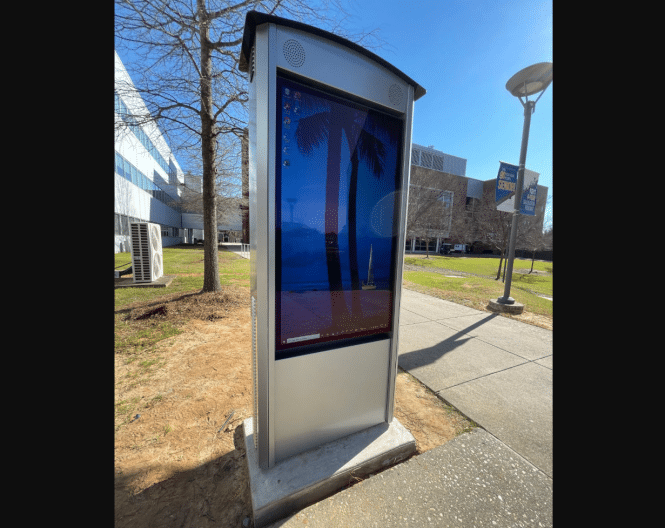
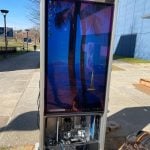
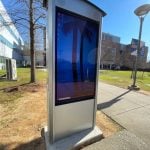
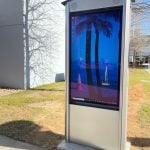
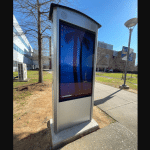
A Peerless-AV outdoor digital display panel, showcasing a computer desktop with palm trees, graces the sidewalk. Nestled near a modern building and lush trees under clear skies, it embodies the essence of a Smart City in North Carolina.

Smart City Peerless-AV Project

Smart City project by Peerless-AV — Pierson Computing Connection, Inc. is proud to share a recent installation of a Peerless-AV Smart City Kiosk at Fayetteville State University in North Carolina, completed in partnership with our friends at CDW.

These state-of-the-art outdoor kiosks are designed to replace static signage and elevate campus communication with dynamic, real-time content. Perfect for sharing campus news, wayfinding, event info, weather updates, and more — all in a sleek, modern design built to withstand the elements.

The Smart City Kiosk features:
✅ 55″ Xtreme™ High Bright Outdoor Display with full HD 1080p resolution — crystal clear even in direct sunlight.
✅ All-weather rated enclosure for long-term durability.
✅ Optional 10-point IR touch overlay for fully interactive experiences.
✅ Easy installation without the need for heavy equipment.
✅ Locking rear door for simple maintenance access.

By integrating this advanced kiosk technology, Fayetteville State University is taking a big step toward improving campus engagement and streamlining information sharing.

👏 Big thanks to CDW and Peerless-AV for being great partners in bringing this project to life!

More Smart City Peerless-AV Articles

Self Service Europe – Poland, Italy & Spain

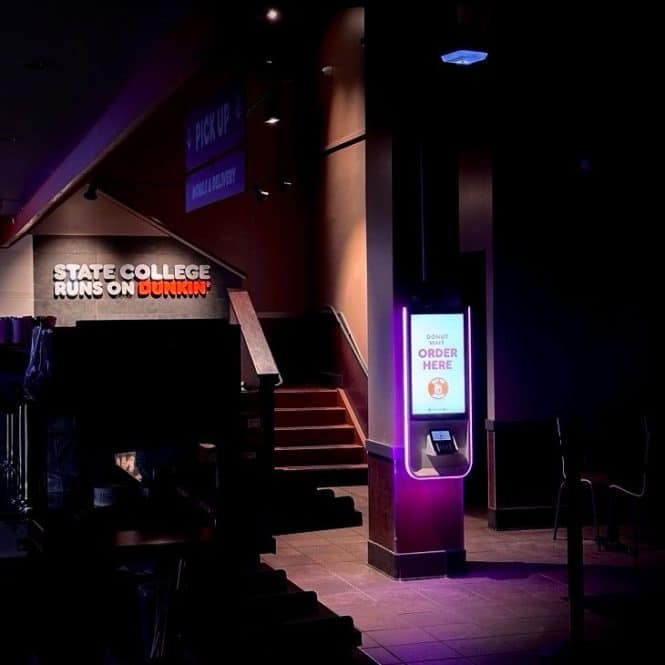
Inside a Dunkin coffee shop, dimly lit with a bright self-service kiosk reminiscent of those in Europe on the right. A sign reads STATE COLLEGE RUNS ON DUNKIN near stairs to the left. A PICK UP sign hangs above.

Self Service Europe Kiosks Come of Age

It’s easy to think of and see US iterations of self-service, but we Americans often forget (and sometimes dismiss) that Europe is a hotbed for self-service. Counterless kiosk-only restaurants are the norm, and instead of 3 or 4 kiosks, you can see 10-15. (In the US, see McDonald’s Counterless with only Self-Order Kiosks (with Cash, too).) Other examples include lockers (see lunchtime in China video).

Introduction

Europe self-service is something to watch! Pretty easy to watch the big companies like McDonald’s, Yum Foods, Inspire and others.   And we think US companies at that point.  Worth noting KFC has over 30,000 restaurants worldwide. Less than 4000 in the US. Everybody likes chicken apparently 🙂  From Digital-Signage.blog

Our tagline — Europe – Are they Behind or Ahead in Self-Service? The US seems to be falling behind Europe and China for that matter. All the cool stuff is there. I know there is residual US pride at play but best to get over it and get with it. Competition is good!

Insight

Europe has consistently led in technology and design. We examine primary design and technology advances in Europe.  Today, we look at m4b in Poland and also Acrelec in Italy. Europe has also embraced “counterless”. Instead of counters with 4 or 5 kiosks, they tend to do no counters and 15-20 kiosks. Looking for examples of COB displays being used in drive-thru outdoor. Europe leads the way there as well. European providers also utilize Chinese manufacturing much more than “Made in USA” stuff. Acrelec, for example, has facilities in China.

Europe has always led in technology and design. We examine major design and technology advances in Europe.

  • Actual AI drive-thru technology that works and isn’t just “talked about” for stock price.
  • Innovative outdoor designs
  • Counterless – Employee Free Zones
  • Next generation menu boards
  • SCO Self Checkout

Part I – Poland

Pictures from Poland

We’ll start with pictures from Poland.  We are not going to show a few things which provide distinct competitive advantage. These are from mb4.pl

Videos from Poland

AI Voice Ordering
Putting Together a KFC

Resources & Brochures from Poland

ITALY and KFC


Kiosk Service – Kiosk Support Done Right

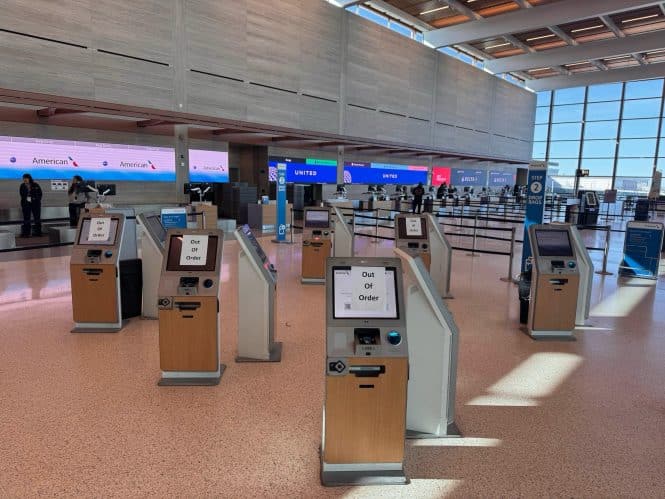
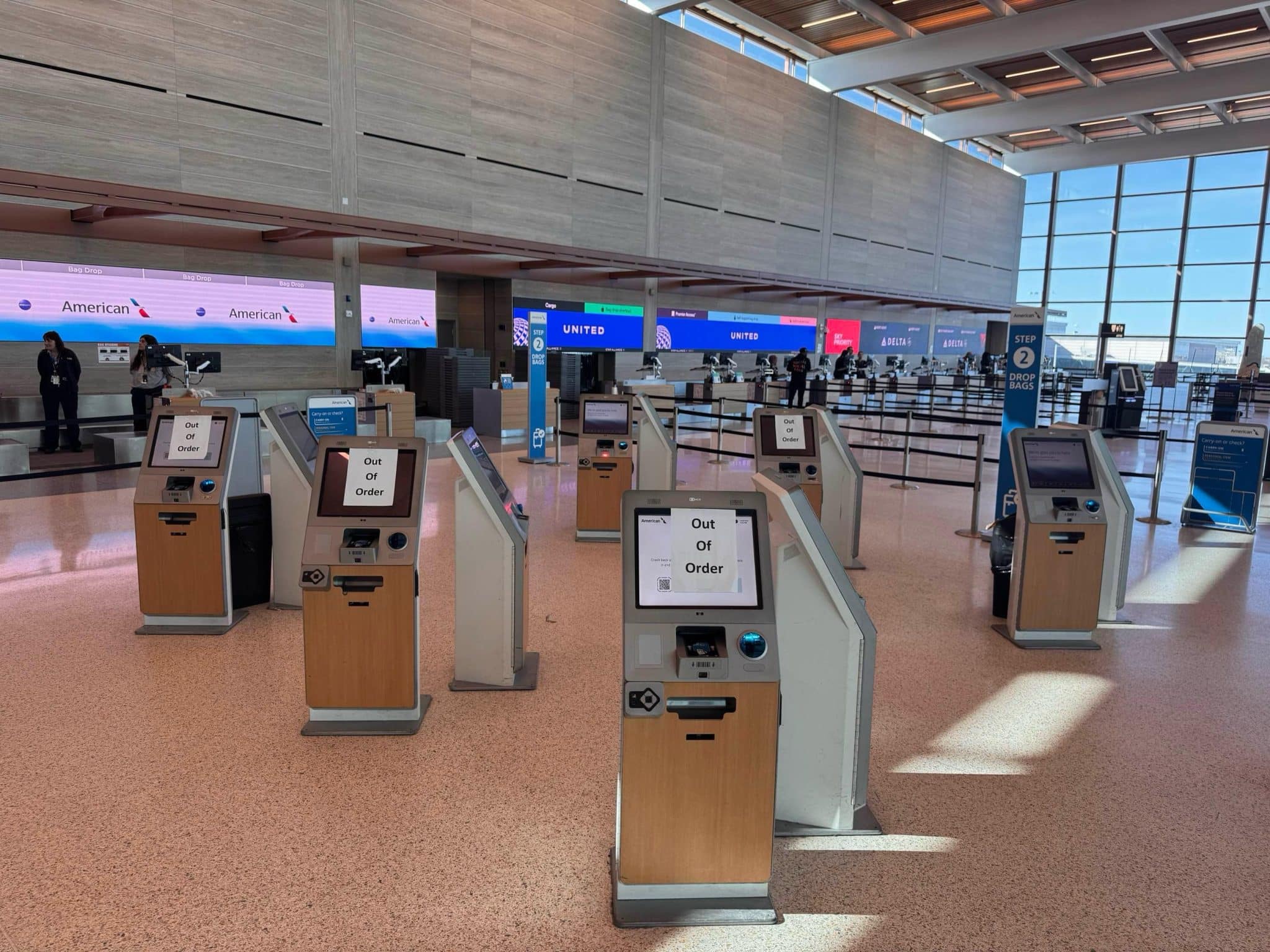
An airport check-in area with multiple self-service kiosks displaying Out of Order signs underscores a disruption in kiosk service. A row of airline check-in counters with digital screens glows softly in the background, while natural light pours through large windows, illuminating the scene.

Kiosk Service Support Considerations

As kiosks slowly became mission-critical, many users didn’t factor in the operational changes.  Cover photo note:  The out-of-order kiosks are by NCR.  Not commonly known yet but NCR has departed airline kiosk business and those kiosks are all EOL/EOS.  They are in process of being replaced by Embross (which bought business from IBM way back). That also indicates NCR service division is out of the picture now. NCR service seems to be dwindling given the reduction by Walmart self-checkout.

Evan Schuman

Evan Schuman

Writer – Evan Schuman has covered IT issues for a lot longer than he’ll ever admit. The founding editor of retail technology site StorefrontBacktalk, he’s been a columnist for CBSNews.com, RetailWeek, Computerworld and eWeek and his byline has appeared in titles ranging from BusinessWeek, VentureBeat and Fortune to The New York Times, USA Today, Reuters, The Philadelphia Inquirer, The Baltimore Sun, The Detroit News and The Atlanta Journal-Constitution. Evan can be reached at [email protected], and he can be followed at http://www.linkedin.com/in/schumanevan/.

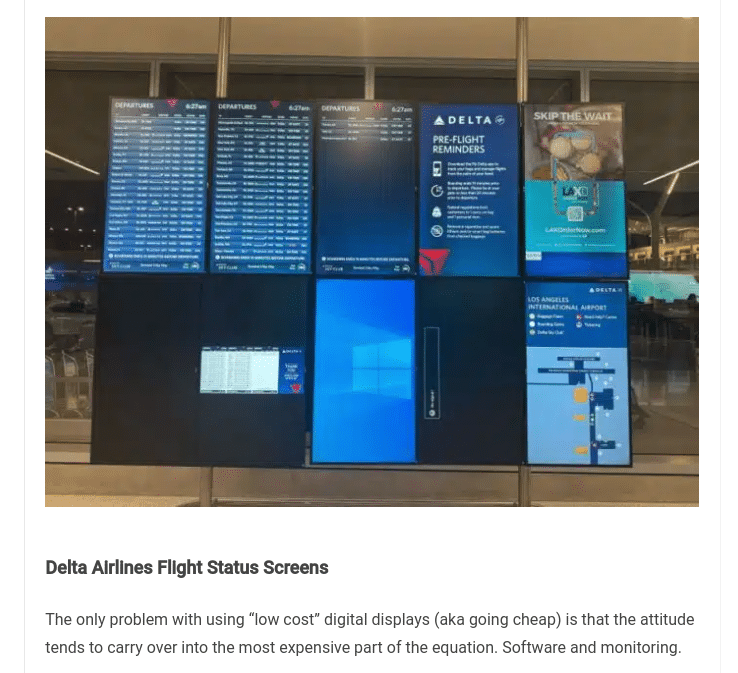
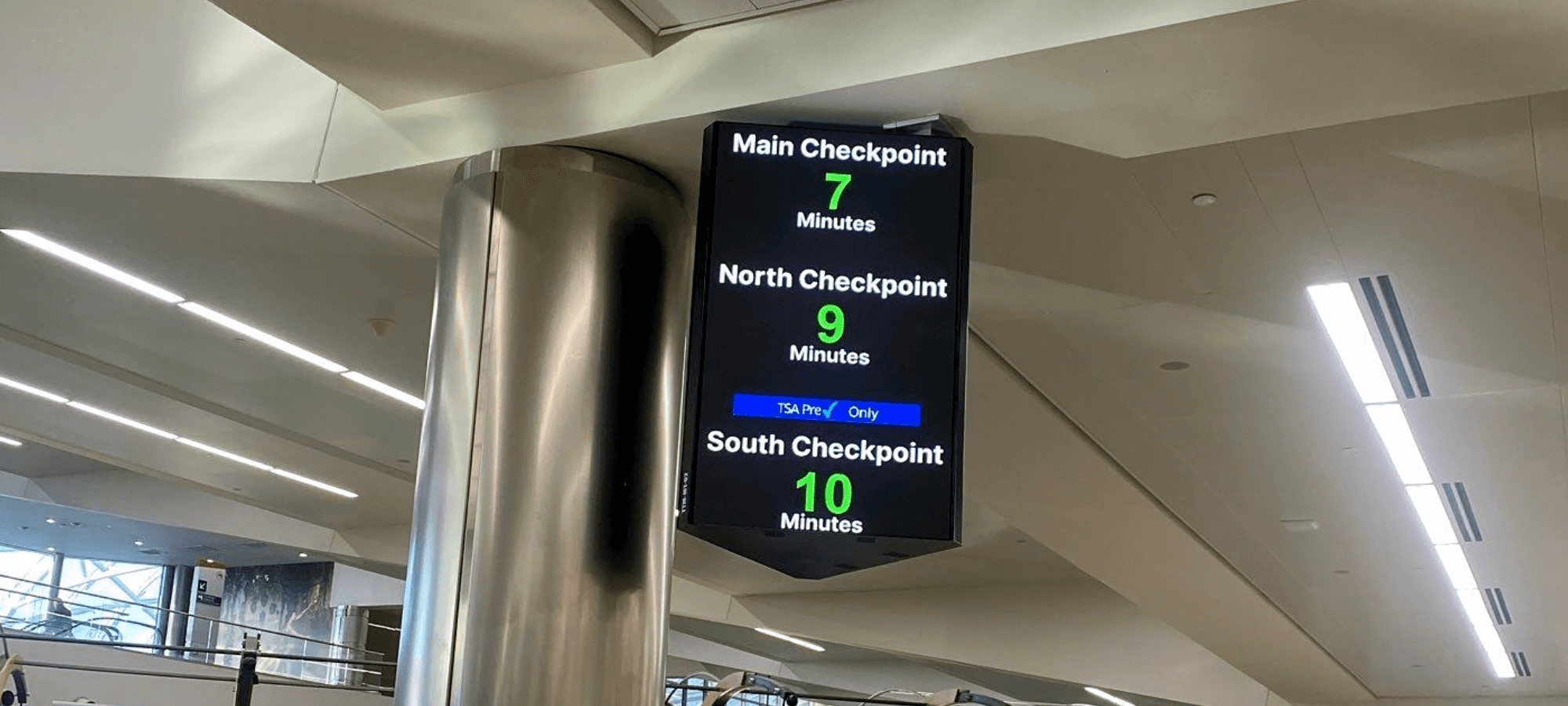
Insight: This “mis-factoring” also extends to all forms of self-service including digital signage, hybrid POS, lockers, vending and more. Recently Delta Airlines suffered a “snafu” with their flight status signage.  Major problem?  Going cheap and not bothering to support process. Consider POS outages — Starbucks POS Outage: In 2015, Starbucks experienced a massive POS outage across the U.S. and Canada, forcing many locations to close early or give away free coffee. This incident is estimated to have cost the company millions of dollars in revenue. Dutchie Cannabis Retail Outage: On April 20, 2024, Dutchie’s POS system crashed for several hours, affecting cannabis retailers during a peak sales day. This outage resulted in lost sales and customer dissatisfaction. General Statistics: It’s reported that 81% of retailers experience POS downtime at least once a year, with 87% waiting four hours or more for support from their POS supplier7. This suggests that POS outages are relatively common in the retail sector.  Self-checkout – An astonishing 67% of users have reported experiencing self-checkout failures, which can include issues like barcode scanning problems, payment errors, and system malfunctions.


Service and support used to be low priorities, but as kiosks became essential, users rarely realized that they needed to be treated like any more revenue-producing devices.

Over the last few years, kiosks have morphed from supplemental assistance devices to–in many instances–mission-critical devices handling many if not all of a location’s purchases and services.

Think of the quick-service restaurants today where customers are served entirely via kiosks. Or look at the airline terminals with kiosks dispensing boarding passes. Many airlines have shifted staffing to reflect the reliance on kiosks. That means that if many or all of the kiosks go down, they won’t have enough staff to continue the service.

Digital flight status screens for Delta Airlines display arrival, departure, and gate information. The layout includes pre-flight reminders and advertisements. Airport seating is visible in the background, enhancing the overall kiosk service experience.

Click for full size

The reason for this disconnect lies in the gradual change for how businesses are leveraging kiosks. Many of these businesses never prioritized service for the kiosks because they were then staffed to handle all service without the kiosks.

When a business change is this incremental, business executives often don’t think through all of the real-world implications when they make a key change.

Businesses have been tripped up by these incremental changes for decades. Remember when businesses took various mundane peripherals–including printers, scanners, copy machines and fax machines–and added them to their network for convenience. That meant every device was assigned an IP address.

That opened a massive cybersecurity hole, but because these businesses had never needed to invest in security for printers or scanners, it took months before they realized that making the devices network-accessible made a huge difference. Those peripherals could easily become an open backdoor in the company’s most sensitive systems.

More recently, the IoT (Internet of Things) boom was another incremental change. But because maintenance and facilities staffs had spent decades buying door locks and lightbulbs on their own, they saw no reason to change that behavior once those locks and bulbs were globally accessible. It took again months before Security insisted on being asked for permission before any IoT locks or lightbulbs were purchased.

That brings us to kiosks in 2025. When businesses started increasingly relying on kiosks, they rarely went back and put into place mechanisms appropriate for any mission-critical device.

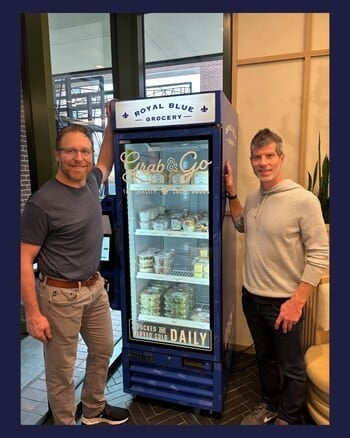
Two people stand beside a blue display fridge labeled Grab & Go from Royal Blue Grocery. Resembling a Smart Food Vending Kiosk, its stocked with packaged foods and beverages. They are indoors, near a window with a plant adding to the cozy ambiance.

Grab & Go from Royal Blue Grocery. Will Pymm on the right. You can see this unit at the upcoming NRA tradeshow in Chicago in May

“You have full restaurants that are going people-less. If you have precisely calculated that you need at least ten kiosks for your dinner crowd and one goes down, you’re out of business,” said Will Pymm, senior VP/managing partner for REDYREF Interactive Kiosk. “ Hungry customers won’t wait a lot longer because you have a maintenance problem. They’ll just leave and they might be hesitant to come back.”

Pymm has watched kiosks take on much more essential roles and yet he has seen no corresponding increase in service, support and redundancy–all things that mission-critical mechanisms almost always have.

“These kiosks are delivering their operations. And if they go down, there is no Plan B. I have watched as things become far more automated and there are no backup plans,” Pymm said. “I don’t think business executives are asking enough questions about the service part of the business. I think it’s an afterthought.”

As businesses push efficiency by reducing headcount by deploying more technology, they need to rethink their spreadsheets. Taking a small percentage of those savings and reinvesting it to protect that now-essential technology is necessary.

“We have become so technology reliant. If something does go down, it can become a catastrophe,” said Jillian Dabovich, director of business development, repair and maintenance for Crane Payment Innovations. “Consider kiosks handling cash payments. If it crashes, the whole thing becomes nothing beyond a big paperweight.” Businesses also tend to not understand how specialized kiosk repair is.

“You can’t dispatch a run-of-the-mill tech because the kiosk is filled with our proprietary components. Our people have the necessary training, certs, licenses and bonding,” Dabovich said.

“We have cash in transit (CIT) partners with armored cars and armed guards for cash activities, such as we do with casinos and banks.”

Depending on the service agreement, kiosk service operations can even do hot swaps, which can reduce the downtime to minutes.

The first approach should be to evaluate redundancy. The redundancy concept is straight-forward. If a business calculates that they need one kiosk for perhaps a testing lab’s waiting room to check in patients, the safe move is to deploy two. That way, if one kiosk crashes, operations–and revenue flow–continues uninterrupted.

If an airline calculates that it needs 15 kiosks, adding two or three more guards against temporary setbacks.

kiosk service An airport check-in area with multiple self-service kiosks displaying Out of Order signs underscores a disruption in kiosk service. A row of airline check-in counters with digital screens glows softly in the background, while natural light pours through large windows, illuminating the scene.

Click for full size

Redundancy can provide operational protections if one or two kiosks go down. But what happens if something larger materializes, such as if a massive power spike or a flood simultaneously shuts down all of the kiosks? Or what if an angry customer or a disgruntled employee takes a sledgehammer to every kiosk?

That’s why redundancy alone is insufficient. It must be coupled with as robust an on-site maintenance plan as the business can justify. That calculation typically would begin with a realistic calculation of the business cost of all kiosks crashing at the same time.

Pymm said the costs vary widely given the different types of kiosks and the different environments where they are needed. In general, though, he said that a typical indoor kiosk might cost about $5,000 and a typical outdoor hardened kiosk would be about $30,000 each.

A typical support plan might increase the kiosk investment by about 5-7 percent of the hardware cost, but if the customer wants full onsite labor, that might get close to roughly 10-12 percent of the total hardware cost.

Kiosk support can be challenging for customers who have not invested in a proper support plan, Pymm said. “Many kiosks have a lot of proprietary hardware. That means that a business might be down for 8 weeks or even 12 weeks if that part is not easily available,” he said.

“Sometimes, it can cost $1,000 just to ship a kiosk across the country,” Pymm said. “Depending on the unit, kiosks can weigh 250 pounds, maybe 500 pounds.”

There are many factors influencing the sharply increased reliance–and, often, dependency–on kiosks, Pymm said.

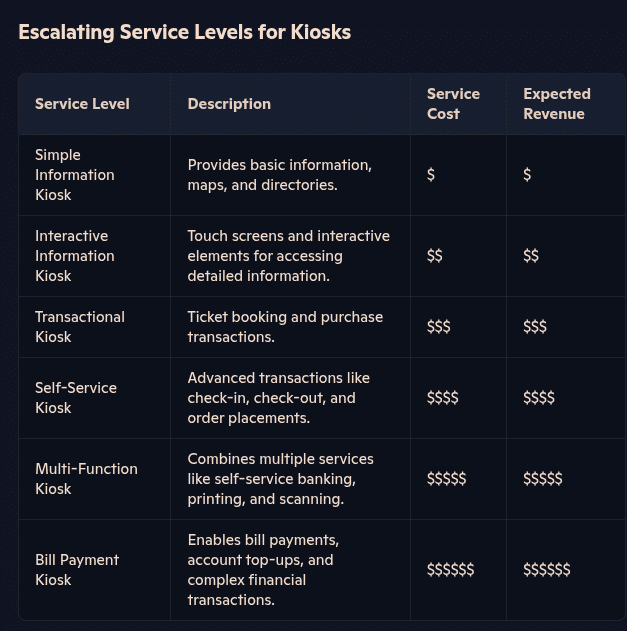
A table illustrating escalating kiosk service levels, complete with columns: Service Level, Description, Service Cost, and Expected Revenue. Levels include Simple Information, Interactive Information, Transactional, Self-Service, Multi-Function, and Bill Payment Kiosk.

A table illustrating escalating kiosk service levels, complete with columns: Service Level, Description, Service Cost, and Expected Revenue. Levels include Simple Information, Interactive Information, Transactional, Self-Service, Multi-Function, and Bill Payment Kiosk.

One of them is the move by many businesses to try and become entirely cashless, which is ostensibly going to reduce the theft of easily-used cash, no time spent counting and protecting cash, no armored car pickups, etc..

That trend runs into two different problems. One is that some consumers don’t have usable credit or mobile payment mechanisms and they are only able to spend cash. And the other is that some states forbid a merchant from not accepting active U.S. currency.

That’s where cash-to-card kiosks come in. Customers can give the machine cash and the kiosk will spit out a prepaid MasterCard for different denominations. That way, the merchant does not need to accept cash–and the many risks and costs associated with cash–but cash-only customers can still make purchases.

Pymm’s team, for example, offers a support plan, backed by software-tracked maintenance and a warehouse full of components and already-assembled kiosks.
“When a customer contacts us, how do we even know what part is broken?” Pymm asked. “We have software that interfaces into the hardware and it constantly relays the health status of every component.”

If a business today is turning over key parts of its business to state-of-the-art kiosks, investing additional dollars into redundant units and a full-fledged support package might make the difference between revenue flowing or one glitch turning that location into a deadzone.


Resources and Thanks

More Kiosk Support Articles

Solar Kiosks for Wayfinding Information – Stamford

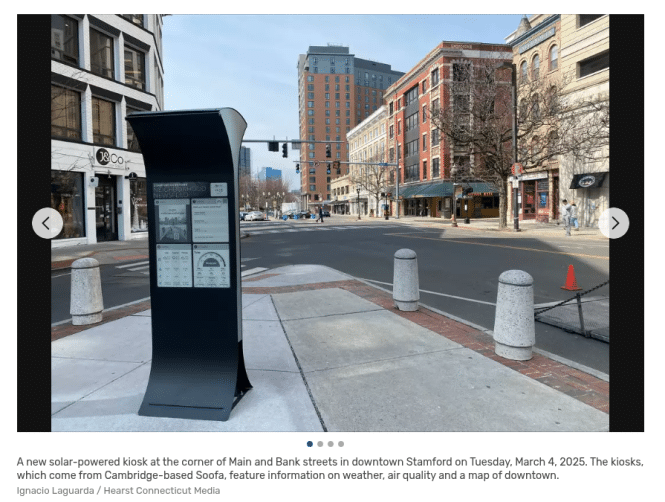
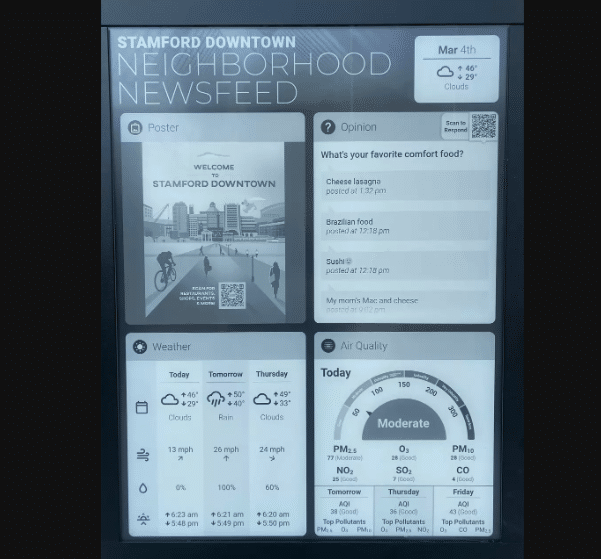
A solar-powered kiosk in downtown Stamford provides crucial wayfinding information amidst brick buildings and shops. The quiet street, free of pedestrians and vehicles, showcases the kiosks efficient design while offering real-time weather updates to passersby.

Solar Powered Kiosks

A new solar-powered kiosk at the corner of Main and Bank streets in downtown Stamford on Tuesday, March 4, 2025. The kiosks, which come from Cambridge-based Soofa, feature information on weather, air quality and a map of downtown. News link and full story.

Ignacio Laguarda / Hearst Connecticut Media

The digital display, part of Stamfords solar kiosks, features the Stamford Downtown Neighborhood Newsfeed, showcasing wayfinding information with sections including a poster for Stamford Downtown, an opinion poll on favorite comfort food, weather forecast, and a Moderate air quality index.

The digital display, part of Stamfords solar kiosks, features the Stamford Downtown Neighborhood Newsfeed, showcasing wayfinding information with sections including a poster for Stamford Downtown, an opinion poll on favorite comfort food, weather forecast, and a Moderate air quality index.

Stamford, Connecticut, has installed four new solar-powered kiosks in its downtown area, with a fifth one on the way. These kiosks, developed by the Cambridge-based company Soofa, provide information on weather, air quality, and maps of the area. They also display city announcements, transit information, and fun polls for visitors. The kiosks are part of an effort to create a more robust wayfinding system in the city. Soofa is providing the kiosks for free, with the company recouping revenue from selling advertising through the devices.

Soofa, which was founded by women in the MIT Media Lab in 2014, is providing the kiosks for free, with the caveat that the company will recoup revenue from selling advertising through the devices.

Looks like e-paper display technology to conserve power?

More Solar Kiosk Articles

CSUN and LG Session Invitation Only

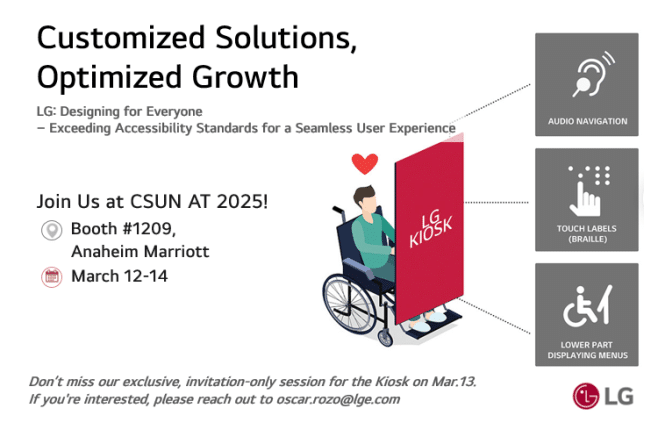
Promotional flyer for LGs participation at CSUN AT 2025. Features a person in a wheelchair using an LG Kiosk, with icons for audio navigation, touch labels, and a lower part displaying menus. Event details and contact information are included.

LG Invitation-Only Session

CSUN LG Session — Join LG for exclusive, invitation-only session for the Kiosk on March 13th.  See booth #1209 for customized solutions and optimized growth. LG: designing for Everyone – Exceeding Accessibility Standards for a Seamless User Experience

CSUN LG Session Event Details:

  • Date/Time: Thursday, March 13, 1:00 PM – 5:00 PM
  • Location: Anaheim Marriott, Palms Tower, 3rd Floor, Suite 312
  • For more information, please contact [email protected]
  • Ask for Oscar or email [email protected]

Best Regards,

Oscar Rozo

Sr. Manager, Standards & Regulatory Compliance

LG Electronics USA, Inc.

Related Articles


AI-Powered Kiosk Experiences and Intelligent Management

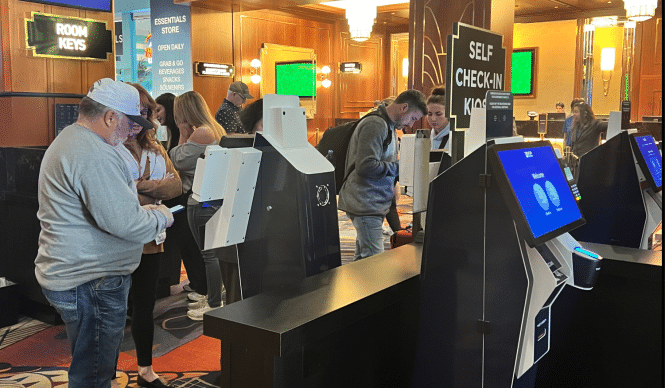
People use AI-powered self-check-in kiosks at a hotel lobby. The kiosks have screens displaying options. The background shows a sign for essentials and hotel services. The setting has warm lighting and a carpeted floor, enhancing the efficient, tech-savvy ambiance.

The Future of Kiosks by Olea

Olea Kiosks® February 2025

The Future of Guest Experience at Self-Service Kiosks – Personalization, Predictive Menus, and Seamless Interactions

Self-service kiosks are evolving—becoming intelligent, personalized, and seamlessly connected to digital ecosystems.

From AI-powered recommendations in QSRs to predictive check-ins at transportation hubs, today’s kiosks are enhancing guest experiences like never before. Imagine a kiosk that remembers your favorite order, suggests the best travel options, or streamlines healthcare check-ins with a single touch.

AI, automation, and omnichannel integration are shaping the next generation of kiosks. Want to see how self-service technology is redefining customer interactions across industries? Read the full article now!


Smarter, More Reliable Kiosk Solutions with Olea & meldCX

Managing self-service kiosks just got easier. Olea Kiosks has partnered with meldCX to integrate powerful device management software with our industry-leading kiosk designs. The result? Real-time monitoring and reduced downtime.

Want to see how this partnership is transforming self-service? Read more and meet us at HIMSS 2025!


Lessons Learned: Where You Put Your Kiosk Could Make or Break Its Success

As we continue celebrating our 50th anniversary, we reflect on the lessons that have shaped Olea Kiosks®. Each month, we’ll share insights from our journey—what we’ve learned, how we’ve grown, and what’s next.

This month, we look back at the importance of kiosk location for a national QSR chain. They installed self-service kiosks, expecting faster service and higher sales—only to see disappointing results. Why?

This article breaks down what went wrong and the crucial lessons every business should know before deploying kiosks. Read on to discover why the right location can make all the difference.

More AI-Powered Kiosk Articles

Real World AI-Powered Kiosk Examples Deployed

Retail and Food Service

Flavor District, North Carolina: This virtual food hall uses AI-powered Otter Kiosks to enhance customer experience and vendor operations. The kiosks feature:

Visual appeal with high-quality food photography to boost sales

Intuitive interface for improved customer and staff experiences

AI-driven upsell program and real-time analytics1

IDK Philly: This restaurant implemented Otter’s kiosk technology, resulting in:

Streamlined ordering process

Reduced wait times

Improved customer satisfaction

Significant reduction in errors1

Transportation

Changi Airport, Singapore: The airport has installed automated kiosks for check-ins and baggage drop-offs. These kiosks feature:

Infrared sensors for touchless interaction

Ability to provide information about flight schedules, airport layout, and wayfinding3

Healthcare
Nehru Hospital, Chandigarh, India: This hospital has implemented interactive AI-operated kiosks that:

Display a virtual doctor for diagnosis assistance

Save medical history in QR codes for easy sharing

Assist doctors and paramedics3

Public Spaces
City of Toronto: The city launched digital information kiosks called “TO360” that provide:

Interactive maps

Points of interest

Transit information

Local news updates3

These examples demonstrate how AI-powered kiosks are being used to enhance customer experiences, streamline operations, and provide valuable services across various sectors.

Deleted Government Information Whitehouse

Deleted Government Information

Our “404” errors have risen recently due to outbound links to government-referenced documents.  Many of those docs relate directly to “kiosk history” and general Accessibility. We are trying to “clean up” the errors but for purposes of historical record  here are the archives of those reports. There are always changes and removals on the web. Often times a company rises but then closes and goes away. The web archive provides that historical data and we support their efforts. History is important.

From The Wayback Machine

Strategies and Guides Archive


Report Archive


FEA Success Stories

These stories highlight where agencies have applied enterprise architecture methodologies to solve specific business problems which has resulted in programmatic success. They highlight where agencies have applied enterprise architecture methodologies to solve specific business problems which has resulted in programmatic success. Each quarter, the FEAPMO will feature new success stories as identified by the agencies.

DOD Success Story

The DoD’s High Performance Computing Modernization Program (HPCMP) is responsible for providing some of the world’s most advanced computing capability in support of the DoD mission. The nation-wide Defense Research and Engineering Network (DREN) provides the HPCMP user community with protocol-rich, high-availability, high-capacity, low-latency, secure connectivity. In June, 2003, the DREN was designated as the first DoD IPv6 pilot network. This DOD success highlights six keys to success and eight challenges that were overcome without additional personnel and with less than $100,000 in additional funding.

EPA Success Story

Each year Industry reports toxics releases to EPA which is shared with State agencies. The 2007 TRI-MEweb significantly reduces the reporting burden of facilities filing via web, abates EPA and state programs data collection transaction costs, and delivers impressive program performance efficiencies. The 2007 TRI-MEweb is a leap forward towards a one-stop-shop paperless TRI reporting system.

FBI Success Story

In late 2007, former Associate Deputy Director, Joseph L. Ford, determined that centrally managing license agreements for Information Technology (IT) was a critical need and would provide an opportunity for huge cost savings and improved efficiencies. During just four quarters of its existence, the program has proved its worth by recording a total FY 2008 cost savings/avoidance of $14,869,700, while also recording an additional $49,394,266 in out-year cost savings for FY 2009 through FY 2012.

Case Studies

These case studies are for information purposes only and can be used by the architectural community to highlight specific examples from Federal Agencies throughout their agency or organization.

FDA Case Study

The following case study demonstrates how the Food and Drug Administration used Enterprise Architecture to standardize business processes and achieve considerable cost savings for their IT Consolidation initiative.

CBP Case Study

The listed case study demonstrates how the U.S. Customs and Border Protection (CBP) uses EA to improve system support at lower cost to more than 20 agencies with missions tied to Internal Trade and Transportation.

HUD Case Study

The following case study demonstrates how the Department of Housing and Urban Development (HUD) used Enterprise Architecture to implement a streamlined electronic grants application process that provides better service to customers and business partners.

FFIEC Case Study

The following case study demonstrates how several banking oversight agencies used Enterprise Architecture to implement a streamlined data collection process that reduced costs, increased productivity, and improved oversight of financial institutions.

Human Resources Line of Business (HR LOB) Case Study

This case study demonstrates how the Office of Personnel Management (OPM) used enterprise architecture to create a blueprint for Government-wide human resources (HR) management, including the creation of HR shared service centers.

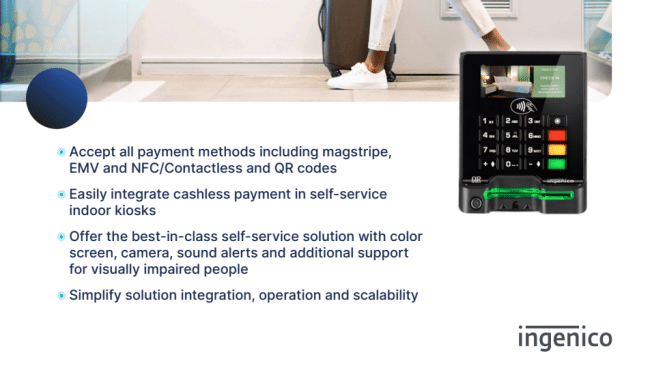
POS Terminal From Ingenico – CX9000 AIO

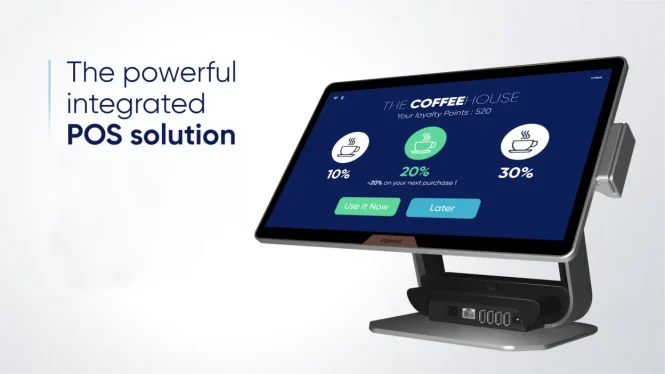
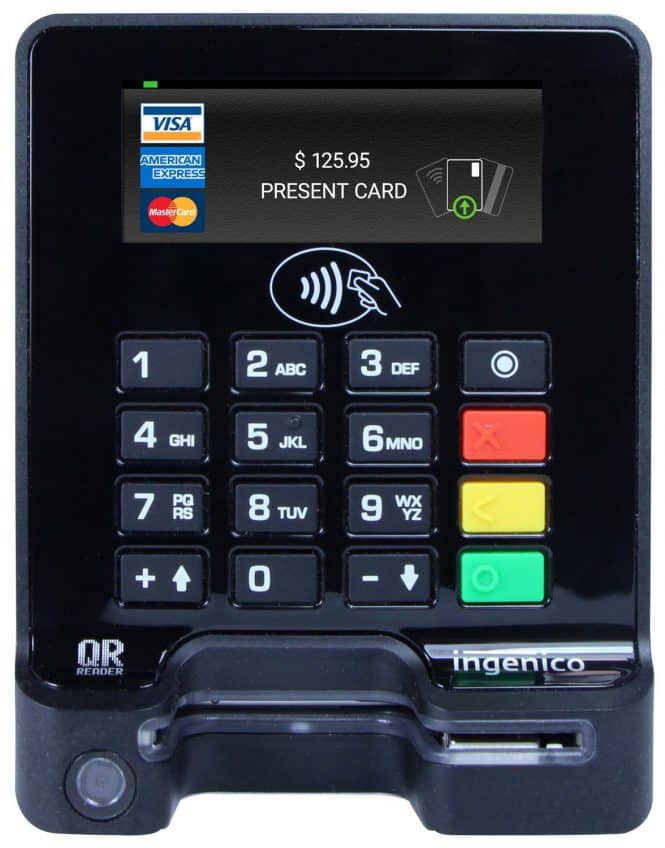
A sleek CX9000 AIO POS terminal displaying a coffee shop loyalty program interface. The screen offers discount options of 10%, 20%, and 30% off for next purchases. Text reads, The powerful integrated POS solution.

POS Terminal AIO From Ingenico

Ingenico has launched the AXIUM CX9000, a new all-in-one integrated point-of-sale (POS) system designed to enhance the retail experience. This sleek device combines advanced payment technology with inventory management, offering a compact solution that saves counter space and speeds up checkout time. It runs on the Android 14 platform, ensuring flexibility and integrated payment security with PCI certification and EMV V3 compliance. The AXIUM CX9000 features a dual display, including a 15.6” touchscreen and an 8” customer-facing screen, and supports third-party ECR app. It also offers plug-and-play setup, a user-friendly interface, and optional accessories like a printer, cash drawer, and barcode scanner.


Press Release on Ingenico

Paris, February 25, 2025 – Ingenico, a global leader in payment acceptance and services, is launching the new AXIUM CX9000, an amazing addition to upgrade your sales experience. This sleek all-in-one cash register provides advanced payment technology into a simple device that handles any retail situation from checkout to inventory management.

With modern aesthetics and high performance that enables smooth operations, integrating payments and ECR services, this device allows integrated sales, payment, and any business services as inventory management. Besides, the fact that it is a compact all-in-one device will make you save counter space while speeding up checkout times to improve customer satisfaction and ensure a seamless experience.

Based on the Android 14 platform, the AXIUM CX9000 also provides flexibility and integrated payment security thanks to its PCI certification and EMV V3 compliance. It also offers plug-and-play with minimal setup and a user-friendly interface, making it easy to use, install, integrate and manage. Its easy customer tool integration could provide loyalty programs, digital receipts, and CRM tools for the best customer experience, as well as optional accessories including printer, cash drawer and bar code scanner.

For the retail industry, the AXIUM CX9000 is a great addition as it is a checkout POS solution with all essential tools in one system, which supports third-party ECR apps. It is equipped with a dual display: featuring a 15.6” touchscreen with an Open Android that is GMS (Google Mobile Services) certified, as well as a second 8” customer-facing screen to facilitate payment and interaction at checkout, which is built to last and inspire infinite possibilities.

Ingenico is here to help its customers to simplify the POS solution and its payment integration with its partners ecosystem.

Text
We are excited by the possibilities that the new AXIUM CX9000 provides for merchants. Not only does it leverage Ingenico’s advanced payments technology, but it also offers a fast checkout experience, delivering a fully integrated solution answering to merchant needs in all aspects of their activity, round the clock.
Author
Vincent Fillaud, Head of Accept Solutions at Ingenico
Text

Learn more about the new AXIUM CX9000 solution here.

About Ingenico

Ingenico is the global leader in payment acceptance and services. We support our customers, and their customers to do more with payments. Active in 32 countries, with over 3,300 employees we have been at the forefront of the commerce landscape for over four decades. With more than 40 million payment devices deployed worldwide, powered by over 2,500 apps, the company is servicing the needs of millions of consumers every day. Through our advanced integrated solutions and network of partnerships, we simplify the world of payments and bring value added services to move commerce forward.

Press contacts

Elena Chadaigne, Global Head of External Communications

T +33 6 80 58 27 62

[email protected]


More Ingenico POS Terminal Articles


REDYREF Launches Smart Food Vending Kiosk

Two people stand beside a blue display fridge labeled Grab & Go from Royal Blue Grocery. Resembling a Smart Food Vending Kiosk, its stocked with packaged foods and beverages. They are indoors, near a window with a plant adding to the cozy ambiance.

Food Vending Via RFiD and RedyRef

In food vending RFiD news RedyRef announces new Smart Vending Fridge deployment. This is not their first foray into vending and RFiD.  See page on RedyRef.  Meanwhile, RFID technology in these smart vending machines offers several benefits, including:

  • Real-time inventory monitoring

  • Enhanced operational efficiency

  • Improved accuracy in tracking products

  • Faster transactions and reduced wait times

  • Automated inventory management and restocking alerts

  • Increased security and reduced theft

These RFID-enabled smart vending machines are being used in various settings, including offices, healthcare facilities, educational institutions, and retail spaces, offering a wide range of products from fresh food and beverages to electronic accessories and medical supplies

Market Players Today

  1. HyperVend Smart Vending Machines incorporate RFID tags for real-time inventory tracking, allowing operators to monitor product availability, pricing, and freshness1.

  2. Selfly Store’s smart vending machines use RFID to recognize products inside the cabinets. Each item is tagged with an RFID tag, giving it a unique identity and enabling real-time inventory tracking2.

  3. REDYREF offers RFID-enabled smart vending machine kiosks, which use RFID technology for quick and accurate data collection, enabling faster transactions and precise inventory tracking4.

  4. Selfly Store has introduced flexible smart vending solutions that include RFID technology, along with scale and camera-based technologies, to offer merchants more ways to optimize revenue and reduce shrinkage

Quite possible this machine will be demoed at the KMA booth at NRA.  You can send an email to Redyref for more info — [email protected]


PRESS RELEASE

Fresh, convenient food options are now available via REDYREF’s new RFID-refrigerated vending machine, thanks to a partnership that unites innovative technology and curated meal, snack and beverage selections, within a premier Austin location.

AUSTIN, TexasFeb. 25, 2025 /PRNewswire-PRWeb/ — Introducing the REDYREF Smart Food Fridge

The REDYREF Smart Food Fridge is a state-of-the-art refrigerated vending machine that offers a curated selection of fresh meals, snacks, and beverages provided by Royal Blue Grocery. The smart fridge kiosk utilizes advanced RFID (Radio-Frequency Identification) vending technology and a simple “Tap, Take, Go” process for an effortless and secure purchasing experience.

How It Works:

  • Tap: Customers begin by tapping their preferred payment method – credit card, debit card, or mobile wallet – on the fridge’s payment terminal, which unlocks the door.
  • Take: The customer opens the door and chooses their items.
  • Go: Once the customer has taken their items from the fridge and closed the door, the RFID system automatically detects which products have been removed. The customer’s account is then charged accordingly, and a receipt can be sent via text. No checkout lines, no scanning, just grab and go convenience.

A Partnership for Convenience and Quality

“We are thrilled to partner with Royal Blue Grocery and AQUILA Commercial to bring this innovative food service solution to the Hartland City Club,” says Will Pymm, Managing Director and SVP of REDYREF. “The Smart Food Fridge is designed to meet the evolving needs of today’s busy consumers who demand convenience and quality. This partnership exemplifies our commitment to providing cutting-edge technology that enhances the customer experience and streamlines operations for our partners.”

Royal Blue Grocery will be responsible for stocking the Smart Food Fridge with a diverse range of high-quality, locally sourced products, ensuring that users have access to a wide range of options throughout the day. “We’re always looking for ways to make it easier for people to access fresh, delicious food,” says Craig Staley, Co-Founder of Royal Blue Grocery. “The REDYREF Smart Food Fridge is a perfect fit for our mission. We’re excited to bring our carefully curated selection of meals, snacks, and drinks to the Hartland City Club, offering convenient options for those on the go.”

Enhancing the Hartland City Club Experience

The Hartland City Club, a premier amenity space within AQUILA Commercial’s real estate holdings, provides a central and convenient location for the Smart Food Fridge. “Enhancing the amenities we offer to our tenants and their employees is incredibly important to us,” says Jay Lamy, Managing Principal at AQUILA. “REDYREF’s Smart Food Fridge, especially when combined with the incredible offerings of Royal Blue Grocery, elevates the overall experience at The Club.”

The Smart Food Fridge is now operational at the Hartland City Club and available for use during regular operating hours.

About REDYREF

REDYREF is a leading provider of self-service technology solutions, specializing in digital kiosks. These include transactional solutions from reverse ATMs and cash-to-card kiosks, to ticketingcheck-in / queuing, and smart RFID vending machines. Founded over 100 years ago, we are dedicated to creating innovative and user-friendly solutions that improve customer engagement and streamline business operations. Learn more at redyref.com.

About Royal Blue Grocery

Royal Blue Grocery is a modern urban grocery store with multiple locations in Austin, Texas. We offer a curated selection of fresh, local, and everyday essentials in a convenient and friendly environment. Learn more at royalbluegrocery.com.

About AQUILA Commercial

Founded in 2007, AQUILA Commercial is a recognized leader in Austin commercial real estate. Today AQUILA manages and leases over 23 million square feet of office, industrial and retail properties and has over 600 corporate tenant representation clients. AQUILA offers clients full-service real estate solutions, providing tenant representation, project leasing, and asset, property, and project management services for office, industrial and retail properties. For more information, visit aquilacommercial.com.

Media Contact
Shannon Eggleton, REDYREF Interactive, 1 800-628-3603, [email protected]https://redyref.com

LinkedIn

SOURCE REDYREF Interactive

— end of press release —-


Background

Smart vending machines are gaining significant popularity in 2025, driven by several factors:

Market Growth — The intelligent vending machine market is experiencing rapid expansion:

  • Global market size is projected to grow from $9.86 billion in 2024 to $32.30 billion by 2032, at a CAGR of 16.0%6.
  • In 2023, the market was valued at $24,847.8 million and is expected to grow at a rate of 12.8%3.
  • The industry’s revenue reached $21.6 billion in 2024, with projections for 2025 showing an increase to $23.2 billion4.
  • Most of the reports are datamart reports and unreliable at best though

Driving Factors

Several key trends are contributing to the popularity of smart vending machines:

Convenience and Accessibility

Smart vending machines offer quick service for groceries and beverages, catering to busy urban lifestyles3.

They are in high demand in offices, commercial spaces, and public areas3.

Advanced Technology — Integration of AI and IoT enables real-time inventory tracking, personalized recommendations, and predictive maintenance. Advanced payment systems, including mobile payments, contactless cards, and QR code-based transactions, are becoming standard4.

Diverse Product Offerings — Vending machines are expanding beyond traditional snacks to include fresh food, organic products, ready-to-eat meals, and specialty items. There’s a growing focus on healthier options, including low-sugar snacks, plant-based products, and functional beverages.

Cashless Payments – The rise of digital payments and cashless options has fueled demand for smart vending machines. Businesses are installing machines that accept various payment methods, attracting more customers and boosting sales

While smart vending machines are gaining popularity, it’s worth noting that some consumers have expressed dissatisfaction with certain food products sold in vending machines. For example, Smartfood popcorn has received mixed reviews, with some customers complaining about quality issues. However, this seems to be specific to the product rather than the vending machine technology itself.

Related Links

Self-Service Recast by AI

Self-Service AI

Self-Service and AI

Self-service is all-encompassing these days.  And AI is just enabling it even more.

Insight: As much money and efficiency that kiosks and self-service have provided to businesses, our take is that very little of those savings have been reinvested in supporting the new mechanisms delivering that efficiency and availability.  Service has yet to catch up.  But that is another article…  With the advent of self-service, increased pressure on supply chain and the “back end” has resulted. AI has enough good data there to have positive effect.  For customers self ordering at kiosks it will be awhile before foundation data is available and nuanced upsell to personality is benefit.  

Think of Google after you have bought a pair of shoes. All of the sudden the AI advertises shoes to you. But you already bought so odds of buying another pair pretty low. Maybe instead they pitch you socks depending on the weather.

What AI Brings To Self-Service

Public AI assistants are poised to revolutionize self-service across various sectors, offering significant benefits for both organizations and users. Here’s an overview of their potential impact:

Enhanced Accessibility and Efficiency
AI-powered self-service tools are dramatically improving accessibility and efficiency:

24/7 Availability: AI assistants provide instant support at any time, reducing wait times and resolving up to 80% of routine inquiries.

Multilingual Support: AI chatbots communicate in multiple languages, expanding customer reach.

Faster Resolutions: Can your people handle thousands of queries simultaneously?

Personalized User Experiences
AI assistants are transforming user interactions through personalization:

Tailored Responses: AI uses customer data to deliver personalized responses, potentially boosting satisfaction by 15%.

Proactive Support: Predictive analytics allows AI to anticipate issues and solve problems before they arise.

Contextual Recommendations: AI assistants can offer personalized suggestions based on user preferences and history.

Cost Reduction and Operational Efficiency
Organizations are seeing significant operational benefits:

Reduced Operational Costs: 90% of businesses report that using AI to improve self-service helps lower operational costs.

Improved Agent Productivity: AI-assisted agents show a 14% increase in overall productivity, with newer agents experiencing a 35% improvement3.

Scalability: AI solutions handle high volumes seamlessly, ensuring consistent service as demand grows


AI for Kiosks and More: Must-Know Self-Service Trends for 2025″ by former member provides insights into the latest trends shaping the self-service kiosk industry in 2025. The rapid technological advancements, particularly in artificial intelligence (AI), have significantly influenced self-service kiosks, transforming both customer interactions and internal processes.

Pretty standard boilerplate.

Key Self-Service Trends

  1. Meaningful AI Integration AI is revolutionizing how companies operate and interact with customers. AI can enhance customer interactions and streamline internal processes. The company is committed to safeguarding user data while effectively utilizing AI to improve its solutions.
    1. Generative AI – Coming soon to kiosks – Kiosk Industry
    2. Kiosk Wayfinder with AI CMS Widgets
    3. Clover POS AI Assist for Self Ordering Kiosk
  2. Data Privacy With the increasing concern over data breaches and new privacy laws, data privacy has become a focal point. Users are cautious about how their information is used. DynaTouch highlights the limitations of basic “Kiosk Mode” options and stresses the need for dedicated kiosk management software. This software offers robust security features, such as user session management and restricted browsing, to protect user data and prevent unauthorized access.
    1. Critical Privacy Considerations For Kiosks 
    2. Kiosk Privacy Is About To Get Far More Complicated – Feature
    3. Legal Decisions Kiosks, Biometrics, Privacy
  3. Personalization Personalization is becoming an expectation in self-service kiosks.
    1. How To Use Self-Service to Enhance the Customer Experience
    2. Personalization, Restaurant Tech Stacks and Stingray Kiosks by …
    3. Digital Signage Kiosk Wayfinding Companies

Additional Resources

The webpage also offers several helpful resources for organizations considering implementing self-service kiosks:

Generative AI and Self Service Conclusion

Self-service kiosks are poised to rise in 2025, driven by advancements in AI, enhanced data privacy measures, and increased personalization. DynaTouch is at the forefront of these trends, ensuring that its solutions not only meet but exceed customer expectations. As technology continues to evolve, self-service kiosks will play a crucial role in providing users with smarter, simpler, and more secure solutions.

Related and Resource Self-Service Trends


Pornvideo and Kiosks

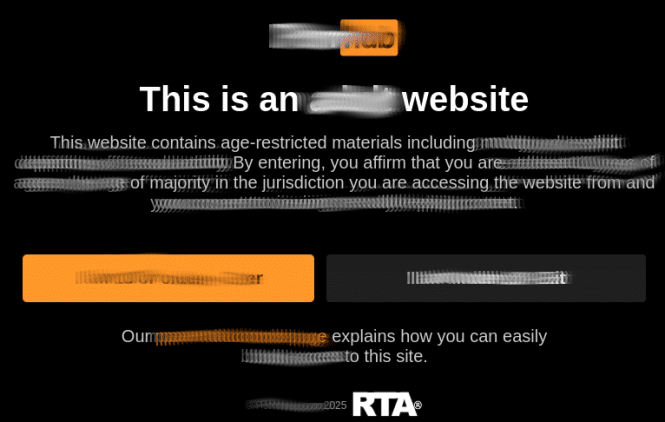
A blurred warning page from an age-restricted website displays, hinting at explicit content like a pornvideo. It prompts the user to confirm theyre of legal age to access the content, offering options to enter or exit and additional blurred text concerning access terms.

Pornvideo and Kiosks

Let’s talk about internet content filtering.  When it comes to your business or providing public access via WiFi, the objective is to provide value to your customers or users. Some considerations:

  • You have users that will impact your bandwidth by downloading videos for example.
  • They will get cookies installed on browsers in your system.
  • They will get emails with dangerous links
  • Age-restricted content may become available.
  • Malicious users will surf to their favorite hack tool sites with penetrating javascript to hijack your system.
  • Many of the most popular social networking sites like Whatsapp or Facebook or Pinterest have threaded in “more suggestive” content including external links. Those have been typically allowed in the past but good chance they qualify now as “dangerous” site.

With the recent analysis of the Smart City RFP that Dallas is doing, reviewing internet content filtering seems like a good idea.  Pornvideo being the main issue. Public WiFi that supports streaming sounds a lot like LinkNYC and they still have problems. And now the latest social sites have only increased their sexual stimuli content to raise audience, valuations and ad dollars.

Ironically posting a PSA on the subject and clearly identifying a typical gateway is not filtered on LinkedIn.  Their AI detection is still rudimentary.  The post was removed but then we appealed for review, and then they agreed and re-posted online. Pretty quick response too which surprised us (less than 4 hours).

Excerpt from Smart City RFP:

  • Kiosks will provide Wi-Fi internet service free of charge to the public for a minimum radius of 150 feet around each kiosk, with bandwidth and IP connections sufficient to support a minimum of 100 users at each kiosk, scalable at up to 200 users in high-traffic areas. Kiosk providing free Wi-Fi internet service must include a City of Dallas Terms of Service “Splash Page” prior to access. Kiosks must provide capability for: (a) wired connectivity with a minimum 1 gigabyte connection speed; (b) cellular provider sim network card via integrated hardware of the proposed solution; or (c) standard 4G/5G cellular via hotspot or cradle point (or similar) device. Proposed solutions must be capable of supporting streaming video based on the standards associated with each connectivity type. Proposers shall include detailed network connectivity specifications including: (a) any minimum upload/download requirements; (b) device connection types for each of the capability methods described above; (c) provide list of cellular provider exclusions, if any exist; (d) LAN port specifications.

Editors Side Note — let’s imagine young kids with mobiles attaching to free WiFi and using it to view PornHub.  We checked the Domain rankings and the organic traffic for PornHub is 2 Billion (yes, 2 Billion). They #11 on most popular sites. YouTube, Instagram and Facebook are all in the top 10, and all of them use sexualized photos and videos to snag their scrolls and views (and advertising dollars).

Pornvideos Been A Problem?

Porn videos have been a significant problem on public kiosks and digital displays. Several incidents highlight this issue:

  1. In New York City, LinkNYC Wi-Fi kiosks faced challenges with users accessing pornographic content on the free public tablets. Despite implementing content filtering systems, some users found ways to bypass these restrictions14.  Here the most likely problem is trying to save money. Rather than use a very mature content filtering, and pay a licensing fee, companies try to DIY with Microsoft Kiosk Mode.  

  2. At Union Station in Washington D.C., a large touchscreen display was hacked to stream explicit pornographic videos for about three minutes during rush hour, shocking commuters.

  3. The issue is not limited to intentional hacking. In some cases, authorized users might accidentally upload inappropriate content, or vulnerabilities in the system could allow unauthorized access.

  4. Feb 2025 — Meta admits Instagram error flooded Reels with violent and pornographic content

To address these problems, kiosk management solutions often implement:

  • Web content filtering software to block access to adult content and other inappropriate websites35.

  • Kiosk browser lockdown solutions to restrict browsing to only approved websites and web apps7.

  • Enhanced security measures to prevent unauthorized access and system compromises6.

Despite these efforts, the challenge persists due to the vastness of the internet and the difficulty in creating foolproof filtering systems

Editor Notes

  • Dallas RFP for smart cities analysis — review the players, projects and pricing. Update on LinkNYC. Oh, condition to cover $770K cancellation cost to CBS Group (former vendor). Revenue share 12% —  LINK
  • Content filtering for corporate sites is probably even more significant —  Sitekiosk has thousands of licenses doing just that.

Pornvideo Related

Digital Kiosks for Smart City – Analysis

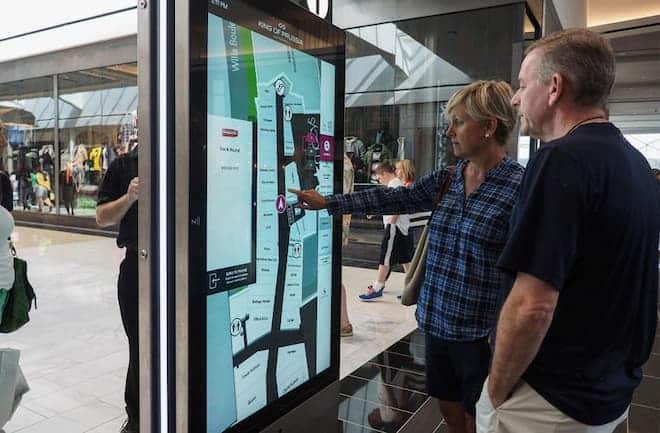
digital kiosk smart city

Digital Kiosks for Smart City

We see these digital kiosks for smart city projects at least once a month. Today Dallas issued one and it bears analysis to understand.  We run a separate Smart City website and LinkedIn group for Smart Cities. We post RFPs and RFIs there.

Summary of Deal

  • 150 kiosks in play
  • potential $770K payoff to cancel CBS Group (in place since 2006)
  • All costs are borne by deployer + 12% cut of advertising revenue to city
  • Resembles 2018 RFP (see link below). Apparently no takers?
  • Accessibility – a cursory nod to “should be in compliance and your problem if not”  — Accessibility, usability and inclusion – creating a welcoming and inclusive technology for our community at large. Kiosks must be accessible to persons with disabilities and adhere to the Americans with Disabilities Act of 1990 (“ADA”) and other relevant legal requirements; including, but not limited to, serving individuals with visual and/or hearing impairments.
  • Texas has some odd “blacklists”

Who Are The Usual Suspects?

  • OBM (Orange Barrel Media) with its IKE kiosks, 19 cities and 500 kiosks. Double-sided 65″ at 3000 NITS. 100 employees
  • CityBridge (LinkNYC) — Intersection and Boldyn are partners. Started in 2014 and supposed to have 7500 kiosks in NYC by 2023.  Currently there are 2,000.  NYC expected $500M in revenue but in 2021 CityBridge defaulted $70M payment. They restructured the franchise agreement and haven’t disclosed the revised agreement. LinkNYC revenue is estimated between $5M and $1M a year.  See recent news on LinkNYC facelift
    • 78% of New Yorkers see LinkNYC content and ads every week5.
    • The network generates more than two billion ad impressions every month5.
  • CIVIQ Smartscapes: Offers smart kiosk solutions designed to address urban needs such as improving city mobility, wayfinding, public Wi-Fi, emergency alert systems, smart lighting, and environmental monitoring13.

  • Smart City Media: Provides a platform for Internet and mobile applications, IoT sensors, and location-based media to engage local residents, empower small businesses, and help tourists13.

  • SmartLINK: Offers kiosks that provide event monitoring, security alerting, Wi-Fi, wayfinding, communications, environmental monitoring, and traffic study solutions13.

  • Soofa: Uses a web-based platform allowing locals to share information and cities to communicate directly with residents about local events and emergencies1

Editor Notes

  • Worth noting LinkNYC has been plagued in the past by “bad content”. Latest article — Pxxxvideo on smart city terminals? YouTube, Instagram, Tumblr, Facebook and 100 new ones. Companies pay for bandwidth used. LinkNYC still has problems. Our recommendation is Sitekiosk for content filtering.
    https://kioskindustry.org/pornvideo-and-kiosks/

Premise:

The City of Dallas is seeking proposals from qualified firms with extensive experience in designing, implementing, fabricating, installing, operating, maintaining, replacing, upgrading, and removing interactive digital kiosks. These kiosks will be primarily located on City of Dallas sidewalks and other rights-of-way and public areas in locations as approved by the City. The kiosks will provide information of interest to both residents and visitors.

The city is seeking a ten-year contract agreement with up to two (2) five-year renewal options subject to vendor contractual compliance. The City reserves the right to negotiate a term other than referenced above if it adds value to the City. The City and the selected vendor will mutually agree upon the final contract term.

An interactive digital kiosk terminals featuring specialized components that provide access to information and applications for emergency notification, communications, commerce, entertainment, navigation, event promotion, activities, education, and services for residents and visitors that are available to the public to be used at locations throughout the City of Dallas

IV. Scope of Work

The City of Dallas is seeking proposals from qualified firms with extensive experience in designing, implementing, fabricating, installing, operating, maintaining, replacing, upgrading, and removing interactive digital kiosks. These kiosks should provide information, including (but not limited to) services for residents and visitors, activities, and upcoming events. The kiosks will primarily be located on City of Dallas sidewalks and other public right-of-way areas in business districts and other locations approved by the City including but not limited to parks, trail entry points, convention center district locations, etc. The determination of the suitability of any location for placement of a digital kiosk shall be made solely by the City. Approval of each kiosk location is subject to the sole approval of the City, which approval may be withheld or delayed for any reason at City’s sole discretion.

All services and responsibilities of the digital kiosk vendor as described herein will be provided at no cost to the City of Dallas. The awarded firm(s) will be responsible for the design, implementation, fabrication, installation, operation, maintenance, repair, and replacement of all kiosks and kiosk components. City reserves the right to annually audit the selected vendor’s compliance with the agreement, including a third-party audit of the selected vendor. The selected vendor shall agree to allow City or its agent access to any materials necessary to conduct such an audit.
The kiosks shall serve the following public purposes, at a minimum:
1. Wayfinding – providing information regarding civic and cultural institutions, transit amenities, restaurants, retail, and other business
2. Public information and emergency messaging – serving as a central dissemination point for public information to enable real-time posting of City communications
3. Increased vibrancy and visual interest of City streets – promoting placemaking in Dallas through City events and programming

Creating a supportive environment for retail and entertainment commerce – furthering economic development within our community

Enhanced visitor experience and brand perception of Dallas

Accessibility, usability and inclusion – creating a welcoming and inclusive technology for our community at large

Kiosk Requirements

  • Kiosks must support English and Spanish at a minimum, and additional language selections shall be included if requested by City to address community needs.

  • Kiosks must be accessible to persons with disabilities and adhere to the Americans with Disabilities Act of 1990 (“ADA”) and other relevant legal requirements; including, but not limited to, serving individuals with visual and/or hearing impairments.

  • Kiosks shall accept content in various formats, including Adobe PDF, documents created using Microsoft Office Suite, web links, maps, images, and other content and formats from the City for presentation on the kiosks.

  • Kiosks must include interactive, easy-to-use features that appeal to a broad population with ease of navigation.

  • Kiosks will provide Wi-Fi internet service free of charge to the public for a minimum radius of 150 feet around each kiosk, with bandwidth and IP connections sufficient to support a minimum of 100 users at each kiosk, scalable at up to 200 users in high-traffic areas. Kiosk providing free Wi-Fi internet service must include a City of Dallas Terms of Service “Splash Page” prior to access. Kiosks must provide capability for: (a) wired connectivity with a minimum 1 gigabyte connection speed; (b) cellular provider sim network card via integrated hardware of the proposed solution; or (c) standard 4G/5G cellular via hotspot or cradle point (or similar) device. Proposed solutions must be capable of supporting streaming video based on the standards associated with each connectivity type. Proposers shall include detailed network connectivity specifications including: (a) any minimum upload/download requirements; (b) device connection types for each of the capability methods described above; (c) provide list of cellular provider exclusions, if any exist; (d) LAN port specifications.

  • The selected vendor will be responsible for all actions and expenses required to secure site approvals, permits, electrical access, installation, repair, and any other cost required to install, maintain, or operate the kiosks. Likewise, the selected vendor will be responsible for all actions and costs required to restore damage created or caused by the vendor or its agents or employees, or damage created or caused by the kiosks. Vendor shall be responsible for restoration of all city right of way or other property to a condition acceptable to City upon removal of any kiosk, either during the term of the agreement or at the end of the term of the agreement.

Kiosk Number and Location. The selected vendor may install up to one hundred and fifty (150) kiosks at locations approved by the City in its sole discretion. No more than fifty (50) kiosks may be installed in any one calendar year.

  1. Special Requirements

As a condition to awarding this agreement, and upon execution of the agreement with the City, the selected proposer may be required to pay the City an amount equal to the termination fee payable by the City under the City’s existing static kiosk agreement with CBS Outdoor Group, Inc., dated January 3, 2006. If the City chooses to terminate the existing static kiosk agreement, the termination fee as of the date of this solicitation is estimated at $770,833.33, and the successful proposer will pay no more than this amount. The final payment amount will be determined by City prior to contract execution. If payment of this fee changes the terms of your proposal, please indicate what those changes would be. The early termination fee is reduced by $20,833.33 per month until the termination by expiration is reached on June 30, 2028.

Here is the actual RFP for review — 01 – Digital Kiosks Specifications

Related Digital Kiosk Smart City Links

Addendum

ADA

The Americans with Disabilities Act (ADA) of 1990 and the 2010 ADA Standards for Accessible Design have several key differences:

Scope and Definition

The 2010 Standards expanded the definition of “disability” to include major bodily functions, not just limitations in major life activities9.

The 2010 Standards broadened the scope of the ADA, increasing the number and types of persons protected under the law6.

Technical Requirements

Reach ranges: The 2010 Standards changed the maximum reach range to 48 inches for both front and side approaches, compared to the 1991 Standards which allowed 54 inches for side approaches11.

Toilet centerline: The 2010 Standards allow a range of 16-18 inches from the side wall to the center of the toilet, whereas the 1991 Standards required an absolute 18 inches11.

Clear floor space: The 2010 Standards increased the clear-floor-space requirements for water closets in toilet rooms11.

Additional Provisions

The 2010 Standards include new requirements for elements not covered in the 1991 Standards, such as recreation facilities, play areas, and swimming pools8.

The 2010 Standards introduced a “safe harbor” provision for elements that complied with the 1991 Standards before March 15, 20128.

The 2010 Standards added provisions addressing ticketing, service animals, communications, and mobility devices like Segways11.

Implementation

The 2010 Standards provided an 18-month grace period for implementation, similar to the original ADA, allowing facilities to choose between the 1991 and 2010 Standards during this time11.

The 2010 Standards became mandatory on March 15, 2012, setting new minimum requirements for newly designed, constructed, or altered facilities4.

These changes reflect an effort to broaden the ADA’s protections, clarify technical requirements, and address new accessibility concerns that have emerged since the original act was passed in 1990.


Addendum Texas Laws

Texas has implemented measures that allow for the cancellation or avoidance of contracts with entities that boycott energy companies, specifically those in the oil and gas industry.

In August 2022, Texas Comptroller Glenn Hegar announced a list of financial companies that boycott energy companies3. Under Texas Government Code Chapter 809, these listed companies are subject to divestment provisions. This means that state entities may be required to divest from or avoid contracts with companies on this list.

The law defines a financial company as a publicly traded financial services, banking, or investment company. After extensive research, the Comptroller’s office identified 10 financial companies and nearly 350 individual investment funds that are subject to these provisions3.

Texas has implemented a similar policy regarding gun rights, alongside its measures protecting oil and gas interests. The state has enacted laws that restrict government entities from doing business with companies that discriminate against the firearms industry13.

In 2021, Texas passed SB 19, which prohibits state agencies and political subdivisions from contracting with companies that endorse discriminatory practices and policies aimed at firearm industries, including the ammunition industry, or firearm trade associations5.

This law has had significant impacts:

  1. Major lenders have left the Texas municipal bond market because they wouldn’t support the manufacturing of AR-15 style weapons1.

  2. The reduced competition in the bond market has reportedly cost Texas taxpayers an estimated $300 to 500 million in extra interest1.

  3. Companies contracting with Texas governmental entities must verify in writing that they do not and will not discriminate against firearm entities or firearm trade associations during the term of the contract4.

These measures apply to contracts valued at $100,000 or more4. The policy aims to protect the firearms industry from what Texas lawmakers perceive as discrimination by financial institutions and other companies adopting ESG (Environmental, Social, and Governance) policies13.

It’s worth noting that as of February 2025, these laws continue to be in effect and have influenced business practices in Texas, despite the additional costs to taxpayers.

CSUN Conference Kiosk

CSUN Conference Kiosk

CSUN Conference Kiosk

March 10-14 is the CSUN Conference. Vispero is major sponsor.

Please visit the Exhibitor Directory page for the 2025 Directory of Exhibitors organized alphabetically by Company Name.

Expo pass is FREE

Members you can meet there include

  • TPGi
  • Vispero
  • Dot Incorporated for Braille
  • LG Business
  • Tech For All

Send email to [email protected] to schedule

Special Note:  LG Electronics will be exhibiting at the CSUN Assistive Technology Conference this March (March 10 to 14, 2025). Along with their booth, they will be hosting an exclusive, invitation-only session on Thursday, March 13th, from 1:00 to 5:00 PM. If you plan to attend CSUN, we would be thrilled for you to visit us at the booth or join us at the session where we will be showcasing our latest kiosk innovations. Contact [email protected]

Good Resource Links (Thanks Anthony with TPGi)

Sessions

AI and AT: Balancing Security with Productivity
Ryan Jones Vispero

Welcome to the 40th Annual CSUN Assistive Technology Conference!

Whether you’re a long-time attendee or joining us for the first time, the CSUN Assistive Technology Conference stands as the pinnacle gathering in its field. Celebrating four decades of excellence, this conference is renowned as the premier forum for exploring the latest in technology and accessibility for persons with disabilities.

Since its inception, California State University, Northridge’s Center on Disabilities has proudly hosted this event, drawing researchers, educators, practitioners, and exhibitors from across the globe. Together, we foster an environment where knowledge, innovation, and best practices converge to advance the cause of inclusion.

Join us in Anaheim, California for an unforgettable week packed with Pre-Conference Workshops, a dynamic Keynote Address Program, engaging Featured Presentations, enriching General Sessions, and vibrant Sponsor Showcase Suites. Explore the latest solutions and services in the Exhibit Hall and take advantage of our expanding networking opportunities and community-building activities.

As we mark this milestone year, we invite you to be part of the conversation that shapes the future of assistive technology and accessibility. Stay tuned for updates, deadlines, and exciting announcements by following us on FacebookLinkedIn, and Twitter.

For details on sponsorship or exhibiting opportunities, please visit our Opportunities page or email us at [email protected].

We eagerly anticipate welcoming the CSUN Conference community back to learn, share insights, and forge connections that propel us forward.

Best regards,

CSUN’s Center on Disabilities Team

News & Updates

Expo Visitor Pass

An Expo Visitor Pass is required to enter the free Exhibit Hall. Expo Visitor Pass registration is now open and will also be available on-site Wednesday through Friday (March 12 to March 14). A single Expo Visitor Pass registration is good for all three days the Exhibit Hall is open.

Conference Attendees (Exhibitors, Presenters, Booth Staff and Attendees) do not need an Expo Visitor Pass as their Conference badges allow access to the Exhibit Hall.

Exhibit Hall Hours

Conference Registered Participants Only – Exhibit Hall Preview

  • Tuesday, March 11: 4:00 PM to 7:00 PM

General Public and Conference Registered Participants

  • Wednesday, March 12: 9:30 AM to 5:30 PM
  • Thursday, March 13: 9:30 AM to 5:30 PM
  • Friday, March 14: 9:30 AM to 1:30 PM

Related CSUN Conference Kiosk Links

4G Kiosk Modem – DPL Wireless Hercules

DPL Wireless Hercules 4G modem

Free 4G Modem Trial

Here is the offer. Our 4G kiosk modem provider member DPL Wireless, is offering a free trial of their top-tier Hercules Modem.

Trial kit comes with Antennas and Remote Restart cable – everything you need to get started.  Call or email Dennis to find out more.

DPL is a big provider in the Bitcoin Kiosk, aka Bitcoin ATM market, which has been gathering steam with the favorable view of the current administration.

High Availability Design

The Hercules Duo is a 4G LTE CAT-4, dual carrier (including 2 SIMs), dual Ethernet, high throughput modem, ideal for applications requiring faster speeds and higher throughput such as bitcoin ATMs (BTMs), interactive teller machines (ITMs), kiosks, and digital signage. The Hercules Duo’s dual SIM/carrier feature makes it ideal for fringe areas and high-volume locations requiring high network availability or redundancy. Its two Ethernet ports allow it to provide multi-service support for auxiliary devices such as video toppers, or it can be configured for WAN Failover.

4G Kiosk Modem Benefits include:

  • Increased uptime
  • Less service calls
  • Remote Restart
  • 24x7x365 in-house support

Resources

Dennis Walsh
Director of Sales
(506) 333-0056

Internet Connectivity Considerations – What About An Antenna?

Whether a 4G modem for self-service kiosks needs an external antenna depends on several factors:

Signal Strength and Quality
Indoor Location: If the kiosk is indoors, especially in a building with thick walls or a basement, an external antenna may be necessary to improve signal reception5. An external antenna can significantly boost signal strength and quality in such cases.

Outdoor Location: The need for an external antenna for outdoor kiosks depends on their proximity to cellular towers and potential obstructions. The built-in antenna might suffice if the kiosk has a clear line of sight to a nearby tower.

Performance Requirements
Data Speed: If higher data speeds are required for the kiosk’s operations, an external antenna can help. In one case, using an external antenna improved download speeds from 2-20 Mbps to 40-100 Mbps.

Reliability: For kiosks that require consistent, uninterrupted connectivity, an external antenna can provide a more stable connection, especially in areas with weak cellular signals7.

Installation Considerations
Flexibility: External antennas offer more flexibility in terms of placement. They can be mounted on the outside of the kiosk or in a location with better signal reception.

MIMO Technology: Many 4G modems support MIMO (Multiple Input, Multiple Output) technology. Using two external antennas can take advantage of this, potentially improving performance.

Specific Scenarios
Strong Signal Areas: An external antenna may not be necessary in locations with excellent 4G coverage.

Weak Signal Areas: An external antenna is highly recommended in areas with poor reception to ensure reliable connectivity8.

Temporary Installations: A modem with a good internal antenna might be sufficient for temporary or easily relocatable kiosks, avoiding the need for external antenna installation.

In conclusion, while not always necessary, an external antenna can significantly improve the performance and reliability of 4G modems for self-service kiosks, especially in challenging signal environments or when high-speed, consistent connectivity is crucial for the kiosk’s operations.

More Wireless Articles

Kiosk Hall Of Fame 2025 Nomination Kenneth Larsen

KT Group’s CEO Kenneth Larsen Nominated for Induction into the Kiosk Hall of Fame

KT Group is proud to announce that its founder and CEO, Kenneth Larsen, has been nominated for induction into the prestigious Kiosk Hall of Fame 2025. This honor recognizes Kenneth’s 20 years of leadership, innovation, and impact in the self-service industry.

The Kiosk Industry Association selects Hall of Fame nominees based on their dedication to advancing the industry and shaping its future. Kenneth’s visionary leadership has positioned KT Group as a global leader, delivering over 28,000 kiosk terminals across multiple industries, including retail, ticketing, pharmacy, and betting.

“This nomination is a testament to the hard work of our entire team and the strong partnerships we’ve built over the years,” said Kenneth Larsen. “As we celebrate our 20th anniversary, I’m incredibly proud of what we’ve achieved, and how those achievements have put me in contention for such a prestigious position. But we always look ahead as a company, and so I’m excited for the future of kiosk innovation, and the part KT Group will play in that innovation.”

Since founding KT Group in 2005, Kenneth has played a pivotal role in revolutionizing large-scale kiosk deployments. After forging strategic partnerships in China, Kenneth’s forward-thinking approach led KT Group to expand internationally, leveraging industrial production powerhouses to deliver kiosks that find the balance between cost efficiency and quality engineering. Today, KT Group’s self-service solutions are integral to some of the world’s leading businesses, ensuring seamless customer experiences across high-traffic environments.

As KT Group continues to push the boundaries of self-service technology, this nomination serves as recognition of both past achievements and future ambitions. Voting for the Kiosk Hall of Fame 2025 is now open, and supporters can cast their votes through the Kiosk Industry Association’s official portal.

About KT Group:

KT Group is a globally recognised provider of full-turnkey self-service kiosk solutions designed to meet the diverse requirements of clients. With expertise centered on crafting self-service kiosks and digital signage terminals that exceed client expectations, KT Group has solidified its position as a leading international manufacturer in the field.

More KT Group Articles

InfoComm Digital Signage Kiosk

digital signage infocomm

InfoComm Digital Signage 2025

See InfoComm Digital Signage, wayfinding, media players and mini-PCs for your digital signage. If it’s enabled by pro AV, it’s at InfoComm® 2025. Geek out with us from June 7-13 at the Orange County Convention Center to test the latest pro AV technologies, stay up to date on industry trends, and grow your professional network.

And yes we will be there — Exhibit Hall (Level 2), Booth 3489 (10 x 20, 200 sq ft)

Major Exhibitors

  • Peerless-AV

    Peerless-AV will demonstrate:

    They will be exhibiting at Booth 3Q150

  • 22Miles booth 4975

    22Miles will showcase:

    22Miles won two awards at the previous InfoComm for their AI solutions, including the SCN Most Innovative Digital Signage Award and the 2024 InfoComm Best of Show Award

  • LG Electronics Booth 4142

    LG will present a wide array of products and solutions, including:

    • A 20-foot-wide by 12-foot-tall kinetic LED screen with 1.9mm fine-pitch

    • Transparent OLED displays in various sizes (30-inch, 55-inch, 75-inch)

    • High-brightness outdoor displays ranging from 22 inches to 86 inches

    • Large format displays including a 105-inch LCD and a 171-inch LED All-in-One

    • MAGNIT MicroLED technology in 136-inch All-in-One and build-to-size models

    • LG SHIELD cybersecurity platform for webOS 6.0 devices

    • LG Level 2 EV Chargers with built-in displays

    • LG Business Cloud software solutions

    • https://www.lg.com/us/press-release/INFOCOMM-2024-LG%20AWARDS-7-1-24.pdf

    LG’s booth number will be W2125

Here is all the relevant information for InfoComm 2025. For more information or for company contact email [email protected] — New stuff from Peerless-AV and if interested in AI Assist then check out 22Miles.

Everything Digital Signage


Exhibit Hall

InfoComm showcases the widest range of digital signage solutions in the US. Experience the latest innovations in displays, interactive kiosks, and content management systems. Discover how digital signage can transform your communication strategy, engage your audience, and deliver impactful messages. Explore the latest trends in interactive digital signage, personalized content, and data-driven displays.

See Digital Signage on the Exhibit Floor

What you’ll find:

Interactive Digital Signage InfoComm 2025

Digital Signage Newsfeed


About InfoComm

InfoComm is the largest technology exhibition and conference in North America focused on the pro AV industry. The exhibition is produced by the Audiovisual and Integrated Experience Association (AVIXA), and currently ranks as the 39th largest trade show in the United States by Trade Show Executive. In addition, AVIXA and its partners produce a global portfolio of trade shows and conferences, including InfoComm China, Beijing; InfoComm India; InfoComm Asia; Integrate; and Integrated Systems Europe.

About AVIXA

AVIXA is the Audiovisual and Integrated Experience Association, producer of InfoComm trade shows around the world, co-owner of Integrated Systems Europe, and the international trade association representing the audiovisual industry. Established in 1939, AVIXA has more than 3,000 enterprise members representing over 20,000 AV professionals, including manufacturers, systems integrators, dealers and distributors, consultants, programmers, live events companies, technology managers, content producers, and multimedia professionals from more than 80 countries. AVIXA members create integrated AV experiences that deliver outcomes for end users. AVIXA is a hub for professional collaboration, information, and community, and is the leading resource for AV standards, certification, training, market intelligence, and thought leadership. Visit www.avixa.org.


More InfoComm Digital Signage Posts

RSPA – New Member Spotlight: Unattended Card Payments

RSPA features UCP

RSPA New Member Highlight UCP

RSPA features UCP

RSPA features UCP

Why did you join RSPA?
We joined RSPA to gain more visibility on the hardware and services we provide to the ISV community offering point-of-sale solutions in retail and other verticals.In one sentence, what do you want RSPA members to know about your business?
UCP Inc. is an authorized distributor and value-added reseller of payment hardware that you can rely on to configure and deploy your terminals correctly, and trust to support your merchants post installation.

Name one fun fact that makes your company different from others.
We decided long ago that we would never have an automated answering service. We treat our clients like family, and when family calls, you answer!

What new/existing technologies do you have an interest in learning more about?
We are really interested to see the innovative ways ISVs are leveraging AI in the retail and payment industries.

What would you tell other resellers like you about the need to join RSPA?
The member directory of the association’s website is a valuable tool in finding partners and solutions to resell in numerous industry verticals.

What is the most encouraging thing you see for the future of the point of sale technology industry? Since we specialize in payment systems for self-service we are often solutioning for harsh outdoor environments, so we are encouraged to see the adoption of contactless only payment technologies in our industry.

Connect with us:

The best point of contact is Ryan O’Brien.
Email: [email protected]

More RSPA UCP Posts


Press Release – HIMSS Healthcare Conference and Kiosk Industry

See Kiosk Industry at HIMSS

kiosk Kiosks

kiosk kiosks

WESTMINSTER, Colo., Feb. 17, 2025  — Kiosk Association: Come see us in booth 3165 (HIMSS site) at the Venetian for the HIMSS Healthcare conference. Say hello, make connections and setup meeting. Patient check-in, accessibility tools for UX and usability, visitor registration and even wristband printers. We have a full portfolio of pictures, contacts and more on our Kiosk Industry page as well. We have international companies.  APnews and PRnewswire.

The HIMSS link lets you connect and chat, or, you can email [email protected] — I won’t be there but hopefully playing golf here in Denver.

FEATURED

This month we have our feature article “Sports Betting, Bitcoin and Crypto Has its time come?” trends across Europe and the US. How to prepare for the revolution (sounds a bit dramatic, maybe), but it is a very reasonable probability. Bitcoin ATMs still have problems, for sure.

On the not-so-good news side, we cover the withdrawal from the Federal Register of Accessible Kiosks NPRM. What next? We have decided that our best response is to assist the industry in developing our common usability guidelines so that all self-service is “self-enabled.” Testing with personas is a significant component.

COVERAGE

  • We have a new affiliation with the RSPA, North America’s largest community of VARs, software providers, vendors, and distributors in the retail, restaurant, grocery, and cannabis verticals. This expands our coverage. Jim Roddy, President of RSPA, “The RSPA is happy to work with Kiosk Industry so together we can share insights and best practices with retail technology solution providers. We see the self-service trend continuing to escalate, and kiosks will play a big role making that happen.”
  • There are international websites with an Asia-focused focus and a Europe-focused focus. See kioskasia.org and kioskeurope.org. For example, we are writing an article on latest first of its kind cutting-edge LED menu boards in Poland and KFC.

LATEST KIOSK INDUSTRY NEWS

FOR AV WE POST TO AVIXA

  • Wayfinding Case Study Philadelphia Airport
  • Can I Go To ISE Barcelona? Please!
  • EV Charging and Healthcare Facilities
  • Digital Podium – Yet Another “Kiosk”
  • Peerless-AV 2024 Projects of Note
  • Best Self Service Awards for 2024

Contact [email protected] with questions or contacts. We accept no financial commission or paid advertising. It is free for companies to participate networking and insight.

About Kiosk Industry:

The source for experienced opinions, insider insights, news, and market trends. Learn from the experts.

About the Kiosk Association:

Thanks to the companies who make this possible.

Lockers Solar Powered

Lockers solar powered

Solar Powered Lockers

Introducing our Solar-Powered Locker, the next generation of parcel delivery and storage solutions. With its innovative solar power supply, this system requires no connection to the grid, providing a sustainable and cost-efficient solution for parcel management. The modular design ensures easy installation and flexibility, while the use of clean energy reduces environmental impact. 👍

Editors Note:  We are big fans of — they also work with our member Nanonation on software for lockers

This advanced solution addresses key challenges in areas with limited access to electricity for traditional lockers, offering a greener alternative. It also supports energy-efficient operations, reducing energy consumption for a sustainable future. 🏝️ 🌅

Tailored specifically for individual users in international markets, the locker offers secure, dedicated storage space for parcels, solving the “last mile” delivery problem. With this system, users can enjoy safe, at-home parcel pick-up, bringing the convenience of doorstep delivery to life. 🏍️

The communication system offers two seamless options:

1. Mobile Connectivity: Use your smartphone to connect via Bluetooth to the parcel locker. While communicating with the locker, the mobile network synchronizes data to the server, allowing you to monitor and control the system remotely from the management console. 😻

2. On-site Operation: The locker is equipped with a keyboard, scanner, and display screen for user interactions. The locker’s IoT system communicates in real-time with the server, receiving instructions from the management console. 👏

This innovative solar-powered Bluetooth locker enhances traditional parcel delivery, offering a smart, eco-friendly, and user-friendly solution for today’s dynamic e-commerce world. 🏄‍♂️

More Lockers Solar Powered Related

Background

Solar-powered outdoor lockers are gaining popularity, but they’re not yet ubiquitous. Here’s an overview of their current status and factors influencing their adoption:

Solar-powered outdoor lockers are becoming increasingly common, especially in:

  1. Urban areas (apartment complexes)

  2. College campuses

  3. Transportation hubs

  4. Parks and recreational areas

However, they’re not yet as widespread as traditional lockers or other storage solutions.

  • Eco-friendly solution aligning with sustainability goals

  • Reduced reliance on grid electricity

  • Permitting costs for example (think of drive thru menu boards)

  • Can be installed in remote locations without access to power lines

  • Often feature smart access systems (e.g., app-based unlocking)

  • Lower operational costs in the long run

  • Reduced need for electrical infrastructure

  1. Initial cost: Higher upfront investment compared to traditional lockers

  2. Weather dependency: May have reduced functionality in areas with limited sunlight

  3. Maintenance: Requires specialized knowledge for repairs and upkeep

  4. Security concerns: Some users worry about the reliability of solar-powered systems

While solar-powered outdoor lockers are gaining traction, they’re not yet “very popular” in the sense of being ubiquitous. However, their adoption is steadily increasing as technology improves and awareness of sustainable solutions grows.

Kiosk Software 2025

Android lockdown kiosk mode https://kioskindustry.org//digital-signage-software-sitekiosk-online-kiosk-software-new-release/

Kiosk Software

Here are the major providers of kiosk software

  • Nanonation – custom software & digital signage
  • 22 Miles – Digital Signage and Wayfinding
  • Acquire Digital – advanced digital signage and wayfinding
  • Sitekiosk – secure browser w/ remote monitoring – lockdown browser kiosk mode
  • Acrelec — generally provides complete but does the software for kiosks and digital menu boards
  • meldCX is a bit different in that they provide analytics and monitoring plus device support
  • Self-Service Networks – Gift Card and Cash2Card
  • SelfPay — Since 2009, we develop and operate a global Network of Automated Payment Stations and Digital Channels offering all kinds of Payments to millions of consumers every year.
  • KIOSK – primarily kiosk enclosures but a large custom software department in-house for complete solutions
  • Vispero – accessibility add-in software
  • YourDolphin – accessibility add-in software
  • AI Software
    • 22 Miles – Digital Signage and Wayfinding
    • Verneek AI Assist for Retail
    • Intuiface – For Next Generation interactive experience creation
    • SapientX – conversational AI voice avatar
    • Voice Order dot net for more on Voice Order

Kiosk software plays a crucial role in modern business operations and customer interactions.  Applications for wayfinding signage is another area for software.  What kind of CMS does it come with and to what degree can you monitor your output.  We just pointed out major embarrassment for Delta Airlines and its flight information system.

From digital-signage.blog — Delta Airlines Flight Status Screens Snafu — How a great plan in 2022 resulted in embarrasing failures in 2025. Our guess is “budget minded” hardware bled into the Software and management monitoring. That’s the usual culprit. You can’t just put things out there and then walk away.

Kiosk Software and digital signage software for that matter importance can be understood through several key aspects:

1. 

  • Self-service options: Kiosk software enables customers to access information, make purchases, or complete tasks independently, reducing wait times and improving satisfaction.

  • 24/7 availability: Kiosks can operate round-the-clock, providing services outside regular business hours.

2. 

  • Reduced labor costs: Businesses can allocate human resources more effectively by automating specific tasks.

  • Streamlined processes: Kiosks can handle repetitive tasks quickly and accurately, improving overall operational efficiency.

3. 

4. 

  • Multi-industry applications: Kiosk software is used across various sectors, including retail, healthcare, hospitality, and transportation.

  • Customization: Software can be tailored to meet business needs and branding requirements.

5. 

  • Upselling opportunities: Kiosks can suggest additional products or services, potentially increasing sales.

  • Advertising platform: Some kiosk software includes capabilities for displaying targeted advertisements.

6. 

  • Multi-language support: Kiosks can cater to diverse customer bases by offering services in multiple languages.

  • Accessibility features: Many kiosk software solutions include options for users with disabilities.

7. 

  • Reduced errors: Automated systems typically have lower error rates compared to manual processes.

  • Lower long-term costs: While initial investment may be significant, kiosks often prove cost-effective over time.

Given these factors, kiosk software has become increasingly important in today’s digital-first business environment. It offers a blend of improved customer service, operational efficiency, and data-driven insights that can significantly benefit businesses across various industries.

Introduction

Here are self-service kiosk software application companies to consider in the software space for kiosks, self-service, remote monitoring and digital signage.  For the most part, most of the solutions are Windows kiosks but Android is a huge contingent now. Note too that many of the Hardware Only companies often resell, recommend and provide the applications.  Most software companies can recommend hardware and provide that as a complete solution.

Which one is best for you depends on your particular situation.  If you are looking for strictly an Android control agent aka lockdown, then Sitekiosk/KioWare are the obvious purpose-built solutions. They also provide support for peripheral devices which in-house web developers usually shake their head at when asked to support.

For more information email [email protected] and we can help advise.

Kiosk Software Only

  • Nanonation – custom software & digital signage
  • 22 Miles – Digital Signage and Wayfinding
  • Acquire Digital – advanced digital signage and wayfinding
  • Sitekiosk – secure browser w/ remote monitoring – lockdown browser kiosk mode
  • Self-Service Networks – Gift Card and Cash2Card
  • SelfPay — Since 2009, we develop and operate a global Network of Automated Payment Stations and Digital Channels offering all kinds of Payments to millions of consumers every year.
  • KIOSK – primarily kiosk enclosures but a large custom software department in-house for complete solutions
  • Vispero – accessibility add-in software
  • YourDolphin – accessibility add-in software
  • AI Software
    • 22 Miles – Digital Signage and Wayfinding
    • Verneek AI Assist for Retail
    • Intuiface – For Next Generation interactive experience creation
    • SapientX – conversational AI voice avatar
    • Voice Order dot net for more on Voice Order

Leading Companies for Android Kiosk Mode Lockdown Browsers


Linux Kiosk Software Solutions

  • You can do it. Several options

Developments in 2025 for kiosk software

1. 

  • AI-driven kiosks can offer more tailored experiences based on user behavior and preferences.

  • Machine learning algorithms can anticipate hardware issues before they occur, reducing downtime.

2. 

  • Allowing users to interact with kiosks without touching screens.

  • Voice recognition: Enabling voice-activated commands for a hands-free experience.

3. 

  • Virtual try-ons: Especially useful in retail for visualizing products.

  • Interactive wayfinding: AR-enhanced navigation in large venues or complexes.

4. 

  • Incorporating facial recognition or fingerprint scanning for secure transactions.

  • Blockchain integration

5. 

  • Improved data collection: Better integration with other smart devices for comprehensive data gathering.

  • Remote management: Enhanced capabilities for updating and managing kiosks from centralized locations.

6. 

  • Scalability: Easier deployment and management of kiosk networks across multiple locations.

  • Real-time updates: Faster implementation of software updates and content changes.

7. 

  • Enhanced features for users with disabilities, including better screen readers and adaptive interfaces.

8. 

Ingenico Payment Solutions

ingenico payment solutions

Ingenico Payment Solutions

Ingenico is a leading global provider of payment solutions and a key player in the fintech industry. Founded in 1980 in France, the company has grown to become one of the world’s largest manufacturers of point-of-sale (POS) terminals and payment systems.

Ingenico’s core business revolves around designing, producing, and selling a wide range of payment devices and software solutions. These include:

Payment terminals: From countertop models to mobile and wireless devices

Self-service payment kiosks

PIN pads

Contactless payment solutions

E-commerce payment gateways

The company’s products support various payment methods, including credit/debit cards, mobile payments, and contactless transactions. Ingenico’s solutions are used across diverse sectors such as retail, hospitality, transportation, and healthcare.

In addition to hardware, Ingenico offers a suite of software and services, including:

Transaction processing

Security solutions

Data analytics

Merchant services

Ingenico has a strong focus on innovation, continuously developing new technologies to stay ahead in the rapidly evolving payments landscape. They’ve been at the forefront of implementing EMV chip technology, NFC contactless payments, and mobile point-of-sale solutions.

The company has a global presence, with operations in over 170 countries and partnerships with major financial institutions, retailers, and payment processors worldwide.

In 2020, Ingenico was acquired by Worldline, creating one of the largest payment services providers globally. This merger has further strengthened Ingenico’s position in the market and expanded its capabilities in digital payments and merchant services.

Ingenico’s commitment to security, reliability, and innovation has made it a trusted name in the payments industry, serving millions of merchants and facilitating billions of transactions annually.

More Ingenico Payment Devices

Contact Ingenico Today!


More Posts

What Google AI Has to Say?

Ingenico is a global leader in payment solutions, providing retailers and businesses with the tools they need to accept payments securely and efficiently. The company offers a wide range of products and services, including point-of-sale terminals, mobile payment solutions, and cloud-based payment processing platforms. Ingenico also provides a variety of support services, including training, consulting, and technical support.

Ingenico was founded in France in 1980, and today it has operations in over 170 countries. The company’s headquarters are located in Suresnes, France.

Ingenico’s mission is to “power the new world of commerce.” The company’s vision is to be the “trusted partner of choice for merchants and businesses around the world.”

Ingenico’s products and services are used by a wide range of businesses, including retailers, restaurants, hotels, transportation companies, and government agencies. The company’s customers include some of the world’s largest and most successful businesses, such as Amazon, Walmart, and McDonald’s.

Ingenico is committed to innovation, and the company is constantly developing new products and services to meet the needs of its customers. The company’s recent innovations include the AXIUM terminal, which is a cloud-based payment terminal that offers a variety of features, including contactless payments, mobile payments, and e-commerce payments.

Ingenico is a leading provider of payment solutions, and the company is committed to helping businesses succeed in the digital age. The company’s products and services offer a variety of benefits, including:

  • Security: Ingenico’s products and services are designed to be secure, and the company uses the latest security technologies to protect customer data.
  • Efficiency: Ingenico’s products and services help businesses to accept payments more efficiently, which can save businesses time and money.
  • Flexibility: Ingenico’s products and services are flexible, and they can be customized to meet the needs of businesses of all sizes.
  • Support: Ingenico offers a variety of support services, including training, consulting, and technical support.

If you are looking for a payment solution that is secure, efficient, flexible, and supported, then Ingenico is a good option. The company offers a wide range of products and services to meet the needs of businesses of all sizes.

JCP Kiosk – Innovative Use of Handheld

jcpenney kiosk

JCP Kiosk and Handheld

JCP Kiosk News – We haven’t seen images of the Elo M60 deployed in JCP but the benefits and strategy make sense. Pilot stage. Brick and Mortar retail must adapt and integrate the digital factors and the Elo M60 does that. Potential benefits: If JCPenney is indeed using the Elo M60 or similar modern POS systems, it could potentially help the company in several ways:
  • Improved checkout speed and efficiency

  • Enhanced customer experience

  • Better inventory management

  • More robust data collection for business insights

  • Flexibility for various payment methods

  1. Company performance:
    JCPenney’s overall performance would need to be analyzed to determine if any specific technology implementation has had a measurable impact. This would involve looking at recent financial reports, customer satisfaction metrics, and operational efficiency indicators.

Meanwhile here is a video on JCP kiosk and new handheld mobile service using Elo M60


Excerpt from Irfan who is the Director of Software Engineering at JCPenney

I’m excited to share the pilot launch of an incredible project that we’ve been working on at JCPenney! See details below.

JCPenney is responding to evolving consumer demands with innovative technology. Teaming up with Kitestring Technical Services and Elo Touch Solutions to streamline operations with a mobile-first approach.

Watch this case study video to discover how we’re reshaping retail shopping into a customer-first experience with a mobile payments-powered handheld, the Elo M60.


Related JCP Kiosk links

Background

The history of JCP Kiosk reflects JCPenney’s efforts to adapt to technological advancements and changing retail landscapes. Below is an overview of its evolution:

Origins and Early Technological Integration

  • JCPenney began experimenting with point-of-sale (POS) systems in the 1970s, following IBM’s innovations in retail automation. IBM installed one of its first retail POS systems at a JCPenney store in North Carolina, enabling the company to streamline sales flow, inventory management, and customer service4.

  • By the late 1990s, JCPenney embraced e-commerce with the launch of jcpenney.com, marking its entry into online retailing2.

Development of Employee Kiosks

  • The JCP Associate Kiosk was introduced as a tool for employees to manage work-related tasks such as accessing payroll information, benefits, employment verification, and W-2 forms. This kiosk system streamlined HR processes for active and former associates3.

Modern Retail Kiosks

  • In recent years, JCPenney has integrated advanced kiosk technology into its operations to enhance customer experiences. For example:

    • The company partnered with Elo Touch Solutions and Kitestring Technical Services to launch handheld mobile POS devices like the Elo M60. These devices allow for mobile payments and improved customer service in stores1.

    • The introduction of kiosks aligns with JCPenney’s broader strategy to modernize its retail approach and respond to evolving consumer demands1.
Impact on Retail Operations

JCP kiosks have played a significant role in optimizing both employee workflows and customer interactions. They reflect the company’s efforts to remain competitive in a challenging retail environment by adopting innovative technologies.

Wayfinding – Case Study Philadephia

wayfinding airport case study

Wayfinding for Airports and Digital Signage

Philadelphia International Airport improved passenger flow with a digital wayfinding solution. Custom kiosks provide real-time flight info, optimal paths, and remote assistance. The system integrates various data sources and serves dual purposes: wayfinding and digital ads. It enhances passenger experience and generates revenue, ensuring future adaptability and growth.  Here is nice case study by Acquire Digital, a leader in digital signage applications and software. For more information contact Troy via email or give a shout to Neil over in the UK


In today’s digital age, airports must evolve to meet rising passenger expectations for seamless navigation and information access. Philadelphia International Airport (PHL), serving millions of domestic and international travelers, demonstrates this commitment to digital transformation through a sophisticated wayfinding solution that sets new standards for passenger experience in modern airport environments. Reference Link.

Leveraging Acquire Digital’s native wayfinding kiosk application and CMS, this implementation represents a significant technical achievement in airport digital solutions, bringing together multiple critical systems into a unified passenger experience. The solution harmoniously integrates Atrius Airport Management Services’ mapping infrastructure, Amadeus flight information systems, and Clear Channel Airports’ digital media platform through Acquire’s sophisticated software, creating a comprehensive passenger information system that demonstrates how thoughtful integration can transform the airport experience.

The Challenge

Modern airports face increasingly complex demands in managing passenger information and experiences. While PHL already utilized Atrius for their mapping infrastructure, the airport recognized the need for a more comprehensive solution that could bridge the gap between digital information availability and practical passenger accessibility.

The key challenge lay in creating a unified system that could serve multiple crucial functions: providing intuitive wayfinding at key decision points, integrating real-time flight information, and incorporating digital advertising capabilities – all while maintaining consistency with existing airport systems.

Passengers need immediate access to information without relying on mobile devices or having to search for website addresses they might not know. Additionally, the airport needed to ensure that any new system could effectively work with their existing infrastructure while adding value through new capabilities.

This meant finding a solution that could not only utilize their current Atrius mapping data but also enhance it through sophisticated kiosk functionality and additional integrations that would benefit both passengers and airport operations.

Industry Group Kiosks Digital Signage

The Solution

At the core of this implementation is Acquire Digital’s wayfinding solution, powering custom-built kiosks developed and installed by Capital Signs. These innovative 75-inch touchscreen displays, strategically positioned at PHL’s high-traffic DE checkpoint where concourses D and E connect, feature a unique wedge-shaped design developed by Capital Signs to maximize visibility and engagement.

The double-sided displays are precisely angled to capture passenger attention as they exit security, demonstrating the seamless collaboration between Acquire Digital’s software capabilities and Capital Signs’ hardware expertise. This implementation exemplifies Acquire Digital’s understanding that successful digital solutions must work the way people do.

Our approach focuses on human behavior first – recognizing that airport passengers need immediate, intuitive access to information, especially during high-stress moments like exiting security checkpoints. The solution’s strategic placement and interface design reflect this deep understanding of passenger behavior, ensuring that digital interactions feel natural and effortless rather than technological.

This human-centric approach to digital experience, combined with our native application’s premium performance serves as the central integration hub, transforming standalone systems into a cohesive digital ecosystem. The platform’s sophisticated architecture enables real-time synchronization between multiple data sources, ensuring consistent information delivery across all touchpoints while maintaining the high-performance standards required in busy airport environments.

Through Capital Signs’ custom hardware design and Acquire Digital’s powerful wayfinding software, the solution creates an engaging and intuitive passenger experience.

Atrius Integration: Enhanced Mapping Capabilities

Acquire Digital’s sophisticated integration with Atrius Airport Management Services elevates the map through advanced data processing that transforms traditional mapping data into an intuitive wayfinding experience. The platform directly ingests and transforms comprehensive data, creating a seamless connection between Atrius’s mapping system and Acquire’s intuitive wayfinding interface.

This integration encompasses: 

  • Real-time processing of detailed 3D terminal maps

  • Intelligent handling of location information for all facilities and services

  • Automated synchronization of operating hours

  • Smart management of amenity locations such as restrooms and ATMs

Acquire Digital’s platform ensures that passengers receive the most current and accurate wayfinding information, while the airport maintains a single source of truth for their mapping data.

The system’s intelligent data handling automatically processes updates, ensuring consistent information across all digital touchpoints while optimizing performance for the kiosk environment.

Clear Channel Airports Integration: Elevating Digital Wayfinding

Acquire Digital’s integration with Clear Channel Airports transforms wayfinding kiosks into powerful dual-purpose digital touchpoints. Through sophisticated software integration, our wayfinding solution maintains its primary navigation function while enabling Clear Channel Airports to deliver impactful digital advertising at key decision points. Our sophisticated software solution ensures that essential wayfinding information remains accessible while creating valuable advertising opportunities. This creates an engaging digital experience that serves both operational efficiency and commercial objectives without compromising the essential wayfinding function.

This collaboration delivers multiple benefits:

For Passengers: 

  • Immediate access to clear wayfinding information when needed

  • Exposure to relevant retail and dining options along their route

  • Real-time updates about airport services and amenities

  • Enhanced awareness of terminal offerings and promotions

For the Airport: 

  • New revenue generation through premium digital advertising locations

  • Increased passenger engagement with airport retail and services

  • Improved space utilization through multi-purpose digital displays

  • Enhanced terminal aesthetics with modern digital touchpoints

For Advertisers: 

  • Access to captive audiences at key decision points

  • Targeted messaging based on passenger location and context

  • Integration with wayfinding data for location-based promotions

  • Premium digital display opportunities in high-dwell time areas

This integration demonstrates how Acquire Digital’s wayfinding solution can transform traditional information kiosks into valuable assets that generate revenue while enhancing the passenger experience. The result is a sophisticated digital ecosystem that serves passengers, airports, and advertisers alike, setting new standards for airport digital displays.

Amadeus Integration: Real-Time Flight Information

Through integration with Amadeus flight information systems, the solution provides immediate access to critical flight details.

Passengers can: 

  • Scan boarding passes for personalized gate routing

  • Access real-time flight updates

  • Receive optimal pathfinding to their departure gate

  • View estimated walking times to their destination

The system’s intelligent routing capabilities calculate the most efficient path based on the passenger’s current location, helping them make informed decisions about their time in the terminal. The solution’s smart retail integration recognizes multiple locations of the same brand throughout the airport, automatically directing passengers to the nearest outlet while maintaining visibility of all locations.

A standout feature is the integrated remote assistance capability. This allows passengers to connect instantly with informed airport staff directly through the kiosk. This integration eliminates the need for them to seek out physical information desks, providing immediate support exactly where and when they need it most. This on-demand support ensures that passengers can get personalized assistance while the efficient flow of travelers is maintained through the terminal.

Comprehensive Passenger Benefits

The solution delivers multiple passenger-centric features:

  • Intuitive touchscreen interface designed for all user levels

  • Multi-language support for international passengers

  •  Remote assistance capabilities for additional support

  • Mobile map handoff functionality for continuous navigation

  • Emergency messaging integration

  • Direct connection to PHL Marketplace for retail and dining information

Through these integrations, PHL creates a seamless information ecosystem that meets passengers at their point of need, providing clear, accurate, and timely information that enhances the overall airport experience.

Industry Group Kiosks Digital Signage

Strategic Partnership

The successful implementation of this project brings together industry leaders, each contributing their unique expertise. The implementation process showcased Capital Signs’ meticulous attention to detail, beginning with comprehensive site surveys to evaluate the optimal kiosk placement.

Their team conducted multiple site visits, creating detailed renderings in collaboration with Clear Channel Airports and using mock-ups to test and verify the exact positioning of the kiosks. The partnership leverages Acquire Digital’s advanced wayfinding and integration software capabilities with Capital Signs’ hardware expertise.

Capital Signs custom-designed and manufactured the innovative wedge-shaped kiosks specifically for this installation, ensuring the double-sided displays would perfectly capture passenger attention. Beyond installation, this collaboration ensures long-term reliability through a robust maintenance program. Capital Signs manages the ongoing hardware maintenance and provides dedicated technical support, with their specialized technicians performing monthly deep cleaning and handling any hardware-related servicing needs.

This is complemented by Clear Channel Airports weekly cleaning program, ensuring the kiosks maintain their professional appearance in the high-traffic airport environment. Alongside the hardware maintenance, Acquire Digital provides continuous software support and updates at no additional cost.

Our development team regularly enhances the wayfinding application’s capabilities, ensuring the system maintains optimal performance and security while incorporating new features as they become available. This commitment to ongoing software development means PHL benefits from the latest technological advancements without requiring additional investment, maximizing the long-term value of their digital wayfinding solution.

The structured maintenance and support model allows PHL to focus on their core operations while the technical teams ensure optimal performance of the digital wayfinding system.

This includes:

  • Professional installation and commissioning

  • Regular hardware maintenance and cleaning

  • Continuous software support and system monitoring

  • Technical troubleshooting and support

  • Hardware and software optimization

Through this comprehensive partnership approach, the project maintains the high standard of reliability required in an airport environment while delivering an exceptional passenger experience.

Future Ready

The implementation at PHL’s main entrance marks the beginning of an exciting digital transformation journey. The solution’s adaptable architecture is designed to grow and evolve with the airport’s needs, supporting additional capabilities and expanded coverage across the terminal complex.

The system’s sophisticated integration capabilities provide a strong foundation for future enhancements, including:

  • Additional data integration opportunities

  • Enhanced analytics and passenger flow insights

  • Advanced passenger engagement features

  •  Expanded mobile connectivity options

  • New retail and service integrations

By implementing this forward-thinking solution, PHL positions itself for continued innovation in passenger experience. The system’s ability to adapt and grow ensures that the airport can consistently meet evolving passenger needs while maintaining operational efficiency.

Through regular updates and enhancements, the platform will continue to deliver value, creating happy passengers while providing a strong return on investment through reduced operational costs, improved information delivery and advertising opportunities. This implementation represents not just a current solution but an investment in PHL’s digital future, establishing a scalable foundation that will serve the airport’s wayfinding needs for years to come.

Transform Your Airport’s Digital Future

The demands on modern airports continue to evolve, and passenger expectations for seamless information delivery grow ever higher. Whether you’re looking to enhance your existing airport systems or implement a comprehensive digital wayfinding solution, Acquire Digital’s integration capabilities can transform your passenger experience while maximizing your existing infrastructure investment.

Contact our team today to discover how our proven integration expertise can help your airport create an intelligent, passenger-centric information ecosystem that drives operational efficiency and passenger satisfaction for years to come.

Latest stories

Industry Group Kiosks Digital Signage

Security Wait Times

Hartsfield–Jackson Atlanta International Airport

Cash Watch – Diebold Nixdorf — Will It Adapt Fast Enough or Pull an NCR?

diebold

Diebold Nixdorf Earnings 2024 Third Quarter

We watch Diebold.  Skillful resellers in the retail market while trying to underpin their lagging ATM service market. We remember DeLaRue.

2025 Guidance: The company provided initial 2025 guidance, projecting revenue between $3.8 billion to $4.0 billion and adjusted EBITDA of $500 million to $550 million. The company secured significant wins in the banking sector, including a major deal with a top-5 U.S. bank for over 3,000 ATMs. Diebold Nixdorf made significant progress in its cloud transformation, with over 230,000 devices now connected to DN AllConnect℠ Data Engine. The company introduced new products like the DN Series™ EASY eXpress and expanded its self-service solutions portfolio.

Diebold Nixdorf’s third quarter 2024 financial results present a mixed picture with several positives and negatives:

:

  • Gross profit (non-GAAP) increased by 8.2% year-over-year to $259.0 million1.
  • Gross margin (non-GAAP) expanded by 250 basis points to 27.9%1.
  • Operating profit (non-GAAP) grew by 7.2% year-over-year to $101.8 million1.
  • Adjusted EBITDA increased by 7.7% to $117.5 million1.

:

  • Net cash use from operating activities improved by 81.1% year-over-year1.
  • Free cash flow use improved by 73.7% year-over-year1.

:

  • Continued strength in Banking with major wins in the U.S., Netherlands, Brazil, and Asia-Pacific1.

:

  • Seven consecutive quarters of gross margin expansion1.
  • Accelerating adoption of lean manufacturing principles1.
  • Successful launch of a new cloud-based sales and operations planning model1.

:

  • Company expects to finish the year at the high end of its adjusted EBITDA guidance range1.

:

  • Total revenue decreased by 1.7% year-over-year to $927.1 million1.

:

  • Operating profit (GAAP) decreased by 21.1% year-over-year1.

:

  • Reported a net loss (GAAP) of $21.7 million, compared to a profit in the same period last year1.

:

  • Retail product market headwinds impacting full-year revenue outlook1.

:

  • Net debt increased to $754.7 million as of September 30, 2024, compared to $647.0 million at the end of 2023.

:

  • Modest unfavorable impact from foreign currency exchange affecting full-year revenue outlook1.

Overall, while Diebold Nixdorf is showing improvements in profitability and operational efficiency, it still faces challenges in revenue growth and maintaining profitability on a GAAP basis. The company’s focus on lean principles and continuous improvement appears to be yielding positive results, but market headwinds in the retail segment and currency fluctuations continue to pose challenges.

Sports Betting, Bitcoin and Crypto – Has It’s Time Come?

Sports Betting Crypto

Crypto Can Be a Positive, Disruptive Force.” Kiosk Manufacturer Kenneth Larsen Explores How the Industry Can Prepare for Sports Betting’s Next Revolution

Introduction

As of February 2025, Bitcoin and other cryptocurrencies are increasingly used in the sports betting industry, including for betting machines. As cryptocurrency adoption continues to soar, Kenneth Larsen, CEO of KT Group, warns that the sports betting industry is not doing enough to prepare for it. While Larsen is optimistic about the potential for cryptocurrency to transform the sector, he believes that regulatory alignment, education and awareness, and infrastructure development are needed to leverage the revolutionary potential of decentralized digital currencies fully.

“Crypto’s integration into sports betting offers a clear opportunity to shake up the market, but the industry isn’t quite ready to meet the moment,” says Larsen. “That’s a shame because it could be transformative, with an improved user experience, a more transparent, open playing field, and secure, cost-effective transactions. Crypto can be a positive, disruptive force for sports betting — if we do the work to make it happen.”

 The advantages of crypto over fiat for sports betting

Larsen identifies three primary advantages of cryptocurrencies in the sports betting landscape:

  1. A new way for bettors to engage with terminals 

“Cryptocurrencies enable near-instant transfers, significantly speeding up the betting process for bettors. The seamless nature of crypto transactions is appealing to tech-savvy players, and adoption could position operators as forward-thinking and receptive to their needs.”

  1. Increased transparency and trust

“Blockchain technology provides an open ledger of transactions. Such transparency can help address one of the sports betting industry’s most persistent issues: trust. Bettors and operators gain the assurance of secure, verifiable transactions while providing additional protection against fraud, chargebacks and data breaches.”

  1. Cost-effective transactions

“Traditional fiat-based payment systems can incur costly transaction fees and often run into processing delays, especially for international users. Cryptocurrencies enable near-instant transfers with minimal fees, meaning global betting platforms can enhance user experience and cut costs at the same time.”

Getting regulation right

While establishing a legislative framework is incredibly complex, Larsen does have some pointers on which approach he believes would be most effective. “I would propose a structured framework, implemented by government legislation. Adoption could drive a nationwide law that operates as a transparent, clear law across all states. Currently, there’s a tangled web of laws. Federal oversight, with a policy of standard guidelines, would assist in streamlining compliance laws whilst still appeasing each unique state’s autonomy.”

Education and awareness

“The industry hasn’t quite grasped yet that crypto has redefined what users expect from online platforms,” he says. “A significant portion of the new generation revels in the decentralised essence of crypto. They crave both privacy and speed, and currencies like Bitcoin offer a host of enticing perks, like anonymity, robust security features, and lightning-fast transaction times.”

“These payment options are fast becoming non-negotiable with an increasingly tech-savvy demographic, and we in the industry need to adapt to this paradigm shift.” he explains. “Of course, blockchain technology isn’t without its risks, and users must educate themselves on the potential pitfalls to protect themselves.”
Infrastructure development

Larsen stresses that any advancement in regulation and/or awareness may be futile if operators don’t ready themselves for adoption. “Naturally, the adoption of crypto into the betting space depends on whether operators invest in technical infrastructure. Secure wallets, integration with multiple different crypto options, and user-friendly interfaces are all key to provide a betting experience that leverages all crypto has to offer.”

Ultimately, Larsen is confident that cryptocurrency isn’t just a passing trend, but a cornerstone of the industry’s future. “We know the market is resilient, and consumer interest in crypto is undeniable. The question is no longer ‘if’ crypto will revolutionize sports betting — it’s when. It’s up to us to seize the opportunity with care and conviction.”

Credit: https://kioskterminals.com/

About KT Group: 

KT Group is a globally recognized provider of full-turnkey self-service kiosk solutions designed to meet the diverse requirements of clients. With expertise centered on crafting self-service kiosks and digital signage terminals that exceed client expectations, KT Group has solidified its position as a leading international manufacturer in the field.

Over the past 15 years, the company has expanded its presence, establishing staff and offices in multiple countries across the globe. This global network enables KT Group to provide efficient and timely service to customers, regardless of their location. Contact Kenneth for more info — [email protected]

Our Take on Sports Betting and Bitcoin

Bitcoin machine operators, at least ATMs, seem to be their own worst enemy so far.  Reference recent splashing all over Colorado news. A bipartisan group of Colorado lawmakers is proposing regulations for the crypto ATMs to protect consumers who fall for a growing list of scams. The legislation would create daily transaction limits, would require machine operators to reimburse consumers who have been scammed in some cases and would require disclosures on the screens of the machines alerting consumers to the possibility of a scam. Not unlike California. You think transaction fees for ATM cash are high?  Check out 20+ at Bitcoin ATMs. Very predatory.

Sports betting may be sanctionable venue where bitcoin is transparent and works.

Still, as of February 2025, Bitcoin and other cryptocurrencies are increasingly being used in the sports betting industry, including for betting machines. Here’s an overview of the current situation:

  1. Online Platforms: Many online sportsbooks and betting platforms already accept Bitcoin and other cryptocurrencies as payment methods.
  2. Betting Machines: Some physical betting machines, particularly in jurisdictions with more relaxed regulations, have started to incorporate Bitcoin and other crypto payment options.
  3. Regulatory Landscape: The use of Bitcoin for sports betting varies significantly by country and jurisdiction. Some areas have embraced it, while others have stricter regulations.

  1. Anonymity: Bitcoin transactions offer a higher degree of privacy compared to traditional payment methods.
  2. Speed: Bitcoin transactions can be processed quickly, allowing for faster deposits and withdrawals.
  3. Lower Fees: Cryptocurrency transactions often have lower fees compared to traditional banking methods.
  4. Global Accessibility: Bitcoin can be used across borders without the need for currency conversion.

  1. Volatility: The value of Bitcoin can fluctuate significantly, which may affect betting amounts and payouts.
  2. Regulatory Compliance: Betting operators must navigate complex regulations surrounding both sports betting and cryptocurrency use.
  3. Technical Implementation: Integrating Bitcoin payment systems into existing betting machine infrastructure requires technical expertise.
  4. User Adoption: While growing, cryptocurrency use is not yet mainstream, which may limit initial adoption.

The trend suggests that Bitcoin and other cryptocurrencies will likely continue to gain traction in the sports betting industry, including betting machines. However, the extent and speed of adoption will depend on factors such as regulatory developments, technological advancements, and consumer demand. As always, it’s important for bettors to be aware of local laws and regulations regarding both sports betting and cryptocurrency use in their jurisdiction.

More Sports Betting Bitcoin Background

Published Release of GLI Gaming Security Framework Modules GLI-GSF-1 and GLI-GSF-2

February 12, 2025 – Gaming Laboratories International, LLC (GLI), is pleased to announce the final published versions of the following modules to the GLI Gaming Security Framework (GLI-GSF):
GLI-GSF-1: Gaming Information Security (GIS) Controls Audit v1.0: This module sets forth the common controls necessary for auditing a gaming organization’s gaming information security management system (GISMS), to ensure robust security measures across all aspects of gaming operations.

GLI-GSF-2: Gaming Technical Security (GTS) Assessment v1.0: This module establishes the minimum benchmark on which to perform security testing on a gaming organization’s gaming production environment (GPE), including but not limited to servers, internet websites, mobile applications, internal, external, and wireless networks.

The GLI-GSF was created in response to an overwhelming industry request for a comprehensive framework covering gaming security. Leveraging three and a half decades of knowledge and gaming industry insight, as well as a thorough review of global best practices for information security, GLI worked diligently alongside Bulletproof Solutions to establish a framework for gaming security. The GLI-GSF-1 and GLI-GSF-2 have been finalized based on industry feedback received.

These initial modules apply to all forms of gaming, effectively replacing the technical security tests previously established in GLI-27 for landbased gaming operations and, in the near future, will replace the technical security controls previously established in Appendix B of GLI-19 and GLI-33 for interactive gaming and event wagering as other modules are released.

Each module in the GLI-GSF is a culmination of industry best-practices. The GLI-GSF is created using a collaborative approach which involves thousands of gaming industry stakeholders. This framework is intended to assist regulators by creating baseline security guidelines which they can adopt and/or utilize in the manner they see fit. In addition to assisting regulators, this framework is of tremendous value to gaming organizations who seek comprehensive guidance and recommendations for enhancing security across all aspects of gaming operations, saving both time and expense. The GLI-GSF is available for free download on the ‘GLI Standards’ tab found at www.gaminglabs.com

Comments

  • Mike Jarmus — Strategic Marketing for Crane past role — This is a great article, and I completely agree that the sports betting industry must stay in tune with the evolving cryptocurrency landscape. Based on our research, 28% of American adults (approximately 65.7 million people) own cryptocurrency. However, ownership does not necessarily equate to transactional usage, highlighting the gap between adoption and practical application. While crypto’s role in sports betting is undeniable, its success depends on both regulatory clarity and infrastructure development. Not only should sportsbook operators take notice, but OEMs of betting kiosks and even component suppliers like CPI must adapt to ensure seamless integration between traditional and digital payment ecosystems.
  • To drive widespread adoption, two key hurdles must be addressed. First, federal clarity on cryptocurrency regulation is essential. State-by-state policies create fragmentation that slows progress. Second, the inherent volatility of cryptocurrencies can be mitigated by incorporating stablecoins or, in the long term, a U.S. central bank digital currency (CBDC). While the Bitcoin Lightning Network significantly improves transaction speed and reduces costs by processing payments off-chain, it does not address price fluctuations. Therefore, sports betting operators, kiosk manufacturers, and payment providers must collaborate to develop cash-to-digital solutions that seamlessly integrate with mobile devices, allowing for both crypto and fiat transactions. The industry’s ability to adapt to these evolving payment technologies will determine how effectively it capitalizes on crypto’s potential.

More Bitcoin and Sports Betting Articles

Pictures

Recent Bitcoin News

  • Reference recent splashing all over Colorado news. A bipartisan group of Colorado lawmakers is proposing regulations for the crypto ATMs to protect consumers who fall for a growing list of scams. The legislation would create daily transaction limits, would require machine operators to reimburse consumers who have been scammed in some cases and would require disclosures on the screens of the machines alerting consumers to the possibility of a scam. Not unlike California. You think transaction fees for ATM cash are high?  Check out 20+ at Bitcoin ATMs. Very predatory.
  • Nebraska – regulations advanced —  A measure that would make operators of controllable electronic records, such as cryptocurrency, subject to regulation under the Nebraska Money Transmitters Act advanced from the first round of debate Feb. 11.

NMI Payments Integration

NMI payments gateway

We welcome NMI as Silver Sponsor

NMI Payment Kiosk

NMI Payment Kiosk

NMI is a global payment platform that offers a unified, scalable, and flexible approach to embedded payments, helping businesses unlock growth potential and foster innovation in the modern financial landscape. The page emphasizes NMI’s commitment to delivering secure and reliable payment solutions that cater to various industries and business needs.

Key Highlights

  1. Powering Every Possibility in Payments NMI’s embedded payment solutions are designed to power every possibility in payments, enabling businesses to drive new revenue streams and payment opportunities. The platform offers a fully integrated ecosystem, ensuring that customers receive a seamless and efficient payment experience. NMI’s modular approach allows businesses to customize and scale their payment solutions according to their specific requirements.
  2. Transaction and Device Statistics The webpage highlights NMI’s impressive transaction and device statistics, showcasing the platform’s reliability and reach. With over 2.3 billion transactions processed and 237,000 connected devices, NMI has established itself as a trusted payment solution provider. Additionally, the platform supports more than 125 shopping cart integrations, further demonstrating its versatility and compatibility with various e-commerce platforms.
  3. Network Tokens and Customer Token Vault NMI has launched network tokens with a customer token vault, providing an added layer of security for payment transactions. Network tokens replace sensitive payment data with unique tokens, reducing the risk of data breaches and fraud. The customer token vault securely stores these tokens, ensuring that customer information is protected at all times.
  4. Proven Performance in Embedded Payments The webpage features testimonials from satisfied clients, highlighting NMI’s proven performance in embedded payments. Clients praise the platform’s ease of use, reliability, and ability to handle high transaction volumes. For example, Johan Snygg, Chief Software Engineer at Instant Systems Sweden AB, mentions that NMI’s payment solutions are easy and reliable, making it a preferred choice for businesses in Europe and the US.
  5. Success Stories and Case Studies NMI showcases several success stories and case studies on the webpage, demonstrating the platform’s positive impact on businesses. These success stories highlight significant improvements in operating costs, transaction time, and merchant onboarding processes. For instance, one case study reveals a 300% monthly increase in new merchants with 0% attrition using the NMI gateway, while another case study shows a 70% reduction in operating costs and a 68% reduction in transaction time.

Products and Solutions

NMI offers a comprehensive range of products and solutions to cater to different business needs:

  • Merchant Relationship Management (MRM): A CRM solution tailored for payment processors and merchants, providing tools for managing customer relationships, sales, and support.
  • ScanX / MonitorX: A robust solution for managing and monitoring payment devices, ensuring that they are functioning correctly and securely.
  • Payment Gateway: A versatile payment gateway that supports various payment methods, including e-commerce, in-person, mobile, and unattended payments.
  • Payment Gateway Extensions: Additional features and integrations that enhance the functionality of the payment gateway, providing businesses with more options and flexibility.

Industry Verticals

NMI’s payment solutions cater to a wide range of industry verticals, including:

  • Independent Sales Organizations (ISOs): NMI provides ISOs with the tools and resources needed to manage their payment processing operations efficiently.
  • SaaS Providers: Software-as-a-Service (SaaS) providers can integrate NMI’s payment solutions into their platforms, offering seamless payment experiences for their users.
  • Banks: NMI collaborates with banks to deliver secure and reliable payment solutions for their customers.
  • Payment Facilitators: NMI supports payment facilitators by providing them with the necessary infrastructure and tools to manage their payment processing activities.
  • Industry Verticals: NMI serves various industry verticals, including retail, hospitality, healthcare, and more, offering tailored payment solutions to meet their specific needs.

Resources and Support

The webpage also provides a wealth of resources and support for businesses looking to implement NMI’s payment solutions:

  • Blog: The NMI blog offers insights into the latest trends and developments in the payment industry, helping businesses stay informed and up-to-date.
  • Case Studies: Detailed case studies showcase the success stories of businesses that have implemented NMI’s payment solutions, providing valuable insights and inspiration.
  • Podcasts: NMI podcasts feature industry experts discussing various topics related to payment processing, offering valuable knowledge and perspectives.
  • Whitepapers: In-depth whitepapers provide detailed information on specific payment-related topics, helping businesses make informed decisions.
  • Webinars: NMI webinars offer live and recorded sessions on various payment-related topics, providing businesses with opportunities for learning and engagement.

Conclusion

NMI’s embedded payment solutions offer businesses a powerful, unified, and scalable approach to payment processing, enabling them to unlock growth potential and foster innovation. With a fully integrated ecosystem, robust security measures, and a comprehensive range of products and solutions, NMI is well-positioned to meet the diverse needs of businesses across various industries. The platform’s impressive transaction and device statistics, coupled with positive client testimonials and success stories, underscore its reliability and effectiveness in delivering secure and efficient payment solutions.

Resource Links


Self-Service Trends 2025

kiosk market research 2019 numbers

Self-Service Trends 2025

“AI for Kiosks and More: Must-Know Self-Service Trends for 2025” by DynaTouch provides insights into the latest trends shaping the self-service kiosk industry in 2025. The rapid technological advancements, particularly in artificial intelligence (AI), have significantly influenced self-service kiosks, transforming both customer interactions and internal processes.

Key Trends

  1. Meaningful AI Integration AI is revolutionizing how companies operate and interact with customers. DynaTouch emphasizes integrating AI in an innovative, safe, and meaningful way rather than merely for buzzword appeal. AI can enhance customer interactions and streamline internal processes. The company is committed to safeguarding user data while effectively utilizing AI to improve its solutions.
    1. Generative AI – Coming soon to kiosks – Kiosk Industry
    2. Kiosk Wayfinder with AI CMS Widgets
    3. Clover POS AI Assist for Self Ordering Kiosk
  2. Data Privacy With the increasing concern over data breaches and new privacy laws, data privacy has become a focal point. Users are cautious about how their information is used. DynaTouch highlights the limitations of basic “Kiosk Mode” options and stresses the need for dedicated kiosk management software. This software offers robust security features, such as user session management and restricted browsing, to protect user data and prevent unauthorized access.
    1. Critical Privacy Considerations For Kiosks 
    2. Kiosk Privacy Is About To Get Far More Complicated – Feature
    3. Legal Decisions Kiosks, Biometrics, Privacy
  3. Personalization Personalization is becoming an expectation in self-service kiosks. DynaTouch is exploring technologies like SmartVX, which allows for customized video content tailored to individual customers. This technology can enhance user experiences by providing personalized interactions, such as personalized videos at the end of utility bill payments with unique usage stats and payment history.
    1. How To Use Self-Service to Enhance the Customer Experience
    2. Personalization, Restaurant Tech Stacks and Stingray Kiosks by …
    3. Digital Signage Kiosk Wayfinding Companies

Additional Resources

The webpage also offers several helpful resources for organizations considering implementing self-service kiosks:

Conclusion

Self-service kiosks are poised to rise in 2025, driven by advancements in AI, enhanced data privacy measures, and increased personalization. DynaTouch is at the forefront of these trends, ensuring that its solutions not only meet but exceed customer expectations. As technology continues to evolve, self-service kiosks will play a crucial role in providing users with smarter, simpler, and more secure solutions.

Related and Resource Self-Service Trends


Accessibility ADA Disability Status 2025

ADA EAA

Where are we with ADA?

ADA Laws Under New Administration — After years of working on revised ADA guidelines, the new Administration has decided to Withdraw the new regulations.  Hard to be 100% that existing Title II regs published last year mandating conformance to WCAG will continue to exist.  The odds of positive standards enforcement by the current Department of Justice are unlikely at best in any case.

Very disappointing. The NPRM probably sat in the OPM office for 6 months, not being acted on.

What About Europe?

  • EN 301-549 is in final stage of comments. March 6th deadline
  • Here are the relevant files
    • Current draft — ETSI_EN_301_549_- 2.1.2 — V 4.1.1c -Working_Draft
    • Prior document — EN 301 549 V1.1.1
    • Demo tool xls — contact [email protected] for this or get it from github
    • Based on my review of EN 301 549 V1.1.1 (2014-02), there do not appear to be any specific differences or exceptions mentioned for kiosks or ICT terminals like point-of-sale (POS) systems. The accessibility requirements in this standard apply broadly to ICT products and services.

      However, a few relevant points to note:

      1. The standard does include requirements related to physical access to ICT (Section 8.3), which would be applicable to kiosks and POS terminals. This covers aspects like clear floor space, reach ranges, and visibility.

      2. There are requirements for operable parts (Section 8.4) that would apply to physical controls on kiosks/POS systems.

      3. The standard has provisions for closed functionality (Section 5.1) which may be relevant for some kiosk-type systems with limited user interface options.

      4. Requirements for displays, user controls, and software accessibility would generally apply to kiosk/POS interfaces as well.

      While not explicitly differentiated, kiosks and POS terminals would need to meet the applicable accessibility requirements outlined in this standard like other ICT products. The specific requirements that apply may depend on the exact functionality and features of the kiosk/POS system.

    • It was produced by ETSI Technical Committee Human Factors (HF) and the eAccessibility Joint Working Group (JWG) of CEN/CENELEC/ETSI.

    • It was prepared in response to Phase 2 of Mandate M 376 from the European Commission to CEN, CENELEC and ETSI.

    • It is a European Standard (EN) that sets out functional accessibility requirements for ICT products and services.

  • And then there is EAA.  EAA Regulation Timelines – Compliance Matters! – Kiosk Industry
  • Most of us are waiting to see how Pin On Glass resolves, if it does.  Touchscreen Payment and “PIN On Glass” POG — Touchy Subject…

Send your comments to Craig Keefner ([email protected])

Here are some points to consider:

  • kiosk manufacturers now provide standard models with accessibility
  • Assistive technology both hardware and software has come down in cost
  • Serving existing customers and growing new customers is more important than ever
  • In their past term the current Administration halted any and all regulations

Possible Action Plans

  • The industry agreeing on a standard set of testing parameters using personas is the most significant step that could be taken. Even more remarkable than regulations and potential enforcement.

OIRA

So What Next For ADA?

  1. Current status of ADA regulations:
    The withdrawal of this specific rule (RIN 3014-AA44) does not affect the overall status of the Americans with Disabilities Act (ADA) or its existing regulations. The ADA remains in full effect, including Title II, which covers state and local government services.
  2. Title II revocation:
    No indication existing Title II regulations will be revoked. The withdrawal of these specific guidelines for self-service transaction machines does not impact the broader scope of Title II or other ADA provisions.
  3. ETSI and European leadership:
    While the U.S. has withdrawn this particular set of guidelines, it’s important to note that accessibility standards continue to evolve globally. The European Telecommunications Standards Institute (ETSI) and other European bodies may continue developing and refining their accessibility standards. However, without additional information, it’s impossible to definitively state whether they will “step up to lead” in this area.

It’s worth noting that:

  • The withdrawal of these guidelines doesn’t necessarily mean a lack of progress in accessibility standards. It could indicate a reassessment or potential redirection of efforts.
  • Accessibility remains a crucial concern globally, and various organizations and governments continue to work on improving standards and regulations.
  • The ADA and its existing regulations still provide a framework for accessibility in the United States, even without these specific guidelines for self-service transaction machines.

To get a more comprehensive understanding of the current state and future direction of accessibility regulations, it would be advisable to monitor announcements from the U.S. Access Board, the Department of Justice, and relevant international bodies like ETSI.

More Links

Resources

ADA US Access Board Proposed Rule 2022-20470

POS or Point of Sale Solution PCI Example

PCI Compliance Credit Card Reader

POS or Point of Sale Solution PCI

Good example of PCI and POS. Canada and Vancouver in this instance.

Typical project RFP

Vancouver Civic Theatres and Vancouver Park Board seek a Point of Sale (POS) Solution, professional implementation services, and ongoing software maintenance & support services (with SLAs).

The selected POS Solution must meet the following Mandatory requirements: if any of the Mandatory requirements is not met, the City will not evaluate the Proposal.

MANDATORY requirements:

The City has invested many hours into creating the existing food and beverage menus/items/recipes: the successful proponent is expected to migrate the City’s data into a new POS platform and maintaining the data relationships, without losing or compromising any City data during the implementation of the POS solution.

Interested in PCI requirements? 68 page document will tell you

POS Vancouver COV PCI-DSS v4.0.1 Responsibility Matrix – Template

Excerpt (first two sections — 16 sections total)

1.1 Processes and mechanisms for installing and maintaining network security controls are defined
1.1.1 All security policies and operational procedures that are identified in Requirement 1 are:

Documented.

Kept up to date.

In use.

Known to all affected parties.
1.1.2 Roles and responsibilities for performing activities in Requirement 1 are documented, assigned, and unde
1.2 Network security controls (NSCs) are configured and maintained.
1.2.1 Configuration standards for NSC rulesets are:

Defined.

Implemented.

Maintained.
1.2.2 All changes to network connections and to configurations of NSCs are approved and managed in accordan
Requirement 6.5.1.
Applicability Notes
Changes to network connections include the addition, removal, or modification of a connection.
Changes to NSC configurations include those related to the component itself as well as those affecting how it pe
1.2.3 An accurate network diagram(s) is maintained that shows all connections between the CDE and other net
Applicability Notes
A current network diagram(s) or other technical or topological solution that identifies network connections and d
1.2.4 An accurate data-flow diagram(s) is maintained that meets the following:

Shows all account data flows across systems and networks.

Updated as needed upon changes to the environment.
Applicability Notes
A data-flow diagram(s) or other technical or topological solution that identifies flows of account data across syst
requirement.
1.2.5 All services, protocols and ports allowed are identified, approved, and have a defined business need.
1.2.6 Security features are defined and implemented for all services, protocols, and ports that are in use and co
1.2.7 Configurations of NSCs are reviewed at least once every six months to confirm they are relevant and effe
1.2.8 Configuration files for NSCs are:

Secured from unauthorized access.

Kept consistent with active network configurations.
Applicability Notes
Any file or setting used to configure or synchronize NSCs is considered to be a “configuration file.” This includes
settings, infrastructure as code, or other parameters that are backed up, archived, or stored remotely.
1.3 Network access to and from the cardholder data environment is restricted.
1.3.1 Inbound traffic to the CDE is restricted as follows:

To only traffic that is necessary,

All other traffic is specifically denied.
1.3.2 Outbound traffic from the CDE is restricted as follows:

To only traffic that is necessary.

All other traffic is specifically denied.1.3.3 NSCs are installed between all wireless networks and the CDE, regardless of whether the wireless networ

All wireless traffic from wireless networks into the CDE is denied by default.

Only wireless traffic with an authorized business purpose is allowed into the CDE.
1.4 Network connections between trusted and untrusted networks are controlled.
1.4.1 NSCs are implemented between trusted and untrusted networks.
1.4.2 Inbound traffic from untrusted networks to trusted networks is restricted to:

Communications with system components that are authorized to provide publicly accessible services, proto

Stateful responses to communications initiated by system components in a trusted network.

All other traffic is denied.
Applicability Notes
The intent of this requirement is to address communication sessions between trusted and untrusted networks, r
This requirement does not limit the use of UDP or other connectionless network protocols if state is maintained
1.4.3 Anti-spoofing measures are implemented to detect and block forged source IP addresses from entering th
1.4.4 System components that store cardholder data are not directly accessible from untrusted networks.
Applicability Notes
This requirement is not intended to apply to storage of account data in volatile memory but does apply where m
example, RAM disk). Account data can only be stored in volatile memory during the time necessary to support t
completion of the related payment card transaction).
1.4.5 The disclosure of internal IP addresses and routing information is limited to only authorized parties.
1.5 Risks to the CDE from computing devices that are able to connect to both untrusted networks a
1.5.1 Security controls are implemented on any computing devices, including company- and employee-owned d
(including the Internet) and the CDE as follows.

Specific configuration settings are defined to prevent threats being introduced into the entity’s network.

Security controls are actively running.

Security controls are not alterable by users of the computing devices unless specifically documented and a
limited period.
Applicability Notes
These security controls may be temporarily disabled only if there is legitimate technical need, as authorized by
controls need to be disabled for a specific purpose, it must be formally authorized. Additional security measures
which these security controls are not active.
This requirement applies to employee-owned and company-owned computing devices. Systems that cannot be
provide opportunities that malicious individuals may exploit.
Requirement 2: App
2.1 Processes and mechanisms for applying secure configurations to all system components are de
2.1.1 All security policies and operational procedures that are identified in Requirement 2 are:

Documented.

Kept up to date.

In use.

Known to all affected parties.
2.1.2 Roles and responsibilities for performing activities in Requirement 2 are documented, assigned, and unde
New requirement – effective immediately
2.2 System components are configured and managed securely.2.2.1 Configuration standards are developed, implemented, and maintained to:

Cover all system components.

Address all known security vulnerabilities.

Be consistent with industry-accepted system hardening standards or vendor hardening recommendations.

Be updated as new vulnerability issues are identified, as defined in Requirement 6.3.1.

Be applied when new systems are configured and verified as in place before or immediately after a system
2.2.2 Vendor default accounts are managed as follows:

If the vendor default account(s) will be used, the default password is changed per Requirement 8.3.6.

If the vendor default account(s) will not be used, the account is removed or disabled.
Applicability Notes
This applies to ALL vendor default accounts and passwords, including, but not limited to, those used by operatin
application and system accounts, point-of-sale (POS) terminals, payment applications, and Simple Network Mana
This requirement also applies where a system component is not installed within an entity’s environment, for exa
and are accessed via a cloud subscription service.
2.2.3 Primary functions requiring different security levels are managed as follows:

Only one primary function exists on a system component,
OR

Primary functions with differing security levels that exist on the same system component are isolated from
OR

Primary functions with differing security levels on the same system component are all secured to the level
2.2.4 Only necessary services, protocols, daemons, and functions are enabled, and all unnecessary functionalit
2.2.5 If any insecure services, protocols, or daemons are present:

Business justification is documented.

Additional security features are documented and implemented that reduce the risk of using insecure servic
2.2.6 System security parameters are configured to prevent misuse.
2.2.7 All non-console administrative access is encrypted using strong cryptography.
Applicability Notes
This includes administrative access via browser-based interfaces and application programming interfaces (APIs)
2.3 Wireless environments are configured and managed securely.
2.3.1 For wireless environments connected to the CDE or transmitting account data, all wireless vendor default
secure, including but not limited to:

Default wireless encryption keys.

Passwords on wireless access points.

SNMP defaults,

Any other security-related wireless vendor defaults.
Applicability Notes
This includes, but is not limited to, default wireless encryption keys, passwords on wireless access points, SNMP
defaults.
2.3.2 For wireless environments connected to the CDE or transmitting account data, wireless encryption keys a

Whenever personnel with knowledge of the key leave the company or the role for which the knowledge wa

Whenever a key is suspected of or known to be compromised.
Requir
3.1 Processes and mechanisms for protecting stored account data are defined and understood.

KT Group – Kiosk Manufacturer

KT Group kiosk manufacturer

New Gold Member KT Group Kiosk Manufacturer

KT Group is an established specialist, recognized by industry leaders as a reliable partner for large corporations seeking to scale self-service kiosk deployments and increase revenue profitability through cost-efficient manufacturing services. We provide a full suite of services, including design, blueprint production, engineering-ready manufacturing drawings, large-capacity manufacturing and assembly, and testing. Furthermore, we ensure adherence to regulations by providing certifications for local governance, user manuals, spare parts, global service contracts, and installations. We offer a full turnkey service backed by a rich background of experience in successful global deployments.

KT Group specializes in providing self-service kiosk terminals for the sports betting and gaming industry. Its expertise lies in creating unique self-service kiosks and digital signage totems that enhance customer experiences and improve operations. KT Group offers tailored design solutions to meet the unique requirements of businesses and customers in this sector.

The company emphasizes its world-class manufacturing process, which ensures high-quality products that support brands and integrated platform providers worldwide. KT Group’s self-service kiosks are designed to deliver premium experiences, making them a preferred choice for businesses looking to enhance their customer interactions.

The webpage also highlights the importance of effective tech support for kiosks, emphasizing benefits such as maximizing uptime and performance, enhancing user experience, reducing costs, providing data-driven insights, and enabling scalability and flexibility. The article mentions the role of proactive maintenance, remote monitoring, timely software updates, and centralized control in achieving these benefits.

Additionally, KT Group discusses the use of “PIN on Glass” (PoG) technology for payment kiosks in the U.S. This technology allows customers to enter their PIN on a touchscreen device instead of a physical keypad. For PoG to be acceptable, it must meet specific security standards and certifications, including PCI certification and hardware requirements. The page also highlights the importance of security measures, such as encryption and tamper detection, and considerations for implementation, including compliance deadlines and consumer trust. Legal considerations related to accessibility and security standards are also addressed.

Overall, KT Group’s focus on tailored design solutions, world-class manufacturing, and effective tech support positions them as a leading provider of self-service kiosk terminals in the sports betting and gaming industry.

Founded in Denmark in 2005

In the 19 years since, we’ve cemented ourselves as one of the leading self-service kiosk and digital signage manufacturers internationally. We now have staff and offices in multiple countries across the globe, allowing us to service our customers quickly and efficiently – no matter where they are.

Our main factory is in Asia, in the industrial heart of one of the biggest distributing regions on Earth. This ideal location allows us to ship orders quickly and efficiently and allows clients to visit the factory and watch their designs come to life. We have over 1,110 full-time employees in our factory, ensuring that you get the kiosk terminal that’s right for you.

Company Brochure

Contact Us

KT Group Ltd. Head Office:
Unit 2, 10/F., NEO, 123 Hoi Bun Road, Kwun Tong, Kowloon, Hong Kong

Kiosk Tech Support and Service with Mobile Video

kiosk tech support

Kiosk Tech Support Tool “Show and Tell” by Advanced Kiosks

Introducing our innovative Show & Tell EZ Support to upload your video explanation of your issue directly to our technicians!

Getting technical support for your kiosks when they have a problem can often be a problem in itself.

  • Where is the serial number
  • What number do I call
  • When can I call it, etc.
  • How do I install or activate the kiosk to the network?

Advanced Kiosks has a very cool capability which uses the camera on your phone. Scan the QR code, enter basic ID info and then shoot and upload video showing the problem.

So Is Tech Support Important?

Effective tech support is indeed highly beneficial for kiosks. Here are several key reasons why:

Maximizing Uptime and Performance

Proper technical support helps ensure kiosks remain operational and perform optimally. This includes:

  • Proactive maintenance to prevent issues before they occur
  • Remote monitoring to quickly identify and resolve problems
  • Timely software updates and security patches

Businesses can maintain customer satisfaction and avoid lost revenue opportunities by minimizing downtime and keeping kiosks running smoothly.

Enhancing User Experience

Technical support plays a crucial role in delivering a positive user experience.

  • Troubleshooting user interface issues
  • Ensuring fast response times and smooth interactions
  • Assisting customers who encounter difficulties

A well-supported kiosk is more likely to meet customer expectations for convenience and efficiency.

Cost Reduction

While implementing tech support requires investment, it can lead to significant cost savings in the long run

  • Reduced need for on-site technician visits
  • Lower repair and replacement costs through preventative maintenance
  • Improved resource allocation based on usage data and analytics

Data-Driven Insights

Advanced tech support systems can provide valuable data and analytics

  • Usage patterns and peak times
  • Common issues and failure points
  • Customer behavior and preferences

This information allows businesses to optimize their kiosk deployments and overall operations continually.

Scalability and Flexibility

As businesses grow, effective tech support enables easier scaling of kiosk networks

. Remote management capabilities allow for:

In conclusion, investing in quality technical support for kiosks is crucial for businesses looking to maximize the benefits of self-service technology while minimizing operational challenges and costs.

More Posts